 Please wait...
The Lilith Blog
March 20, 2014 by Chanel Dubofsky
“I Wanted to Be Pat Boone’s Daughter.”

When Sue William Silverman and I met to discuss her new memoir, The Pat Boone Fan Club: My Life as a White Anglo Saxon Jew, she played “Exodus” for me on her iPhone. (Boone actually wrote the lyrics for the theme song for the movie Exodus, which lyrics he titled “This Land Is Mine.”)
Me: It sounds really…generic.
Sue William Silverman: Everything about Pat Boone is generic. That’s why I loved him, I could make him into anyone I wanted him to be.
Silverman’s memoir is a story of among other things, evolving identity, of wishing your reality wasn’t yours in the most profound way, of doing whatever it takes to escape it and become yourself.
Lilith: The Pat Boone Fan Club opens with a quote from James Baldwin:
“Identity would seem to be the garment with which one covers the nakedness of the self: in which case, it is best that the garment be loose, a little like the robes of the desert, through which one’s nakedness can always be felt, and, sometimes, discerned. This trust in one’s nakedness is all that gives one the power to change one’s robes.”
Can you comment on why you include this?
Sue Silverman: To me, this quote conveys the complexity of identity, which is what I explore in the book. How, when, and why do we change our identity? What parts of ourselves do we reveal?
For me, growing up in a troubled, incestuous family, I lost a sense of my true self, including a sense of my Judaism. Throughout the book, I tumble through various identities: I tried to pass as Christian; I tried being a kibbutznik, picking apricots in Israel; as a hippie, I tramped cross-country in a VW camper; I vacationed in Yugoslavia with a boyfriend who, it turned out, was anti-Semitic; I married – and divorced – two Christian men.
More than anything – and this is the heart of the book – I wanted to be Pat Boone’s daughter. I wanted that very Christian, squeaky-clean 1960s pop star to adopt me. Why? Because my father sexually molested me growing up.
But why Pat Boone? For hours, as a young girl, I gazed at photos of him and his beaming, golden family in fan magazines. If Pat Boone could raise four daughters, couldn’t he raise me, too? In my child-mind, he was the ideal of what a father should be: someone nurturing, caring, safe.
So the identity I most wanted was that of Pat Boone’s fifth daughter!
- 2 Comments
March 18, 2014 by Sarah M. Seltzer
Busting Open the Good Mother Myth
 The good mother. She bakes her own challah and breastfeeds, is impeccably groomed while holding down a career or volunteer job, nurtures her family 24-7–and in today’s world, she is also spiritually attuned and a strong, independent woman.
Of course, she doesn’t exist. Avital Norman Nathman, a writer and mom living in Massachusetts’ Pioneer Valley, has edited a collection of essays tackling this new spin on an old myth from many perspectives, introducing readers to a passel of moms who do not fit the mommy mold, and are confronting their own Good Mother Myth myth by writing their truth. Whether they struggle with mental illness, gender roles, or community expectations, the dozens of voices collected in “The Good Mother Myth” create a mosaic that is so much richer and interesting than any perfect mom could be. Nathman spoke with Lilith on one of this winter’s many snow days about media myths, policy changes, and hearing from a panoply of moms.
Sarah Seltzer: Tell me about the genesis for this collection.
Avital Norman Nathman: I’ve been writing about parenting and motherhood for a while now, in addition to my other areas of interest. And being immersed in that topic, I was hyper-aware of how the mainstream media framed their stories and discussion surrounding motherhood. Motherhood would either been seen as this sanitized ideal that we’d all supposedly aspire to or various stories would be co-opted and used as cautionary tales. i.e. “You don’t want to end up as this BAD MOM,” working the fear and judgment.
SS: So why did you decided to do it as anthology of multiple voices instead of just yours!
ANN: It all kind of came to a head for me when Time Magazine came out with their now infamous “Are you MOM ENOUGH?” cover featuring the mother nursing her toddler (while he stood up on a chair. Yay shock value!). It felt superficial, especially when there are so many legitimate and pressing issues facing mothers and families. But those aren’t controversial or sexy enough to merit the big headlines, I guess.
So, I started thinking about a book where I would write about motherhood, not necessarily without a filter, but without intentional framing. Allow stories that just “were” so to speak. The more I started thinking about it, the more I realized that if I used only my voice, I wasn’t doing much to change the current dynamic. Hence the idea to make it an anthology.
- No Comments
March 14, 2014 by Dasi Fruchter
Purim: An Order Out of Chaos
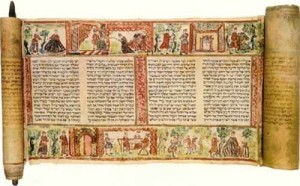 Out of all the Jewish holidays, I’ve always felt the most ambivalent about Purim. I consider myself to be more of a Sukkot or Passover aficionado, serving grand meals under the stars or crafting experiential moments of peoplehood around an elaborately decorated Seder table. I felt something lacking in the apparent disorderly nature and wackiness of Purim. Yet, I can actually weave the narrative of my life through the events that took place on the 14th of the Hebrew month of Adar. What I thought was disorder was actually a path– the path in which I continue to journey as a leader, a learner, and a student at Yeshivat Maharat.
The young Purim. One of my earliest memories happened on Purim. It was in the synagogue social hall as we prepared to read the megillah. I remember the air smelled vaguely like packaged hamantaschen and I was holding a homemade noisemaker in my hand to drown out the name of Haman, who threatened to “to destroy, kill and annihilate all the Jews, young and old, infants and women, in a single day.” I was proudly dressed as Queen Esther, and my five- year-old self bumped into one of my tiny friends. She was also dressed as Queen Esther, and she was wearing a pair of those tiny high heels that you could get at a toy store, a costume princess dress with a tiara, and plastic clip-on earrings that dangled to her neck. She sat on the edge of a chair, her glittery feet dangling off the edge. I looked at her with such admiration, coveting all of her accessories. In my mind, in all of her royalty, she could have been coated in diamonds.
Purim, ten years old. My mother was involved in youth work, and every year she fashioned a fabulous Purim party for teens and their families. That year, however, one of the teens came to the party very, very, drunk–and we needed to stay late to make sure he got home. As an anxious child, I remember pacing back and forth and breathing shallowly as the police came to examine him and look in his car. Why was he lying on the floor and yelling? I felt out of control and frightened. My mother made order out of the chaos–I watched as my mother skillfully dealt with the situation and waited for the teen’s parents to arrive before we left for home. I watched from a distance, admiring, fearing.
- 1 Comment
February 27, 2014 by Danica Davidson
Winning Any Office (or Male-Dominated Environment)

www.flickr.com/76029035@N02
Rebecca Sive was a cofounder of the Jewish Fund for Justice, one of the founding organizers for EMILY’s List and was included in the book Feminists Who Changed America: 1963-1975. This is still only a small part of her résumé, but Sive has taken her knowledge, experience and passion for women’s rights and penned the book Every Day Is Election Day: A Woman’s Guide to Winning Any Office, from the PTA to the White House” called by Publishers Weekly “a clear and persuasive roadmap to female political success.”
Sive’s book is both down-to-earth and invigorating as it champions women to move forward and gives concrete details on how to do so. She also supplies real-time advice from a host of powerhouse women in the worlds of politics, business and philanthropy. While her book is angled toward politics and running for office, Sive’s advice can be used in any other male-dominated environment.
Danica Davidson, a journalist whose writing on women’s rights and women’s issues has appeared in “Lilith,” “Ms.,” MTV and CNN, interviewed Sive.
Danica Davidson: How did you first get involved in feminism?
Rebecca Sive: I became a feminist after reading Sisterhood Is Powerful and The Dialectic of Sex while in college. In different ways, each was eye-opening, informative and inspirational. Although I had always been independent and a leader, these books put a face and a politics on my views, interests and political commitments.
My mother and father had taught my sister and me to be independent and to do good, so it was a relatively short step to becoming a feminist activist with these goals, once I learned about the women’s movement (around 1971). Before joining the American Jewish Committee — after graduate school — and co-founding the Jewish Fund for Justice several years later, I was a college and graduate school feminist activist.
I led a campaign (pre-Roe v. Wade) to provide contraception services at my college (Carleton College) health clinic. Before we succeeded — after organizing and running a campus-wide campaign — women students had to travel to a Planned Parenthood clinic 40 miles away. (Needless to say, it seemed that whatever the boy students needed was available!)
At the American Jewish Committee, I organized various women’s projects whose goals were to further collaboration among Jewish women and women of other ethnic groups. All the projects had a feminist focus. Among the projects was the Illinois Women’s Agenda, a coalition of over 70 organizations, including Jewish women’s organizations, such as the National Council of Jewish Women. This was the first modern women’s-movement-era coalition to advocate for economic security, women’s reproductive autonomy and other issues in the state. (An article I wrote about it is in this book: The Roads They Made: Women in Illinois History).
Another project was an exhibit on Illinois women’s history for the U.S. Bicentennial, which led to the re-appearance of a Jewish woman, Hannah Shapiro Glick, who started the historic 1910 garment workers’ strike in Chicago.
The Jewish Fund for Justice (JFJ) was an idea of Heather Booth’s and Si Kahn’s and maybe a couple others. We met for the first time at the Midwest Academy in Chicago, which hosted many progressive gatherings (and where I was trained by Heather as a community organizer). All of us had considerable social justice organizing experience. We knew the history of the American Jewish community’s commitment to social justice and wanted to institutionalize it among like-minded donors at a time — the Reagan era — when conservatives were trying to dismantle civil rights achievements.
DD: How do you think being Jewish helped shape your beliefs on social justice, feminism and leadership?
- No Comments
February 27, 2014 by Dasi Fruchter
At Compassion’s Edge
 The snow that doesn’t quite seem to stop falling this winter was also falling consistently throughout the winter of my tenth grade year of high school. As a teen, as gunmen shot in the suburbs of DC near my home and wars raged around the world, I was very bothered by the “state of things”, and I just wanted to do something about it. So, the night before Chanukah, I decided to prepare gifts for my friends at the day school I attended. I printed little cards that read:
Happy Chanukah! A Donation has been made to American Jewish World Service in your honor.
I taped a candy to each one (poorly, I recall. many of them fell off) and handed them out in school to my friends, feeling like I had done my part to fix the world that seemed so broken to me, and that didn’t seem to respect the values I grew up holding: that each person was made in the image of God, and deserves to live a life free of violence and oppression.
Early on in my college experience, though doing Jewish social change work is what continued to make my heart beat faster, I decided to begin to largely shut out issues of global justice from my consciousness. I had become simply overwhelmed by the volume of things that needed fixing around the world, and I was reminded of my high school classmates, as they had rattled off skeptical reactions to my idealistic donation-making approach that Chanukah. I would never get anything done, they had said.
I struggled with this overwhelming feeling, because I so deeply cared about justice for everyone. But eventually, I decided that, while I wouldn’t be totally silent on global issues, I would stop seeking to be on committees that worked to solve issues thousands of miles away. There were too many stories close to me that I wanted to be a part of transforming.
Furthermore, I wasn’t able to compartmentalize all of the oppression and suffering I saw in the world, but I knew deeply and sincerely that I wanted to be a part of the team that was making the world a better place. So, in my first efforts, I was working on shifting injustices within a twenty-mile radius. I knew I could be strategic and effective on a local level, and that others felt the same way about their potential impact in jetsetting and changing the world on a much larger scale. We would each have our spheres and we would support one another in forging social change.
This year, this calculus shifted unexpectedly for me. I became a part of the American Jewish World Service inaugural Global Justice Fellowship cohort, and we were headed to the Thai/Burma border in early January. I haven’t traveled much; it’s always made me a little tense. There is something about how airplanes are precariously floating in the air, how once you get where you’re going, the food hits your tongue a little differently, and the smells and sounds recall memories that aren’t quite your own. It all feels a little uneasy and unsafe.
- 2 Comments
February 26, 2014 by Alison Lowenstein
Losing Loehmann’s
http://www.flickr.com/docjohnboy
It feels like everyone has a Loehmann’s story–or at least they did.
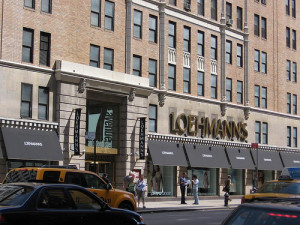
Like a hunter who proudly displays a deer head on the living room wall, offering painstaking details of the kill, many women with a Loehmann’s purchase have a novella-length story behind the find. By the end of February, 39 Loehmann’s retail clothing locations will have closed for good, seven years before the discount emporium would have turned 100. Loehmann’s, like the grand resorts and bungalow colonies of the Catskills, will become a legend in American Jewish history.
Losing Loehmann’s is like losing a well-dressed aunt. There were parts of her that exposed your deepest insecurities, especially when she forced you to undress in a room full of strangers. But the love you had for this relative made you feel at home every time you walked through the door.
The store, founded by the late Frieda Loehmann, started in Brooklyn and attracted many fans. Harriet Mandel, a very well-dressed lifelong Loehmann’s shopper, recalled going to Loehmann’s to find a metziya—a bargain, “I grew up in the Loehmann’s culture, way back to the old auto salesroom on Nostrand Ave., with sheets strung for dressing rooms, Back Room dresses for $9.99, and salespeople ‘on the lookout’ for that special item.” Mandel noted that in the early days of Loehmann’s it served a need for many immigrant European Jews, “As if Loehmann’s was waiting for these elegant women from European cities who came penniless. It was an opportunity that allowed them to dress in their tastes at prices they could afford.”
Although we have nostalgic stories of Loehmann’s throughout the decades, Loehmann’s also had the ability unleash the beast within all of us. There were numerous shopping trips where I secretly wished my sister wouldn’t fit into a skirt because I wanted it. Years ago, I was so immersed in the hunt for a dress I didn’t notice my toddler son had left his stroller. Embarrassed to say, in the same breath I alerted the saleswoman my kid was gone, I also instructed her not to put the dresses I had chosen back on the rack. I shouldn’t have been thinking about bargain hunting while searching for my missing son, later found giggling under a rack of shirts–but such was the power of Loehmann’s.
T.V. sitcom “The Nanny” compared the first few minutes of a Loehmann’s sale to the running of the bulls, and the character Fran Fine warns her charge, Gracie, at a Loehmann’s Red Star clearance sale, “You are going to see things today that will haunt you for the rest of your shopping life.” Even the (non-Jewish) humorist Erma Bombeck, titled a book All I Know About Animal Behavior I Learned in the Loehmann’s Dressing Room.
Yet when Loehmann’s announced late in 2013 that it was closing, customers tried to pay their last respects. Barbara Schwartz visited her New Hyde Park location to say goodbye to a favorite fitting room attendant, Doris, but found she wasn’t there any longer. “She stood on her feet for probably close to 50 years. She organized, hung up, and carefully loved all of her merchandise. Doris spent her life in the confines of a public open dressing room taking pure delight when she saw you looking great in a garment. I could sense her smile of satisfaction. Then, I would ask her opinion. She knew just when to encourage the purchase and why.” Schwartz also remarked, “There are stores over the years that imitate Loehmann’s, but there will never be another one. That will bring me to tears. I am both naked and crying.”
During the past decade, there were multiple news stories about Loehmann’s declaring bankruptcy. As well as subtle changes in the store. For instance, I found it suspicious every time I went to the register, the cashier always tried to sell me magazine subscriptions. Astute New Jersey shopper Helen Levine, who spent decades shopping at Loehmann’s Paramus, N.J., store noted, “When they stopped offering the extra discount on my birthday I should have seen the writing on the wall!”
The store played a role in shaping our female identity. It was in the Loehmann’s fitting room that I caught a glimpse of what I’d look like when I was post-menopausal, while I tried not to stare at women with spider veins trying on cocktail dresses. And every time we went to Loehmann’s, my mother joked that the seats outside the fitting room were made for Jewish husbands. As a child, I didn’t dream of marrying a prince; I wanted to marry the kind of guy who’d sit on the bench outside a Loehmann’s fitting room waiting for me. This image encompassed all one would want from a life partner–patience, honesty, and the mutual appreciation for a good deal.
The loss isn’t easy. Loehmann’s was a staple in American Jewish life. From the original Brooklyn location to the pilgrimage most New Yorkers made to the Bronx, you could track the Jewish neighborhoods in America by the Loehmann’s locations.
It will take time before I’m able to remove my gold Loehmann’s Insider Club card from my wallet. And where will we get our dresses for my daughter’s bat mitzvah? I’m mournful for all the years of shopping that have been taken from us. I don’t think we’ll have the same experience nestled up on the couch perusing Gilt and Zappos websites. Like Jewish delis, and the seltzer man, Loehmann’s is another part of American Jewish culture that will now live only in stories. Younger women will feel about these tales of Loehmann’s shopping experiences the way I felt when I heard my older relatives retelling jokes from Borscht Belt comedians. Even as a child, I knew I’d never really get them.
- 1 Comment
February 20, 2014 by Yona Zeldis McDonough
Print is Dead
 Print is dead, or so the pundits have been telling us. And yet, in this electronic age when reading matter has been whittled down to fit on a smart phone, along comes Fig Tree Books, a brand new print publisher whose focus is the Jewish American experience. A blend of original titles and revered classics, Fig Tree is the brainchild of Fredric Price, a drug developer, and it will be launching in early 2015. Lilith’s fiction editor, Yona Zeldis McDonough, talks to Fig Tree senior editor Michelle Caplan about Fig Tree’s goals, ambitions and how this “nimble” imprint plans to take advantage of “the new normal.”
YZM: Can you talk about the decision to start a new publishing company at a time whenever everyone is bemoaning the decline of print in general and books in particular?
MC: My publisher, Fredric Price, has had a successful entrepreneurial career developing drugs for rare diseases. While he has no professional background in publishing, he is an avid reader and has established two longstanding groups that read and discuss Jewish books and essays. He decided to focus his efforts toward creating the new home for the best fiction of the American Jewish experience. All of the changes that have occurred in publishing in the last several years create a window of opportunity for a small, focused, nimble imprint like Fig Tree Books. We can take advantage of the new normal because we do not have a pre-existing structure, organization or operating method that is struggling to adapt to the new publishing environment. Fred feels that the publishing industry is ripe for the same type of approach that he used when developing, marketing and selling “orphan” drugs. Rather than following the industry in trying to develop blockbuster drugs for highly visible illnesses like hypertension, he built very successful businesses by focusing on drugs for small populations. While Jews represent a small fraction of the American population, we are a significant percentage of the purchasers of literary fiction.
YZM: What drew you to this editorial position at Fig Tree?
MC: Fred has responded to the need for a publisher to champion emerging and unique voices and created a place where writers about the American Jewish experience can launch their work into the world with visible celebration and support. I have spent most of my career as a freelance editor, consultant and ghostwriter of fiction, creative non-fiction and film scripts. I’ve mentored both aspiring and established writers and I believe Fig Tree will be the home of American Jewish fiction writing for the 21st century. We will have a combination of original works plus what we call re-released classics, books that were previously published and are now out of print but are relevant and exciting to readers today.
YZM: What is the significance of the name Fig Tree?
MC: Our name is inspired by a letter from George Washington to the Hebrew Congregation in Newport, Rhode Island in 1790, in which he says “May the children of the Stock of Abraham, who dwell in this land, continue to merit and enjoy the good will of the other Inhabitants; while every one shall sit in safety under his own vine and fig tree, and there shall be none to make him afraid.” We feel that this event in American history captures the spirit of our democracy in which Jews and other previously religiously persecuted groups have flourished. The wisdom of our first president set the stage for a milieu of tolerance and acceptance, enabling Jews to thrive, and we could think of no better metaphor for the beneficence of the Jewish Experience in America.
YZM: Will there be any particular emphasis on writing by Jewish American women?
MC: We are interested in publishing novels of excellence that deal with the American Jewish experience and are agnostic as to an author’s gender, age, race and even religion. It is a rich mosaic that can be approached by anyone with a gift for writing and a topic that appeals both to Jews and others. We certainly do hope to attract beautifully written books by women writers. Our editorial staff is comprised of women with a keen eye for quality writing.
- 1 Comment
Feminists In Focus, The Lilith Blog
February 12, 2014 by Amy Stone
Meet on Screen the First Woman Rabbi
via filmlinc.com
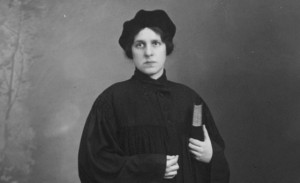
How do you make a documentary about Regina Jonas, the world’s first woman rabbi, when only one photograph survives?
It helps if you’re pushed to do the deed by Elsa Klapheck, the contemporary German rabbi whose book, Fraulein Rabbiner Jonas: The Story of the First Woman Rabbi, is the definitive source on this extraordinary woman, born in Berlin in 1902 and ordained in 1935. (The book has been translated into English by Lilith contributor Toby Axelrod. Klapheck, ordained in Frankfurt, is the first woman rabbi in the Netherlands.)
“Regina” — Diana Groó calls her film “a poetic documentary” of Regina Jonas — made its U.S. premiere in January at the 23rd NY Jewish Film Festival, presented by the Film Society of Lincoln Center and The Jewish Museum. The 63-minute film is in English.
Groó, 40, who seems either doomed or destined to be identified as a Jewish Hungarian filmmaker, stayed true to the hundreds of documents Regina Jonas managed to save for posterity. The poetry comes with the archival footage – going back to 1900s Berlin — combined with music and voices. British actress Rachel Weisz is the voice of Regina Jonas. Others giving life to archival material include Groó’s grandmother, 86, the same age as Jonas’s students would have been, and a survivor of four concentration camps.
- No Comments
February 11, 2014 by Miriam Olenick
Who’s in the Cute Girl Network?
 “The Network is a loose alliance of smart, beautiful young women who’ve come to share information about all the spazzes, dorks, tools, freaks, perverts, losers, and dumbass boys in the city and to prevent yet another awesome girl for falling for yet another lame guy.” – The Cute Girl Network
Many women – and men – find themselves in a sticky, unpleasant situation when their friends are dating people who are clearly (from an outsider perspective, at least) not worthy of them. Love is blind, and sometimes when you try to disillusion people, they just shut you out.
The Cute Girl Network, a graphic novel by MK Reed, Joe Flood, and Greg Means, offers a hilarious solution to this problem – a network of women who prevent their members from dating undesirables by putting the word out on their unsatisfactory ex-boyfriends; in this case, getting the skateboard chick protagonist Jane, up to speed on clumsy, forgetful Jack’s past dating misadventures. It seems like the perfect solution; Jane is a fun, smart, and talented girl who would be better without a loser in her life. Only Jane doesn’t really think along those lines: “I don’t want some guy who’ll look good on a Christmas card or has a great resume. I want someone I’m gonna be happy with from day to day.”
The Network’s intrusion on Jane’s love life provides excellent food for thought on the subject of modern love and dating. When should you give someone a second chance? How much dating advice is actually helpful? How do you fall in love, without being blind?
However, more than taking a stance on whether Jane or the Network is right, the novel takes a stance on contemporary portrayals of love and romance – namely, that most of them suck. In one memorable scene in the novel, Jane’s friends are reading aloud from “Vampyr Boyfriend,” a spot-on parody of Twilight, in which the romantic leads, stalker vampire Caleb and gothic girl Chastity, gaze intensely at each other and mope a lot.
Author MK Reed explains her frustration with contemporary love portrayals: “Messages of ‘Your ambition is sabotaging your love life!’ and ‘A Real Man will solve all your problems!’ drive me nuts. I just got married and while admittedly it’s nice, the only life problems it solved is ‘Who will go to the store when I don’t want to?’ and ‘Who will save me from choking to death in my apartment?’”
Thankfully, Reed’s own love story is a breath of fresh, realistic, air – and one that you can read in under 24 hours. This awkward, funny romance is well worth your time.
- No Comments
February 6, 2014 by J.E. Reich
Survivors and Liberators, Liberators and Survivors
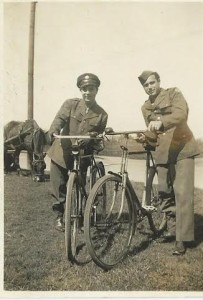 A few months ago, my mother called and told me that she had found a Nazi war medal in our basement. She had been cleaning out her house preparation for a move to the suburbs of Pittsburgh, away from the city where I had been raised.
“How is that possible?” I asked her from my apartment in Brooklyn. I thought of past residents of our house, of closet-case white supremacists. But the owners before us had been a family of Orthodox Jews.
“I’m pretty sure I’m right,” she replied, “I think it’s an Iron Cross. It has a cross on it.”
- 2 Comments