 Please wait...
The Lilith Blog
May 11, 2011 by Susan Weidman Schneider
Charity Auctions Online: Benefits Beyond Financial Success
Cross-posted with eJewish Philanthropy.

You may have noticed that the gala benefit season is in full swing, and extreme donor fatigue has set in for some. In an email last week, a friend began by moaning, “I hate these things, and rarely go. But please come with me.”
Jews aren’t alone in this suffering. The Chronicle of Philanthropy last October headlined the dilemma as “Charities Rethink Galas.” The Chronicle suggests freshening things up with a silent auction, perhaps held alongside the cocktail hour, though there may be another way out of the rubber chicken (or sushi) circuit. On May 9, Lilith, the nonprofit Jewish feminist magazine, opens its fourth online-only auction as a route to raising funds without the extreme sport of event planning.
It may seem strange that in almost 35 years as a Jewish nonprofit Lilith has not yet held a large-scale fundraising event. A couple of years ago, though, when we hosted a small spring cocktail party in Manhattan as an egalitarian way to draw in women across the age spectrum for an evening of “friendraising,” socializing and good talk, we decided to pair it with a silent auction. The offerings ranged from ritual objects and art-glass paperweights to, well, sex toys donated by a women-owned business. Vintage clothing and jewelry, autographed books, a Hazon cycling outfit, original art, Zabar’s goodies, a Miriam’s Cup, and assorted “experiences,” including a portrait session with photographer Joan Roth. And while there was terrific fun at this face-to-face gathering – held, appropriately, at the Drisha Institute for Jewish Education, where women go for advanced Jewish study – we questioned whether the modest financial take was worth the trouble. Since then, we’ve learned a thing or two. We discovered, as we were in the process of cataloguing items for the face-to-face auction, that there are online sites, like BiddingforGood.com, geared specifically to assisting nonprofits manage auctions like ours exclusively online.
Starting in 2009, Lilith’s has had modestly gratifying financial success with twice-yearly online auctions using Bidding for Good. The financial benefit is no surprise, but there have been other, unanticipated lessons and outcomes beyond the auctions’ dollar value. (more…)
- No Comments
May 10, 2011 by Susan Weidman Schneider
Lilith’s Contemporary Salons for Smart, Savvy Jewish Women
Cross-posted with eJewish Philanthropy.
How do women move from diagnosing what’s wrong with the world to taking action to improve it?
 I had ample opportunity to mull this over when I attended the National Council of Jewish Women’s triennial convention in Dallas earlier this month. When I’d been honored by them three years ago as a Woman Who Dared, I was down with the flu, and wasn’t able to appear, so this time I wanted to catching up in person with the representatives of the only self-styled “progressive” Jewish women’s organization.
The gathering proved a useful primer on the political and legislative issues women face right now, with reproductive rights, pay equity and the task of bringing in more women as judges and elected local officials at the top of the agenda. Then there was the challenge of expanding the base and drawing in the dollars needed to move the agenda forward. In a session on women’s giving, the NCJW presenters set forth many of the tenets Lilith has written about, chief among them that women tend to get to know a cause before writing a check or clicking “Donate,” and that we like to give and to work in concert with other women. A new study from Princeton on women undergraduates puts it well: “Women seek, and benefit from, affiliation with other women.”
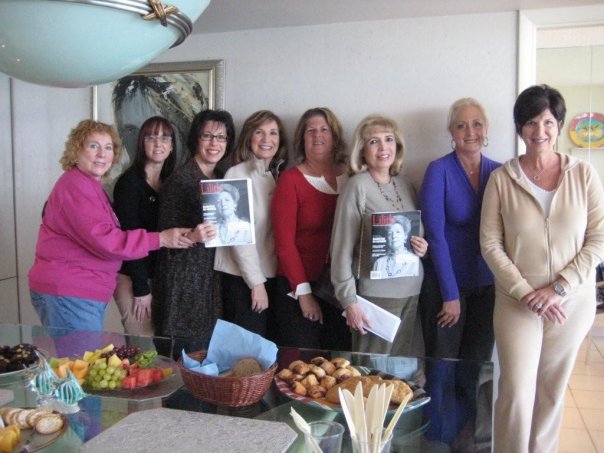
This is one reason I was at the NCJW convention – to tell the attendees about the success Lilith has had in bringing women together for smart talk under the rubric of Lilith salons – now 90 strong across the country and in Canada and other places too, many of them in conjunction with Women of Reform Judaism. (more…)
- No Comments
May 4, 2011 by Merissa Nathan Gerson
Becoming a Man in my Family
 In a hot tub in California I met my cousin Ruthie for the first time. I had known her my entire life, but never like I did in our bathing suits, in the steam, family ditched poolside. We were there for our cousin Mara’s Bat Mitzvah, the whole family, gathered exiles from New Jersey, Florida, Connecticut, Washington, DC, Italy, Argentina and California.
Family time, back in the day, was always the same. There were the men–and then there was everyone else. As I got older, particularly when I became a Women’s Studies major, the Gerson boys’ club became the bane of my Jewish existence.
Why? Because within my home growing up in Washington, DC, my voice was honored as equal to my father’s. At Shabbat dinners my father would invite political powerhouses, writers and rabbis to the table and I was not only given permission, but pushed and encouraged to represent my own views in well-articulated arguments. I was asked to tell about Job and his struggles with G-d, or my views on Arabs and Israelis or social ethics or international politics. I was encouraged to see myself as one of the boys, as a man really.
Except at larger family gatherings.
This was when the old country came in. From Poland to New York, all those tough male cousins who got in street fights and needed my father, the biggest of all of them, to intervene. No matter how evolved or covertly feminist my immediate family had become, in my Jewish post-Polish extended family I became a mere “girl,” and an invisible wall formed. I remember one cousin addressing my brother, both of them Columbia alums. My brother got stories on how to put wine on the heater to get drunk off of alcohol air, or even was asked to engage on topics of religious morality. If I tried to enter the conversation, it was clear it would require something of a third ear. Akin to using auditory blinders, a filter was activated to blot out the female voice when more than one male engaged in conversation. (more…)
- 2 Comments
May 3, 2011 by Liz Lawler
The Passover Purge
 Are you gonna finish that? If you do, are you going to keep it down?
The Passover Purge has me thinking about bulimia and Jews. I hear the word “purge” and I go straight there. Koshering your kitchen for Passover is hard and thorough work. Under normal circumstances, this just marks a heightening of Jewish food awareness. It is a week of tip-toeing through grocery stores and restaurants, scanning ingredient lists for yeasty offenders. All of which is juxtaposed with the frantic Spring cleaning (the other day, my cleaning lady got three panicked phone calls in the span of two hours, from people trying to corner some help). At any rate, my train of thought went something like this: Passover, Jews, food, purging, neurosis, barfing = Jeworexia?
When I was converting, Jews kept telling me how every holiday is “ALL ABOUT FOOD, YAY!! You’ll love it, there’s food, there’s wine, and there are endless evenings around the table.” So: a mix of booze, food, ritual observance and family… Religious and familial drama unfolding in a place connected to nourishment–how can there not be a disproportionate number of Jewish women gagging up their food? (more…)
- No Comments
May 2, 2011 by Emma Gray
Glee’s Rachel Berry Confronts Her “Jewish Nose”
 Last week, Glee aired a much-anticipated 90-minute episode, entitled “Born This Way,” after Lady Gaga’s inclusive anthem. During the episode, each character deals with the things about themselves that they are most ashamed of, ultimately embracing these characteristics. For Rachel Berry (played by Lea Michele), one of the most markedly Jewish characters on the show, her challenge is accepting her not-so-button nose.
The myth of the Jewish nose is one of the most widely espoused Jewish stereotypes. Its origins can be traced to the flawed “science” of 19th century Eugenics movements. Eugenics attempted to define ethnicity through physical characteristics. In his book Making the Body Beautiful, Sander L. Gilman explains that these traits were generally compared to and vilified in relation to a white, European “ideal.”
The German children’s storybook, Der Giftpilz, published in 1938, provides a perfect example of the explicit discussion of the Jewish nose. In one of the stories, Little Karl, a 7th grade schoolboy, describes to his classmates how to recognize a Jew. “One can most easily tell a Jew by his nose. The Jewish nose is bent at its point. It looks like the number six. We call it the Jewish six.”
Although we have come a long way since 20th century ideas of racial purity, the myth of the giant Jew nose still runs rampant, providing perfect fodder for Glee’s writer, Brad Falchuk. Falchuk himself happens to be Jewish, as well as the son of the current president of national Jewish women’s organization, Hadassah. (more…)
- 7 Comments
April 21, 2011 by Maya Bernstein
Commemorating
 It was one week into my family’s trip to Israel, and we lost our camera. Perhaps it was stolen. Most likely it fell out of the bottom of the stroller, while I was digging for sunscreen, or pretzels, or a hat. Perhaps it was the inevitable sacrifice, to appease the gods who watch over those who travel with young children and worry about losing BPA-free bottles and spoons, favorite dolls’ clothing, socks, diaper-bags, not to mention, of course, the children themselves. I noticed the camera was gone when the children were bathed and clean and dressed for the Sabbath. The girls had flower head-bands in their hair and the baby was wearing a vest, the sun was setting over the walls of the old city in Jerusalem, and the air smelled of the exhaust fumes of the last Friday buses, and of jasmine.
What upset me most was losing a week’s worth of pictures. My oldest moaned: “now it’s like we were never here.” I momentarily entertained the thought of buying a new camera, and retracing our steps. My husband suggested that we could leave pages of our photo-album blank; a trip of blind images, wisps of memories trickling ephemeral from between our fingers.
Now, though, that it is Passover, and the leavened excesses of our existence have been burned, for the moment, and, as a people, we are immersed in the preservation of an ancient psychic memory, the loss seems strangely appropriate. It has reminded me to spend some time experiencing, rather than preserving an experience. I have become so accustomed to reflecting while living, that, perhaps, I have cheated myself out of the full joy of being, of living, without trying to figure out how to package, market, preserve that life. My camera, Twitter account, Facebook site, all at once seem like chametz, bloated with self, replete with very me. How appropriate to be without a camera on Passover, to travel, suddenly, lighter, with a different lens. Emptying myself of these vehicles for expression, I find more space to be. I am reminded of a poem by Sir Thomas Browne: (more…)
- 7 Comments
April 7, 2011 by Bonnie Beth Chernin
Birthday Serenade
 I had just finished listening to my daughter serenade me with Happy Birthday to You when I asked if she could sing the song again in Hebrew. Maybe it was because I didn’t want my birthday celebration to end, or maybe it was because I knew she could do it.
Rachel had learned the Hebrew version at her Jewish day school, a school under the auspices of the Conservative movement. I mention this only as a report released in 2008 about attitudes concerning Jewish days schools found that many people, at least in the New York City area, think a Jewish day school refers to an Orthodox yeshiva and are not aware that day schools can also encompass Conservative Judaism
At school Rachel learned Yom Huledet Same’ach, Happy Birthday, sung to the popular tune first composed by two sisters Mildred Hill and Patty Smith Hill in 1893. But Rachel’s 2011 Hebrew rendition took on a new twist, at least for me. (more…)
- 5 Comments
March 22, 2011 by Liz Lawler
Horton Hatches Her Own Egg: Yes, I had My Own Baby
My child was intended. Meaning—I intended his life, and intended to parent him. There was a decisive moment when we entered into “the process” so to speak. So I remember what it feels like to gaze wistfully at other people’s children, what it feels like to think, “yikes, what if it doesn’t happen for us?” The question was settled blessedly early. Getting and staying pregnant (at least this time around) was no problem. But certainly, I know how overwhelming that impulse is. I understand really wanting a kid.
 I wonder, in hindsight, what lengths I might have gone to in order to get one. IVF? Maybe. Adoption? Sure. Surrogacy…..? That one gives me pause. Could I really ask another woman to go through this (NSFW!) for me? I outsource many essential functions in my life: I have a hair stylist, a cleaning lady, a plumber. But is this really a task that I want to delegate? For one thing, cutting my hair and scrubbing my toilet don’t require the maid or my stylist to strip mine their own bodies.
Elton John got me pondering this. I don’t normally spend much time on Sir Elton, but this caught my eye. He and his partner just welcomed a son, via surrogate. They had been denied an adoption due to Elton’s age and sexuality. So, surrogacy was the next step. The sexuality thing complicates the issue, this isn’t just about women’s or children’s rights; there is a civil rights angle to consider. Adoption is heavily and often arbitrarily policed, really the only realm of child-bearing/procurement that is. It is, sadly, easier to buy a kidney than it is to adopt a child. (more…)
- No Comments
March 17, 2011 by admin
Sisters in Arms
Elisa Albert, author of The Book of Dahlia and How This Night is Different, writes for Tablet Magazine about how “playing the defiant Vashti in a day school Purim play awakened [her] inner feminist.”
A couple of thousand years after Haman was sent to his death for trying to persuade King Ahasuerus to execute all the Jews in his kingdom, a motley group of fifth- and sixth-graders at Temple Emanuel Community Day School of Beverly Hills (motto: “Living Judaism!”) pulled out all the stops on a Purim musical revue spectacular.
We all wanted to be Esther, of course, the heroic, beautiful, self-sacrificing beloved of the King. The ingénue savior of the Jews, and so thin from all her fasting! She was going to get to wear a dirndl and sing a re-lyricized “My Favorite Things.” Second choice would have been to play a member of Esther’s harem, biblical pole-dancers with veils, MC Hammer pants, exposed midriffs, sequins. Ahasuerus, surrounded by his minions and ogling a parade of bachelorettes, was given to breaking the fourth wall, winking at the audience, and exclaiming, a la Mel Brooks, “It’s good to be the king!”
I was cast as Vashti and was, at best, ambivalent about it. She was the shrew. The cast-off first wife, a mere footnote to the story of Esther’s bravery and the salvation of the Jewish people. My costume was a modest polyester gown and my big number was “I’m Gonna Wash That King Right Out of My Hair.” I was last seen on stage protesting the beauty pageant, pacing back and forth downstage, alone, with a large sign that read WOMEN UNITE!
Keep reading here.
Related: ‘Commentary’: Feminists Are Ruining Purim
- No Comments
March 15, 2011 by admin
The Whole Megillah–Lilith Style!
 And now, for your reading pleasure, a new way of thinking about Purim from Lilith’s senior editor, Rabbi Susan Schnur, in a four part series:
Our [Meaning Women’s] Book-of-Esther Problem
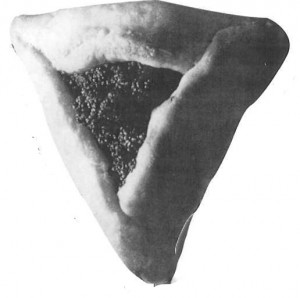
From Prehistoric Cave Art to Your Cookie Pan: Tracing the Hamentacsh Herstory
The Womantasch Triangle: Vashti, Esther and Carol Gilligan (A Developmental Look)
The Once and Future Womantasch: Celebrating Purim’s Full Moon as “Holy Body Day”
Enjoy, and share your own Purim reflections below.
The Lilith Blog is brought to you with the generous support of our donors.
- 5 Comments