 Please wait...
The Lilith Blog
May 14, 2012 by Julie Sugar
Orthodox Judaism, My Soul is Sick with Love for You

http://www.flickr.com/simplyboaz
On Thursday, the Orthodox Union issued a statement publicly opposing the President’s recent stance on same-sex marriage. I read it that afternoon, got up from my desk, walked into the office bathroom, and cried. If the OU does indeed represent Orthodox Judaism, as they assert, the path towards a more honorable Orthodoxy seemed too long. I conceded to myself that feminism or LGBTQ inclusion within the movement really is an oxymoron, a fantasy. It was time for me to finally break up with Orthodox Judaism.
Yet on Shabbos morning I was back in my Orthodox synagogue, holding the Torah and reading a prayer out loud on behalf of the congregation.
Participating in that part of the service—either reading aloud the prayer for the American government, for the State of Israel, or sometimes both—has been bittersweet because it is an innovative but limited opportunity for women to have an increased role in the ritual space. See, I believe that increased sensitivity and inclusion within the framework of halakha, traditional Jewish law, is not only feasible, it is a communal obligation. While this year I became less observant again (I grew up completely secular), and I haven’t currently been identifying as Orthodox, I have stayed in an Orthodox community because I feel compelled to work from within the movement to increase opportunities for women in the ritual space while remaining within the contours of halakha. Thankfully I am not the only one thus compelled; there are other people, entire organizations, and communities like mine working towards a shared vision of an ever-improving and increasingly inclusive Orthodoxy.
- 11 Comments
May 9, 2012 by Guest Blogger
My Writing Roots in Porn Lit
By Anonymous

Gypsy Rose Lee seated at typewriter/ World Telegram & Sun photo by Fred Palumbo via Library of Congress.
The year was 1979. Ronald Reagan was in the White House, Leonid Brezhnev was in the Kremlin, and I had just tumbled, fresh-faced and clueless, from the idyllic confines of a Seven Sisters college in the mid-Hudson valley. I had a plan–graduate school at Columbia University in September–and my very first apartment, a shabby walk-up on 107th Street and Amsterdam Avenue, then a sketchy neighborhood just south of Harlem. But I needed an income, so I found a job as a waitress. On my first day I inadvertently charged one customer $14.60 for an iced coffee, splattered another with gobs of cheesecake from the slice I dropped, and was fired by the end of my shift. Time for plan B. I pored over the want ads in the Village Voice. Telemarketer? Nurse’s aide? Nothing clicked until I read this one:
STAFF WRITER
ADULT FICTION
I called the number and spoke to a woman who was far more interested in my typing skills than my literacy. She told me to write the first chapter of School Girl Crush, a playful, Sapphic romp set in an East Coast boarding school. “It should be around 20 pages long,” she said. “And it shouldn’t take more than four hours.” I’d written a lot of term papers over the past few years, but I had never churned out 20 pages in four hours. Then I thought: East Coast? Girls’ school? Hey, I was a natural. I conjured my own college campus: the scenic pond—where I had three characters go skinny dipping—and the gym’s communal showers—where two others had a passionate, lesbian encounter—and pretty soon, the chapter was written. The next day, I sat across a desk from Flo, a zaftig middle-aged woman with a head of corkscrew ringlets and a big, toothy smile. As she read my chapter, the smile got even bigger. “This,” she said, “is perfect. When can you start?”
- No Comments
May 8, 2012 by Guest Blogger
A Conversation with Alix Kates Shulman

Alix Kates Shulman has been a passionate feminist voice for over 40 years, bringing to light questions of marital parity and other front-line issues of women’s rights in her memoirs and other nonfiction. Beginning with her first novel, the now- classic Memoirs of an Ex-Prom Queen, Shulman’s fiction has been praised for its wit, insight, and compassion. She is a past contributor to Lilith—the 1993 article “Gentiles and Jews at the Hop” and, most recently, an excerpt from her 2008 memoir To Love What Is. Readers will welcome this spring’s back-to-back publications, A Marriage Agreement and Other Essays and the novel Menage,“a brilliantly wry and entertaining comedy of desires” (Booklist), that is “delightfully wicked” (Kirkus).
In your sharp and funny new novel Ménage, Heather McKay is a stay-at-home mother and, for most of the novel, a would-be writer who puts up with her husband’s affairs in exchange for the extravagant and trouble-free life he gives her. Yet when Mack brings a notable dissident writer to live with them, she is bold in her seduction of him, as if she has nothing to lose. What drives her?
What drives her is a combination of literary ambition and ambivalence about the status of stay-at-home moms. Also, since Mack roams freely in the world while she’s lonely at home, she’s angry at him for his affairs and feels no qualms about having one herself. Ambivalence concerning both stay-at-home and working mothers is something that does not go away—note its renewed flare-up over Ann Romney. A recent Nation column by Katha Pollitt has the best analysis of that conundrum I’ve seen in ages.
- No Comments
May 7, 2012 by admin
PAULA HYMAN (1946-2011) At the Center of Change

Paula Hyman, pictured here with her daughter Judith Rosenbaum. Photo by Amy Stone.
At the time of her death in December, Paula Hyman was the Lucy Moses Professor of Modern Jewish History at Yale University. She had been the first female dean of the Albert A. List College of the Jewish Theological Seminary, the first woman president of the American Academy for Jewish Research, and co-founder of of the germinal Jewish feminist group of the 1970s, Ezrat Nashim. While still a graduate student, she authored what may have been the first social history of Jewish women, The Jewish Woman in America [1976], and then proceeded to transform the way that Jewish scholars think of such basic historical paradigms as assimilation and acculturation by viewing these phenomena through the lens of gender.
Most of the Jewish girls born in America today will take it for granted that women can be rabbis, count in a minyan, and read from the Torah. And Jewish historians being trained today are called to task when the do not take gender into account. Paula Hyman was at the forefront of the religious and intellectual struggles that generated these changes. Her influence extended both into the academy and far beyond it, affecting the lives of Jewish females in schools and congregations in ways of which many are still unaware.
The reflections that follow give some glimpses into her legacy, and the extraordinary ways in which she shaped the Jewish feminist world we live in today.
Read more in a free download from Lilith’s Spring 2012 issue.
- No Comments
May 2, 2012 by Yona Zeldis McDonough
Secret Agent Barbie

Photo via Mattel
Well, Barbie’s gone and done it again. Yes, the petite, plastic plaything has proved, once more, that she’s hardly a retrograde relic. Far from it. Barbie’s on the cutting edge—where, as a matter of fact, she has been since her inception in 1959.
Coming this summer, Mattel will bring out the Barbie Photo Fashion, a brand-new doll with an LCD implanted in her impressively toned tummy. A lens in her back allows her user—almost always a girl—to take pictures with the doll. In a word: Brilliant. Instead of the bimbo blonde who passively receives the male gaze, this new Barbie channels and harnesses nascent female power, by encouraging play of an entirely new kind. Yet again, Barbie has become a vessel and conduit, tapping into the inchoate desires of girls, and giving those desires a comprehensible form of expression in the world.
But to those of us who have known and loved her over the past five plus decades (and I count myself at the top of this list), there is nothing fundamentally surprising about this news. Barbie has always been a secret agent, a force for subversion and empowerment masquerading as a harmless, leggy pin up.
- No Comments
April 30, 2012 by Yona Zeldis McDonough
A Conversation With Debra Spark
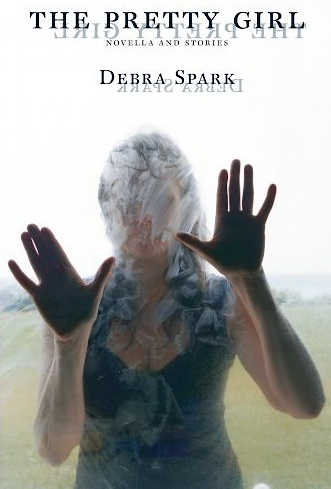 Debra Spark is a bit of a fabulist—her stories skirt the tantalizing territory between what’s real and what’s imagined. In this new collection, The Pretty Girl, Spark’s imagination creates a group of stories that are wholly off beat. She talks to Lilith’s fiction editor, Yona Zeldis McDonough, about where she gets her inspiration, her attraction to the visual arts and her fascination—and occasional frustration—with toy theaters:
In your linked short stories you create radically different characters, settings and even time periods in each of your stories. Can you say more about this decision?
I wrote these stories over a very long period of time, so that may be part of the answer. I actually think of the stories as connected, despite the variety, since many of them circle around the theme of art and deception.
You have written both novels and stories; do you have a preferred form?
I think I like novels better, since with a novel you only have to think up a new idea every few years, but with stories you have to do it ever few months!
The freshness and originality of your dialogue is really notable. Do you have any interest in writing a play or any other dramatic form?
Thank you. I love the theater, and I would love to write a play at some point, but I just don’t think I have the skills. I frequently go to the theater here in Portland, Maine, and whenever I do, I am newly amazed. Often when I know a play’s conceit in advance, I try to imagine how things will unfold, before I actually see the play. Invariably, what is to come is far richer than what I am able to imagine.
- No Comments
April 23, 2012 by Guest Blogger
Green? Or Greeneh? Some Earth Week Reflections
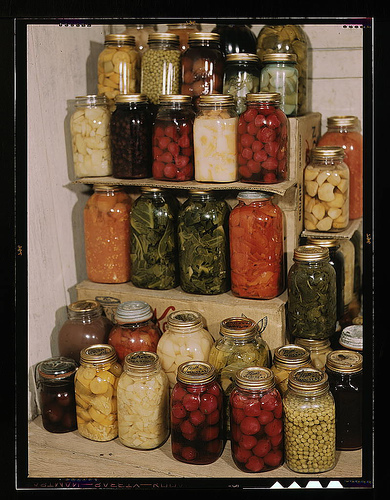
Photo via Library of Congress Flickr stream
Growing up, green was the color of the aluminum siding on our house and of our painted garage, teeming with a full assortment of scrap—wood, metal, plastic, heavy paper and anything else that might somehow serve a future purpose. Green was the color of the lawn I often mowed, watered only when needed and early in the morning. My Girl Scout uniform was green. And so were the glasses filled with warm tea left out every morning for me and my sisters, the intentional love-filled leftovers from the big stove-cooked pot of tea our Dad filled his Thermos from each day before heading to his job at Gleason Works in our boat-sized American-made Chevy Impala, which he could fix himself.
Green was a shade of envy, too. Envy of the kids whose sandwiches were packed in throwaway Ziploc bags instead of bulky Tupperware that had to be schlepped home. Envy of all the other moviegoers, who got to socialize while waiting on line for buttered popcorn while we rustled through an over-stuffed tote to access a re-used plastic bag full of white kernels, air-popped at home. Envy of my friends whose families hired plows to remove their snow while we bundled up in hand-me-down snowsuits and shoveled all day.
It was envy of my classmates and friends whose parents had gone to college, didn’t have accents and weren’t mistaken for grandparents… and it was envy of those who had grandparents.
- No Comments
April 5, 2012 by Tara Bognar
A.M. New York: Highlights for Lilith Readers
I happened on th is free city rag on the subway this morning and was impressed by all the items I thought might be of interest to my fellow Lilith fans and thought I’d share the wealth. Unfortunately, none of my favorites are actually on their website so I’m providing other links where they were available:
NYPD “Hercules” teams are guarding synagogues during Passover in response to a newly posted threatening Al Qaida mock movie poster.
Seriously – you don’t often come across this much exciting cross cultural material in a three sentence article. Al Qaida, a fundamentalist Muslim terrorist group that, among other things, would like to purify Islam of outside influences, has prepared an impressively designed poster that could easily be blazoned across a bus to promote a new Hollywood film if it weren’t for the (surely unintentional) sexual double entendre: “Al Quaeda: Coming Soon Again in New York.”
“Hercules,” of course, was an ancient Greek demi-god known for his strength. Some ancient Jews embraced Hellenism (apparently one scribe claimed that two sons of Abraham joined Hercules on his Africa expedition) and others strenuously resisted it, culminating in a bloody civil war – see Hannukah. The cultural resonances of American “Hercules” teams guarding Jewish synagogues during the holiday when we commemorate escaping from Egypt to become a sovereign people in our own land are wonderful to ponder. (Incidentally, the planes used by the IDF in the Entebbe raid were also called Hercules).
- No Comments
March 8, 2012 by Tara Bognar
International Women’s Day, Iranian Women’s Rights
 This morning I attended a panel discussion about the status of the struggle for women’s rights in Iran. Sponsored by the organization Iran 180 and scheduled in honor of International Women’s Day, the panel included Roya Hakakian, a writer, poet, and producer based in New York, Solmaz Sharif, a dissident journalist and poet, and Arash Abadpour, a (male) computer scientist and popular Persian and English language blogger.
Iran is an important topic in Jewish news media, even more so recently, with speculation about its development of nuclear capabilities and discussion of appropriate American and Israeli responses. But spending Purim morning thinking specifically about the status of women in Esther and Vashti’s ancient home seemed appropriate. The panel’s moderator, New York Times reporter Anne Barnard, successfully guided discussion towards intra-Iran human rights issues but unfortunately had less success keeping the focus on women.
Beyond an acknowledgment of the courage of women dissidents in Iran in general and specific recognition of Nazanin Khosravani who just two days ago began a six year prison sentence after refusing to write a letter admitting fault and requesting pardon for “collusion” and “propaganda” against the regime, the panelists’ discussion was quite general and non-gender specific.
From a Jewish perspective (and an International Women’s Day perspective) that is too bad. The struggle of women in the juxtaposition of extremist theocratic suppression of women’s rights, everyday sexism, and a fairly liberal and educated, but struggling, middle class could prove all too relevant to those concerned about the situation in Israel.
- 4 Comments
March 2, 2012 by Guest Blogger
An interview with Lilith magazine’s Editor in Chief
Cross-posted with Kosher Salt.
Anyone who read Freakonomics remembers the chapter on how a person’s name can pre-determine their future. If that frightening piece of incredible parental pressure got you thinking about the name game, Susan Weidman Schneider, editor of Lilith magazine, has plenty more to say on what’s in a name and the latest issue of the mag.

KS: What’s the greatest perk/biggest obstacle in working as editor of an independent, Jewish and frankly feminist magazine?
SWS: Editing Lilith magazine, now celebrating its 35th year, is a treat. The writers are wonderful, the ideas new and stimulating, and the end product is, I hope, insightful and always a good read—whether it’s in print, on the web via our soon-to-appear digital edition, or on the lively Lilith blog.
KS: What do you think is the most impactful topic that Lilith has covered?
SWS: That’s a tough one. The major issues Lilith has opened up have been topics like violence in Jewish families; Jewish women’s philanthropy and our relationship to money; Jewish hair—a sellout issue by the way; rabbinic sexual misconduct; new rituals and celebrations for the Jewish calendar and for the landmarks of our lives.
The last couple of Lilith salons at Sixth & I were really dynamite, and they dealt with cover stories that, like the what-we-call-ourselves story in Lilith’s current issue, resonate in our lives. One salon had to do with an article on breaking up over food. We spent about three hours in spirited discussion about what we eat, why it can sometimes be schismatic, what food represents in a relationship, and more. The second salon focused on what we wear. You can imagine! The talk ranged from our favorite garments to how we want to present ourselves to the world as feminists, as Jews, as professionals. Clothing is a powerful signifier, and we really mined that territory in our conversation.
- No Comments