 Please wait...
March 3, 2016 by Yona Zeldis McDonough
Rebecca Kanner Retells the Biblical Story of Esther in Her New Novel
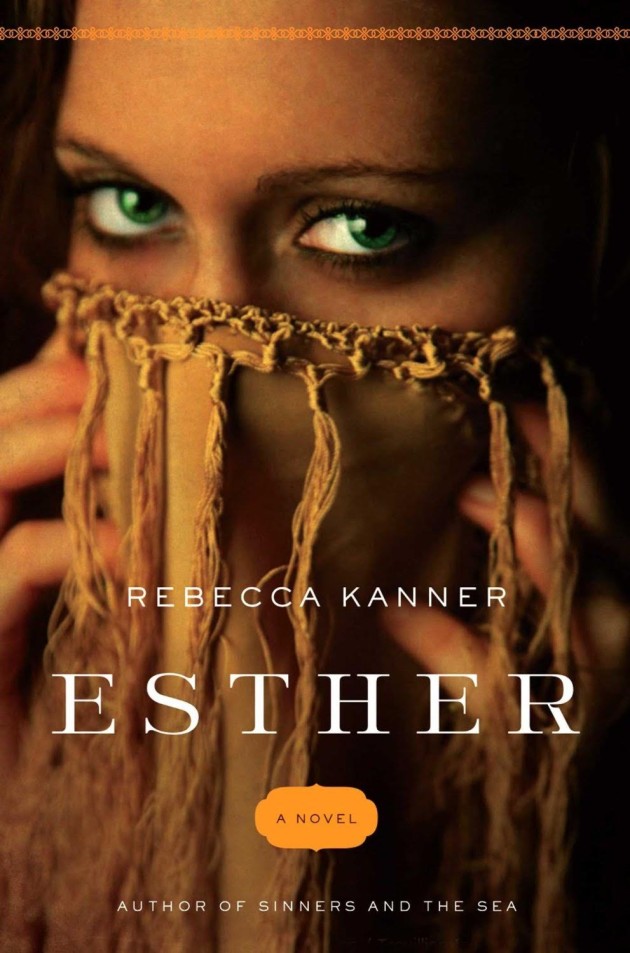 A young Jewish girl is ripped from her hut by the king’s brutish warriors and forced to march across blistering, scorched earth to the capitol city. Trapped for months in the splendid cage of the royal palace, she must avoid the ire of the king’s many concubines and eunuchs all while preparing for her one night with the monarch. Soon the fated night arrives, and she does everything in her power to captivate the king and become his queen. Her name is Esther, and Rebecca Kanner has brought her memorably to life in this retelling of the Biblical story.
Kanner’s Esther learns that wearing the crown brings with it a fresh set of dangers. When a ruthless man plies the king’s ear with whispers of genocide, it is up to the young queen to prevent the extermination of the Jews. She must find the strength within to violate the king’s law, risk her life, and save her people. Kanner talks to Fiction Editor Yona Zeldis McDonough about how she went about researching the novel and what she did to make the ancient text feel new again.
Q: What drew you to the subject of Esther?
A: I was intrigued by the feat that Esther carried off—saving her people. I retold the story so that beauty and obedience weren’t her most important characteristics. I was inspired by looking at paintings of Anne Boleyn and reading descriptions of Cleopatra (as well as looking at pictures of the coins that feature her). While these women are widely believed to have been gorgeous, they were not actually pictures of traditional physical perfection. Their personalities, including both wit and charm, are what I believe accounted for much of their attractiveness. We have continued to mythologize their beauty as an explanation for their success (however short-lived it was for Anne Boleyn), instead of focusing on their intellects.
- 2 Comments
Feminists In Focus, The Lilith Blog
March 1, 2016 by Amy Stone
What Does a Star Do After Winning the Academy Award for Best Actress?
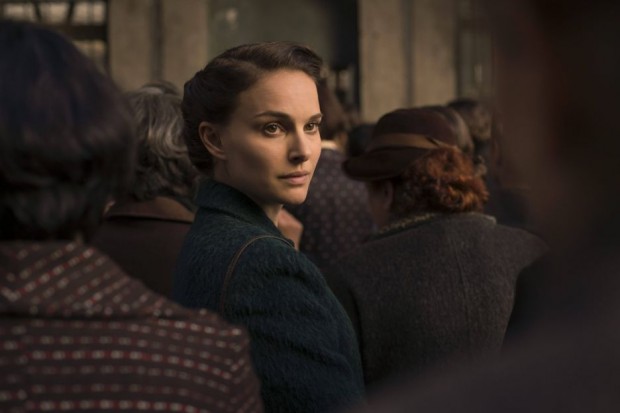
Natalie Portman in “A Tale of Love and Darkness.”
What does a star do after winning the Academy Award for Best Actress?
In a relatively short time, Natalie Portman went from her Oscar win for “Black Swan” in 2011 to starring in, directing and co-writing the film version of Amos Oz’s autobiographical novel “A Tale of Love and Darkness” (2015).
Her personal appearance, along with a crowd of paparazzi, brought a red-carpet buzz to the closing night of the 25th Anniversary New York Jewish Film Festival in January.
For those of us who track the successes for women in film, what a tour de force. Portman, who was born in Jerusalem and has dual US-Israeli citizenship, certainly did it her way. She had major control over the script, which she insisted be in Hebrew with English subtitles. She stars as Fania, Oz’s mother, who came to Mandate Palestine with romantic ideas from her privileged childhood in Poland. With a disappointing marriage in a harsh reality, she pours out her passion and gift for storytelling on young Amos.
But where were the other women filmmakers? With two weeks of films from around the world, from countries large and small, and subject matter in all shapes and sizes, I counted six female directors of feature films to nine males. Most surprising, for shorts, only three women directors to 11 men. For retrospective picks including guest selections, only one woman director (the recently deceased Chantal Akerman) to nine men. (Not to overly weight the statistics, I counted as one the male directing team of two men.) And surely the selection process is not biased against women. Aviva Weintraub, associate curator of the Jewish Museum, is the long-time director of the festival, which is presented by the Film Society of Lincoln Center and the Jewish Museum. Plus, women are well represented on the selection committee.
When I asked Weintraub if there were more women directors today than 25 years ago, she said she hadn’t counted, but probably yes. Clearly this issue is beneath the radar, even as the issue of sub-par status for women and minorities comes up regularly, dragged over the carpet at this year’s Academy Awards.
- No Comments
February 29, 2016 by Sarah Bunin Benor
Have You Noticed These Images in “Transparent”?
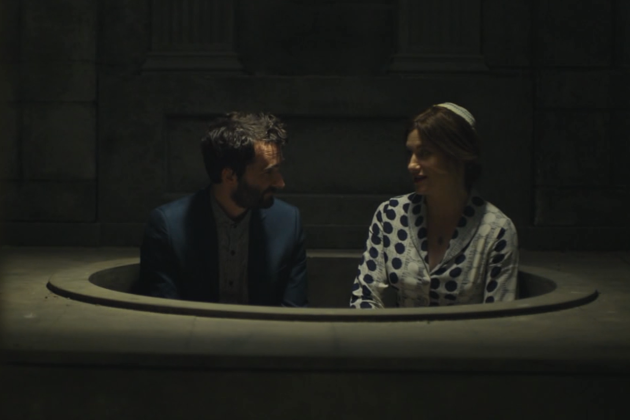
Josh and Raquel in the empty mikveh.
“I didn’t want to throw you off with too much Jewiness on a first date.” This is Raquel, the rabbi in Jill Soloway’s series “Transparent,” telling her love interest, Josh Pfefferman, why she’s not wearing her yarmulke. It’s also the approach the writers take to the show. It has been described as “arguably the Jewiest television show ever,” but the “Jewiness” comes in gradually. The first few episodes portray the Pfeffermans as cultural Jews—discussing Jewish names, picking up their standing order at Canter’s Deli, donating old items to the “Hadassah League,” recalling a relative who died in Treblinka, and sprinkling a few Yiddish words into their English, like fakakta (shitty), keppie (head), and shaitel (wig).
But by the sixth episode, Jewish themes—some of them religious—come to drive the plot. We see a Shabbat dinner, complete with wine, challah, exchanges of “Shabbat shalom” and “Good Shabbos,” a no-cell phone rule, and a conversation about which tune should be used for lighting the Shabbat candles. We see a 13-year-old perform her Torah portion after her bat mitzvah is cancelled (Lech Lecha—the portion of Genesis about Abraham leaving home, a fitting symbol for the show’s theme of personal transitions). When a man dies, his body is wrapped in white shrouds and buried after the singing of El Malei Rachamim; the guests wash their hands before entering the shiva home, and the mirrors are covered. Season 2 includes a Jewish wedding and a Yom Kippur episode chock full of Jewish rituals—asking for forgiveness, tossing bread into a pond, and pounding their chests penitentially during the Al Chet prayer in synagogue. Characters reflexively kiss mezuzahs and discard cracked eggs with blood spots. Yiddish and Hebrew words become more prominent. And, in flashbacks to 1933, we see the Pfeffermans’ ancestors fleeing Berlin because of the Nazis’ rise to power.
- 2 Comments
February 23, 2016 by Yona Zeldis McDonough
Why Did Véra Nabokov Destroy All Her Letters to Vladimir?
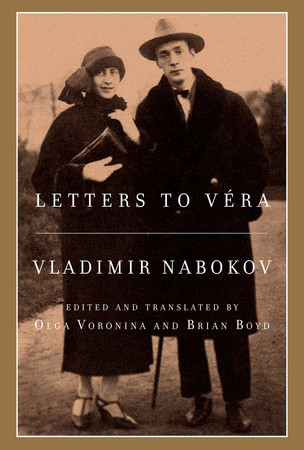 Véra Nabokov was half of one of the most famous—and enduring—literary couples of the twentieth century. She and Vladimir met in Berlin, in 1923, at a charity ball peopled with Russian expats like themselves. The party was a masquerade, and throughout the evening, Véra kept her face masked, a seemingly unimportant bit of behavior—except that it was not.
Véra Slonim was already aware of Nabokov’s reputation as a gifted poet who was quickly gaining prominence on the literary scene, and she rather boldly let him know of her admiration. Their courtship was playful and passionate, and they married in 1925, when he was 26 and she 23. For the next half century, Véra was Vladimir’s everything: first reader, editor, secretary, cook, maid, mother of his child, even protector—it was rumored she carried a gun in her purse. She was also Jewish, a fact that forces all the other facts about her to realign into a new and surprising order.
- No Comments
February 18, 2016 by Hanna R. Neier
“I Wasn’t Stopped by the Glass Ceiling. I Was Stopped by the Parenthood Ceiling.”
 Sometimes, you think your life is going to go in a very particular direction. And then, it doesn’t.
Judith S. Kaye, the first woman to serve as New York’s Chief Judge, died this January at the age of 77. Born in 1938 to Polish Jewish immigrants, she paved the way for women in the legal profession. But, ironically enough, she never actually planned on going into law. What she wanted to be was a writer.
Way back when, I too wanted to be a writer. And, like Judge Kaye, I am the daughter of Jewish immigrants who fostered in me the drive to succeed—to get a parnasa, a career, make a living. I spent my childhood writing stories, but shied away from the uncertain livelihood of a freelance writer. I wanted to soar to the top.
So I went to law school. I planned on using my writing skills to advocate for others and support myself, a real parnasa. I graduated law school and got a job doing just that.
I lasted six years.
- No Comments
February 15, 2016 by Yona Zeldis McDonough
“The Man Who Got Her Pregnant Was Never Even Named”
I’ve always set my novels in New York City, where I was raised, and where, with brief exception, I’ve lived my entire life. This was less of an active decision than a default position. New York was familiar, New York was easy. I knew the nuances of the neighborhoods, the traffic patterns, the sounds of the birds, all without having to reach or stretch. But at a certain point, this very familiarity began to chafe, and I decided to expand my horizons. I settled on New Hampshire as the locale for my new novel, The House on Primrose Pond, because my husband is a New Hampshire native, and over the years, we’ve spent a good bit of time there. I wanted a place with which I was familiar, a place I could easily bring to life—because place does function as a character in a novel—and NH fit the bill.
 I already had my two main characters in mind—Susannah Gilmore (it had been Goldblatt, and changed by her grandfather Isaac) and her older neighbor, Alice Renfew. But somehow I wanted more, something big and cataclysmic that was connected to the state of New Hampshire that would, in some as-yet-to-be-revealed-to-me way, resonate with these characters and the particular challenges they faced. So I typed the words “New Hampshire tragedy” into Google, thinking I might find a flood, a fire, or a storm of epic and Biblical proportions.
Instead, I found a book entitled Hanging Ruth Blay: An Eighteenth Century New Hampshire Tragedy. I was hooked even before it arrived, with two-day expedited shipping, from Amazon. And when it did show up, I devoured Blay’s story with measure of fascination and horror, and knew that I had incorporate these eighteenth-century events into the contemporary story of Susannah and Alice.
- No Comments
February 9, 2016 by Eleanor J. Bader
Which of These Heroic Holocaust Women Have You Heard of?
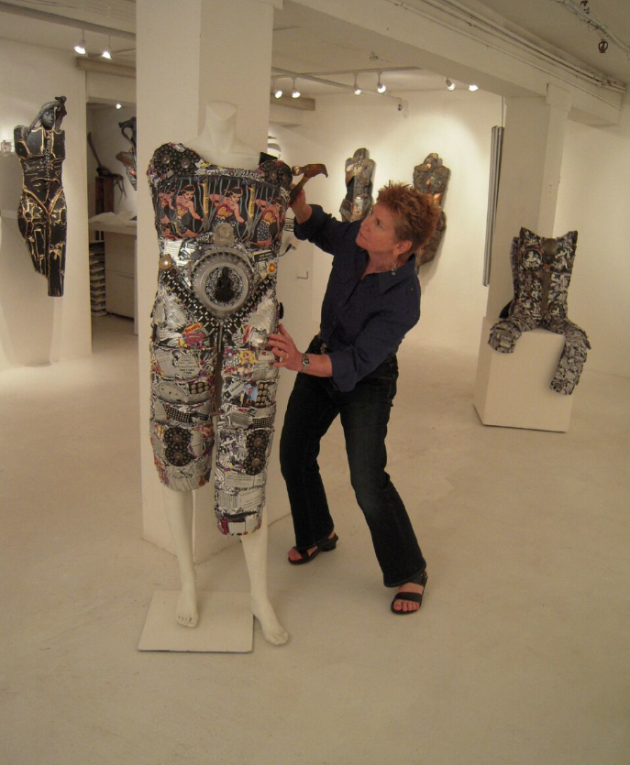
Stein with Sculpture, 2010
Feminist artist Linda Stein wants every human being to be what she calls an “upstander,” not a bystander. Whether this means speaking out against oppression; defending someone who is being bullied, ostracized, or persecuted; or simply showing compassion to a person in need, her work is meant to encourage action over passivity.
Her most recent effort, a series of tapestries, sculptures and collages, is called Holocaust Heroes: Fierce Females, and pays homage to 10 women, half of them Jewish and half of them not, who exhibited almost-unimaginable “upstanding” courage during World War II.
Some, like Anne Frank (1929-1945) are well known. Others, like Vitka Kempner (1920-2012) are not. Kempner was a leader in the resistance that formed in Lithuania’s Vilna ghetto, and, as part of the United Partisan Organization, was the first woman to participate in blowing up a Nazi train. Other women memorialized by Stein include Noor Inayat Khan (1914-1944), the first female radio operator to be sent from Britain to assist the French resistance; Nancy Wake (1912-2011), a New Zealand native who became an underground courier; and Ruth Gruber (still alive at 104), an American journalist and photographer who not only interviewed camp survivors after the war—bringing their stories to international attention—but had earlier risked her life to rescue 1,000 Jewish refugees and wounded American soldiers.
- No Comments
February 8, 2016 by Sharon Glassman
The Tzedakah Valentine
Do you feel, in your heart of hearts, that Cupid’s annual holiday glorifies everything that’s wrongly romanticized and commercialized about love?
- No Comments
February 5, 2016 by Amy Stone
Warning: Miri Regev May be Harmful to Israeli Culture
 Miri Regev made page one of The New York Times. She’s the right-wing face of what The Times headlined as “Culture Wars Shift in Israel to Art Realm” (Jan. 30, 2016). Make the front page of The Times and you’re well on your way to being the Israeli that we American Jews rush to love or hate.
But back in November, the Other Israel Film Festival at the JCC Manhattan beat The Times to the punch at its panel “Israel’s Freedom of Speech.” Four outspoken Ha’aretz editors and reporters along with filmmaker Mor Lushi spoke critically of Regev’s chilling effect as Netanyahu’s Minister of Sport and Culture. This divisive defender of Israel approaches culture with the same zeal she brought to her brief stint as chief press and media censor for the Israeli army, followed by IDF spokesperson during Israel’s disengagement from Gaza in 2005 and the 2006 Lebanon War.
Minister of Sport and Culture since last May, Regev only joined the Likud Party in 2008, at the age of 43. She was elected to Knesset the next year, last on the Likud list of 27 candidates winning seats.
Disturbing examples of Regev’s wielding her budget for patriotic purity: She attempted to freeze funding for Haifa’s al-Midan Arab-language theater for producing a play about a Palestinian terrorist. She threatened to block state funding for the prestigious Jerusalem Film Festival unless it removed the documentary “Beyond the Fear,” on the assassin of Prime Minister Yitzhak Rabin.
- No Comments
February 3, 2016 by Sandy Eisenberg Sasso
Secrets of Jewish Love and Marriage
Ten years ago my daughter was getting married, and I wanted to give her a gift of Jewish love stories which included her own. In searching for the very best stories, ones that might share love’s wisdom, I looked to a good friend and folklorist, Peninnah Schram. She suggested a number of beautiful narratives. As we talked, I proposed that we put together an anthology of Jewish stories of love and marriage. Not only could we provide an important historical collection, we could also show the evolving and eternal nature of romance. There was nothing like this available.
 Neither of us had the time then, but we never abandoned the idea. One day we would create a book, Jewish Stories of Love and Marriage. When my daughter and son-in-law were celebrating their tenth anniversary, we were ready. Before we could even off a proposal to a publisher, we would have to do our research. All through those study months, Peninnah and I would call each other to share what amazing material we were finding. Each narrative had its own power and beauty; together they wove a tale of joy and sorrow, defeat and triumph, spontaneity and tenacity. Every day we found a new story, it was like opening a surprise gift. Every night I would pour a glass of wine and read those legends to my husband, Dennis. It was like renewing our vows.
One unexpected discovery was the story of Pearl, the wife of Rabbi Judah Loew of Prague. I knew the rabbi of Golem fame, but not Pearl, the clever and wise student of Talmud. The two are buried side by side in the Jewish Cemetery of Prague. One tombstone sits over both their graves. When I stood before that grave with a group of fellow travelers, I told her little known story.
We hadn’t anticipated including love letters in the anthology. But we kept finding such stunning correspondence that we decided to devote a section of the book to them. Reading the correspondence of Alfred Dreyfus (the Jewish French captain falsely accused of treason) and Lucie Hadamard, Martin and Paula Winkler Buber, we were witness to playful wit and compassionate longing. We came to understand in a much deeper way how those relationships sustained and fostered their creativity. Particularly important for us was how these letters often gave women a voice.
- No Comments