 Please wait...
March 25, 2011 by Jill Finkelstein
Link Roundup: Remembering the Triangle Shirtwaist Factory Fire
Welcome to this week’s installment of Lilith’s Link Roundup. Each week we post Jewish and feminist highlights from around the web. If there’s anything you want to be sure we know about, email us or leave a message in the comments section below.
 Today marks the 100th anniversary of the Triangle Shirtwaist Factory fire. Check out the Jewish Daily Forward for more information about the tragic fire and to read original coverage from the Yiddish Forverts. [The Forward]
UPDATED: Take a look back at Lilith’s previous commemoration of the Triangle Shirtwaist Factory fire, retold in comic-strip form by Trina Robbins. [Lilith]
Famous convert and Hollywood icon, Elizabeth Taylor died of congestive heart failure this past Wednesday. Elizabeth converted to Judaism in 1959 and was deeply committed to Jewish and Israeli causes during her lifetime. [The Forward]
A bomb went off at a crowded bus stop in Jerusalem on Wednesday, leaving 1 dead and 30 injured. The victims were rushed to Hadassah Hospital in Ein Karem. [Ha’aretz]
In light of the recent attacks on Israel, Allison Kaplan Sommer wrote about the practical fashion choices Israeli women must make in case of a rocket attack. [The Sisterhood]
Amnesty International is condemning Egyptian authorities for forcing female protestors to take “virginity tests.” At least 18 women have come forward as victims of the invasive “tests” and have reported being brutally attacked while being held in military detention. [Jezebel]
Princeton University’s Steering Committee on Undergraduate Women’s Leadership released a report on the gender gap in undergraduate leadership positions. The committee found that female students often took less visible jobs, were discouraged from taking more prominent leadership roles, and frequently undersold their accomplishments. The report also stated that, “Women are expected to be poised, witty, and smart—but not so witty or smart as to be threatening to men.” Though the report looked only at Princeton students, the study has wide relevance–to collegiate females everywhere and to all interested in women’s leadership. [Princeton University]
- 1 Comment
March 22, 2011 by Liz Lawler
Horton Hatches Her Own Egg: Yes, I had My Own Baby
My child was intended. Meaning—I intended his life, and intended to parent him. There was a decisive moment when we entered into “the process” so to speak. So I remember what it feels like to gaze wistfully at other people’s children, what it feels like to think, “yikes, what if it doesn’t happen for us?” The question was settled blessedly early. Getting and staying pregnant (at least this time around) was no problem. But certainly, I know how overwhelming that impulse is. I understand really wanting a kid.
 I wonder, in hindsight, what lengths I might have gone to in order to get one. IVF? Maybe. Adoption? Sure. Surrogacy…..? That one gives me pause. Could I really ask another woman to go through this (NSFW!) for me? I outsource many essential functions in my life: I have a hair stylist, a cleaning lady, a plumber. But is this really a task that I want to delegate? For one thing, cutting my hair and scrubbing my toilet don’t require the maid or my stylist to strip mine their own bodies.
Elton John got me pondering this. I don’t normally spend much time on Sir Elton, but this caught my eye. He and his partner just welcomed a son, via surrogate. They had been denied an adoption due to Elton’s age and sexuality. So, surrogacy was the next step. The sexuality thing complicates the issue, this isn’t just about women’s or children’s rights; there is a civil rights angle to consider. Adoption is heavily and often arbitrarily policed, really the only realm of child-bearing/procurement that is. It is, sadly, easier to buy a kidney than it is to adopt a child. (more…)
- No Comments
March 18, 2011 by Jill Finkelstein
Link Roundup: Marriage, Divorce, and Purim
Welcome to this week’s installment of Lilith’s Link Roundup. Each week we post Jewish and feminist highlights from around the web. If there’s anything you want to be sure we know about, email us or leave a message in the comments section below.
 With Purim beginning tomorrow night, Yosef Goldman reminds us of the objectification of women mentioned in the megillah and offers ideas on how to celebrate the holiday feminist-style. [Jewschool]
When it comes to Purim costumes, parenting columnist Marjorie Ingall asks why we are more comfortable with little girls dressed up like boys than little boys dressed up like girls. [Tablet Magazine]
In honor International Agunot Day, which occurred yesterday on the Fast of Esther, the National Council of Jewish Women called upon Israel’s Knesset to enact divorce reform. The term aguna, literally meaning anchored or chained, refers to a woman who is “chained” to a marriage and is unable to remarry because her husband refuses to grant her a get, a divorce document required by Jewish law. [NCJW]
Is the word “Jewess” an ethnic slur? Sala Levin explores the history of the “retro” term that is currently making a comeback. [Moment]
Slate writer KJ Dell’Antonia described the backlash against parenting bloggers who write about not loving their children and what comments cross the line. [Double X]
An Israeli couple is awaiting a decision from Israel’s attorney general on whether or not they have the right to their deceased son’s frozen sperm. Their son, Ohad Ben-Yaakov, was not married and died at the age of 27 due to a work-related accident. If granted permission, the couple hopes to find a surrogate carrier to give birth to their posthumous grandchildren. Currently, Israel law only allows the wife or partner of the deceased the right to use the sperm for posthumous reproduction. [Tablet Magazine]
On Wednesday, a bill to repeal the Defense of Marriage Act (DOMA) was introduced into the U.S. House of Representatives and U.S. Senate. If repealed, it would lift the ban on same-sex marriage in the United States. [Washington Blade]
Israeli Rabbis from the religious Zionist community launched an initiative to marry gay men to lesbian women. So far they have performed 11 of these marriages. [Ha’aretz]
In response to the devastating tsunami in Japan, Jewish and Israeli groups rushed to send support. Israeli organizations Zaka and IsraAid sent search-and-rescue teams to Japan, while many Jewish groups are working hard to raise money to help with relief efforts. The Chabad center in Tokyo has also been sending food and supplies for a bakery that the organization commissioned in the city of Sendai. Visit here to find out how you can help the victims. [JWeekly]
- No Comments
March 17, 2011 by admin
Sisters in Arms
Elisa Albert, author of The Book of Dahlia and How This Night is Different, writes for Tablet Magazine about how “playing the defiant Vashti in a day school Purim play awakened [her] inner feminist.”
A couple of thousand years after Haman was sent to his death for trying to persuade King Ahasuerus to execute all the Jews in his kingdom, a motley group of fifth- and sixth-graders at Temple Emanuel Community Day School of Beverly Hills (motto: “Living Judaism!”) pulled out all the stops on a Purim musical revue spectacular.
We all wanted to be Esther, of course, the heroic, beautiful, self-sacrificing beloved of the King. The ingénue savior of the Jews, and so thin from all her fasting! She was going to get to wear a dirndl and sing a re-lyricized “My Favorite Things.” Second choice would have been to play a member of Esther’s harem, biblical pole-dancers with veils, MC Hammer pants, exposed midriffs, sequins. Ahasuerus, surrounded by his minions and ogling a parade of bachelorettes, was given to breaking the fourth wall, winking at the audience, and exclaiming, a la Mel Brooks, “It’s good to be the king!”
I was cast as Vashti and was, at best, ambivalent about it. She was the shrew. The cast-off first wife, a mere footnote to the story of Esther’s bravery and the salvation of the Jewish people. My costume was a modest polyester gown and my big number was “I’m Gonna Wash That King Right Out of My Hair.” I was last seen on stage protesting the beauty pageant, pacing back and forth downstage, alone, with a large sign that read WOMEN UNITE!
Keep reading here.
Related: ‘Commentary’: Feminists Are Ruining Purim
- No Comments
March 15, 2011 by admin
The Whole Megillah–Lilith Style!
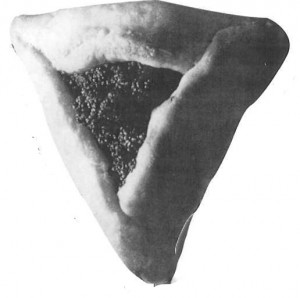 And now, for your reading pleasure, a new way of thinking about Purim from Lilith’s senior editor, Rabbi Susan Schnur, in a four part series:
Our [Meaning Women’s] Book-of-Esther Problem
From Prehistoric Cave Art to Your Cookie Pan: Tracing the Hamentacsh Herstory
The Womantasch Triangle: Vashti, Esther and Carol Gilligan (A Developmental Look)
The Once and Future Womantasch: Celebrating Purim’s Full Moon as “Holy Body Day”
Enjoy, and share your own Purim reflections below.
The Lilith Blog is brought to you with the generous support of our donors.
- 5 Comments
March 13, 2011 by Amy Kronish
Feminists in Focus: Blurring the Line Between Reality and Fantasy in the films of Michal Bat-Adam
 Israeli actress, director and scriptwriter, Michal Bat-Adam, challenges our concepts of reality and fantasy by creating fine lines that delineate between the contemporary reality and memories of the past and between the actress’ real self and the role that she is playing. Bat-Adam has made ten Israeli feature films, all dealing with complex and intense relationships, unique friendships, and passionate loves of women, many of them personal films based on autobiographical elements.
In her most recent film, Maya, Bat-Adam takes a look at how an aspiring actress can become overly emotionally involved with her first role, to the point that it takes over her rational life and affects everything around her. Maya lands a major role in the theater, playing a young woman who goes crazy when her parents force her to have an abortion. The script of the play is written by the stage director, with whom Maya becomes involved. As Maya is becoming obsessively involved with her character, she goes to a mental hospital to learn more and she begins to see things in a radically different way from the director/scriptwriter/lover. Slowly, it becomes apparent that Maya can’t stop herself from actually becoming her character, and from interpreting her role in her own way. (more…)
- 1 Comment
March 12, 2011 by Jill Finkelstein
Link Roundup: International Women's Day and the Fight for Equality
Welcome to this week’s installment of Lilith’s Link Roundup. Each week we post Jewish and feminist highlights from around the web. If there’s anything you want to be sure we know about, email us or leave a message in the comments section below.
 Women around the world gathered together on Tuesday, March 8th in honor of the 100th anniversary of International Women’s Day. Many women spent the day participating in protests, marches, and other festivities to celebrate the fight for women’s equality. [NPR]
Dr. Rachel Levmore explored how the day is used as a “a platform for what is known in Jewish tradition as cheshbon hanefesh – a combination of account-taking and reflection.” [JPost]
Rabbi Laura Geller also wrote an excellent piece in honor of International Women’s Day about the advancement of Jewish women. [Huffington Post]
Yad L’Achim, a Haredi organization in Israel, recently began rescuing Jewish women from their abusive Muslim husbands in the Palestinian Authority. Feminists have been known to remain silent on issues regarding Islamic women and girls. Caroline Glick writes, “It is not feminism that motivates its members to save these women. It is Jewish law.” [JPost]
The Puah Institute introduced a new course designed to teach rabbis how to offer sex counseling to ultra-religious couples. The course will also offer its students a “sexual counselor” certificate. [Ynet]
On Monday, U.S. Supreme Court Justice Sonia Sotomayor discussed the sexist nature of her confirmation hearing, in which she was asked a series of questions about her dating life. [The Atlantic]
On Wednesday, the U.S. Senate rejected the U.S. House’s spending bill that would have stripped Planned Parenthood of all federal funding. Despite this victory for pro-choice groups, the GOP plans to continue fighting for the defunding of Planned Parenthood and its other anti-choice legislation. [Women’s eNews] [Kaiser Health News]
Individual states have also taken extreme measures in the war against women’s reproductive health. South Dakota’s Senate passed a bill requiring women to wait 72-hours and visit an anti-abortion “crisis pregnancy center (CPC)” before being able to obtain an abortion. [NPR] Indiana introduced a bill that would require doctors to tell women that having an abortion is linked to breast cancer. The bill would also outlaw abortions after 20 weeks and require women to view an ultrasound of the fetus. [Huffington Post]
- No Comments
March 9, 2011 by Bonnie Beth Chernin
Israel’s Starry, Starry Night
 The first time I visited Israel in 1979, Sadat and Begin signed the peace treaty between Egypt and Israel. The announcement came over the radio while I sat on the ground near lush grapefruit trees and drank coffee poured from a thermos, on break from picking the yellow fruit. The Israelis who listened to the news with me responded with weary skepticism, “We’ll see what this means.”
The first time my daughter visited Israel on our family trip this February, Egypt was again taking a momentous step as the people of Egypt forced out Mubarak and demanded greater freedom. The Israelis we met along the way again expressed skepticism, “We’ll see how this plays out.”
And while the calls of democracy that began in Tunisia and Egypt and spread to Libya suggested a seeming realignment of longheld stars, during our stay in Eilat, in the south of Israel, my husband, daughter and I, along with a group of other families, saw the Israeli night sky in its full array of comforting constellations, the stars in place in their trusted positions.
A friend had organized the trip through Dark Sky Safari with guide Eitan Schwartz who brought his telescope to a site outside the mountains of Eilat. He spread out blankets so we we could lie down and see the sky. He also brought a powerful, green laser pointer that traced a direct line to the stars in their patterns. (more…)
- 2 Comments
March 1, 2011 by Maya Bernstein
Witch
When my grandmother babysat for us when I was young, we always played “Witch.” This was a glorified version of Hide and Seek, in which the witch hunted for the innocent children with the hope of capturing and cooking them in her cauldron for supper. My grandmother was the witch, of course, since, hands down, she had the best cackle, and since she had invented the game. We hid (I remember the soft feel of the velour on the back of the chair in the corner of my parent’s bedroom), and she walked around the hallways, cackling and talking in her witch voice, threatening to find us. I don’t remember if she actually found us, or if we simply emerged, terrified, but she appeased us with pots of spaghetti and slices of mozzarella cheese. She’d sing us to sleep in her low alto, and laugh that she was a terrible babysitter, and that we weren’t allowed to repeat anything she said to our parents.
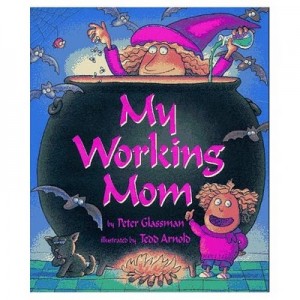 Memories of playing Witch with my grandmother came flooding back at me when I opened last week’s New Yorker magazine to Tina Fey’s article about the challenges of being a working mother. Fey’s daughter comes home from preschool one day with a book with a witch on the cover called “My Working Mom.” Though her daughter is pre-literate, Fey reads into this – my mother the witch who voluntarily goes to work – unleashing her relentless, unforgiving internal debate about whether or not she should take a break from her thriving career to have a second baby. On the one hand, she argues: “And what’s so great about work, anyway? Work won’t visit you when you’re old. Work won’t drive you to the radiologist’s for a mammogram and take you out afterward for soup.” On the other, in addition to the fact that many people depend on her for their jobs, she is also breaking through glass ceilings in comedy, an industry still dominated by (sexist) men, which is why, she writes, “I can’t possibly take time off for a second baby, unless I do, in which case that is nobody’s business and I’ll never regret it for a moment unless it ruins my life.” (more…)
- No Comments
February 28, 2011 by admin
A Look Back on Black History Month
 As we come to the end of Black History Month, let’s take a look back at some of Lilith’s writings on the topic.
Fall 1996: “Are You Black or Are You Jewish?” Resisting the Identity Challenge
by Sarah Blustain
The children of those black-Jewish marriages forged in the halcyon days of the 60’s Civil Rights movement have come of age. They talk here about their Jewish mothers, their pain at having to choose an identity, and the confusion they feel about a society that denies them their double birthright.
Fall 1999: Unsung Heroines of the ‘60s: Jewish Women Who Went South
by Debra L. Schultz
Women in the civil rights movement integrated bus terminals, taught in Freedom Schools, registered black voters and served time in Southern jails. Now they talk frankly about the danger, their mothers’ reactions, and what in their Jewish consciousness propelled them.
Winter 2002: Jewish Girls and African-American Nannies
Lilith asked readers to dig deep, for the first time, into these experiences. The results are stories of love and complexity. In these pages grown-up Jewish daughters begin to think through the lessons, the gratitude and the guilt of these intensely intimate dyads. We also listen to three nannies on the other side of these relationships.
- No Comments