 Please wait...
May 23, 2012 by Sheva Zucker
Candles of Song: Yiddish Poems about Mothers Rajzel Zychlinksy
Yiddish poems about mothers, in memory of my mother, Miriam Pearlman Zucker, 1914-2012.
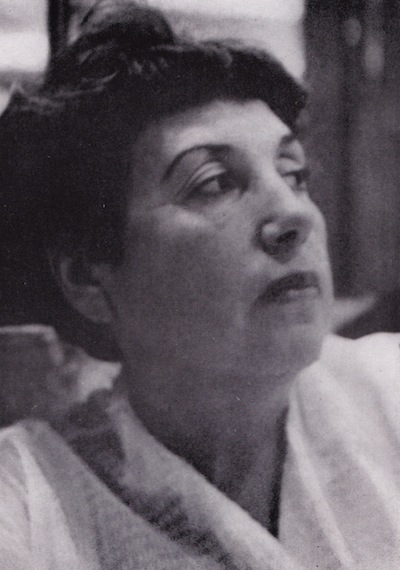
Photo of Rajzel Zychlinksy
Rajzel Zychlinksy (1910-2001) was born in Gombin, Poland in 1910. Her first book of poems, Lider (Poems), published in 1936, included a very laudatory foreword by the celebrated poet Itsik Manger. She and her husband, the psychiatrist and author, Dr. Isaac Kanter, left their home in Warsaw during the Second World War and took refuge in Russia where their son Marek was born.
In 1951, Zychlinksy emigrated to New York. She lived there until the last few years of her life, when she moved to Berkeley, California, to join her son. She published several volumes of poetry in Yiddish, among them, Tsu loytere bregn (To clear shores), 1948, Shvaygndike tirn, (Silent doors), 1962), Di November-zun (The November sun), 1977 and Naye lider (New Poems), 1993. In 1975 she was awarded the prestigious Manger Prize for Yiddish Poetry. The Holocaust is a major theme in her work.
A fine selection of her poems has been published in English in the book God Hid His Face: Selected Poems of Rajzel Zychlinsky, translated by Barnett Zumoff, Aaron Kramer, and Zychlinsky’s son, Marek Kanter.
Here, Mame, by Rajzel Zychlinksy, read by Sheva Zucker:
- No Comments
May 15, 2012 by Amy Stone
On the Dangerous Dykes Book Tour
 This past week was a good one. President Obama finally came out in support of same-sex marriage. In contrast, homophobia still holds sway in the worlds of Orthodox Judaism, even within the enlightened academic stronghold of modern Orthodoxy — Yeshiva University (YU) and its women’s undergraduate school, Stern College, both in Manhattan.
Two days before Obama made his announcement, a crowd of more than 100 piled into the offices of JOFA (Jewish Orthodox Feminist Alliance) for the book tour of the anthology Keep Your Wives Away from Them – Orthodox Women Unorthodox Desires. The event was sponsored with Eshel, an organization working to build support for lesbian, gay, bisexual and transgender Jews in traditional Jewish communities.
You’ve got to love a book whose cover looks like a photo from yesteryear of a sweet looking dyke in drag, straight out of the shtetl. The book’s essays speak personally and halachically (according to Jewish law) of lesbian, bi and transgender sexuality within Orthodox Judaism. The book tour’s goal is to connect traditionally Jewish and Orthodox lesbian, bi, trans and queer people to each other and to raise awareness in the Jewish community about being LGBTQ and Orthodox.
- 3 Comments
May 14, 2012 by Julie Sugar
Orthodox Judaism, My Soul is Sick with Love for You

http://www.flickr.com/simplyboaz
On Thursday, the Orthodox Union issued a statement publicly opposing the President’s recent stance on same-sex marriage. I read it that afternoon, got up from my desk, walked into the office bathroom, and cried. If the OU does indeed represent Orthodox Judaism, as they assert, the path towards a more honorable Orthodoxy seemed too long. I conceded to myself that feminism or LGBTQ inclusion within the movement really is an oxymoron, a fantasy. It was time for me to finally break up with Orthodox Judaism.
Yet on Shabbos morning I was back in my Orthodox synagogue, holding the Torah and reading a prayer out loud on behalf of the congregation.
Participating in that part of the service—either reading aloud the prayer for the American government, for the State of Israel, or sometimes both—has been bittersweet because it is an innovative but limited opportunity for women to have an increased role in the ritual space. See, I believe that increased sensitivity and inclusion within the framework of halakha, traditional Jewish law, is not only feasible, it is a communal obligation. While this year I became less observant again (I grew up completely secular), and I haven’t currently been identifying as Orthodox, I have stayed in an Orthodox community because I feel compelled to work from within the movement to increase opportunities for women in the ritual space while remaining within the contours of halakha. Thankfully I am not the only one thus compelled; there are other people, entire organizations, and communities like mine working towards a shared vision of an ever-improving and increasingly inclusive Orthodoxy.
- 11 Comments
May 14, 2012 by Sheva Zucker
Candles of Song: Yiddish Poems about Mothers Malka Heifetz Tussman
Yiddish poems about mothers, in memory of my mother, Miriam Pearlman Zucker, 1914-2012.
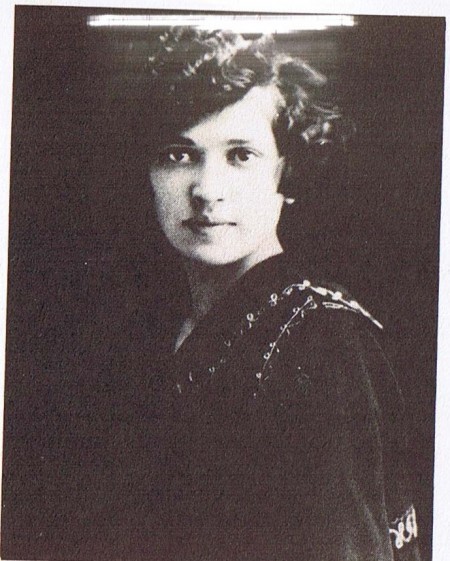
Photo of Malka Heifetz Tussman
Malka Heifetz Tussman (1896-1987) was born in Bolshaya-Khaitcha, Ukraine. She wrote her earliest poetry in Yiddish and Russian. She immigrated to the US at the age of 16 joining family in Chicago and began writing poetry in English but soon switched to Yiddish. She made her literary debut in 1918. She became a teacher in a secular Yiddish school in Milwaukee and studied at the University of Wisconsin. Later she, her husband and two sons moved to Los Angeles. In 1981 she was awarded the prestigious Itsik Manger Prize for Yiddish Poetry in Tel Aviv. Her poetry, according to the introduction in With Teeth in the Earth: Selected Poems of Malka Heifetz Tussman, translated and edited by Marcia Falk, “Frank and exploring, innovative in language – reveals the richness and complexity of a woman’s life.” She died in Berkeley, California. Heifetz Tussman published poems, stories and essays in Yiddish magazines both in America and Europe. Her six volumes of published verse include Lider (Poems), MIld mayn vild (Mild, my Wild), Shotns fun gedenken (Shadows of remembering), Bleter farn nit (Leaves don’t fall), Unter dayn tseykhn (Under your sign), and Haynt iz eybik (Today is forever).
Here, Vi Azoy Bistu Klug Gevorn, Mame, by Malka Heifetz Tussman, read by Sheva Zucker:
- No Comments
May 11, 2012 by Jill Finkelstein
Link Roundup: Same-Sex Marriage and Fighting the "War on Women"
Welcome to this week’s installment of Lilith’s Link Roundup. Each week we post Jewish and feminist highlights from around the web. If there’s anything you want to be sure we know about, email us or leave a message in the comments section below.
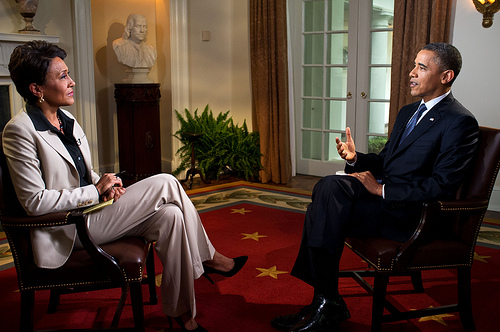
http://www.flickr.com/whitehouse
On Wednesday, President Obama made a historic endorsement of same-sex marriage. In an interview with ABC’s Robin Roberts, he stated, “At a certain point, I’ve just concluded that for me personally it is important for me to go ahead and affirm that I think same-sex couples should be able to get married.” [NY Times]
After three years of banning women from singing at events in South Africa’s Jewish community, most notably at Yom Ha’atzmaut (Israel Independence Day) and Yom HaShoa (Holocaust and Heroism Remembrance Day) events, a new organization called South African Centre for Religious Equality and Diversity’s (SACRED) has begun to fight back. This year, a compromise was made allowing women to sing at a Yom Ha’atzmaut celebration in Johannesburg, but only in a mixed choir, along with men. The organization released a video as part of their campaign to stop the discrimination. [Ha’aretz] & [Ha’aretz]
Lilith author Jennifer Rosner explained why she chose to communicate primarily with her deaf daughters in spoken language rather than sign language. [Motherlode]
Click HERE to read a fuller description of this mother’s parenting challenges and joys in Lilith’s current issue.
- No Comments
May 9, 2012 by Guest Blogger
My Writing Roots in Porn Lit
By Anonymous
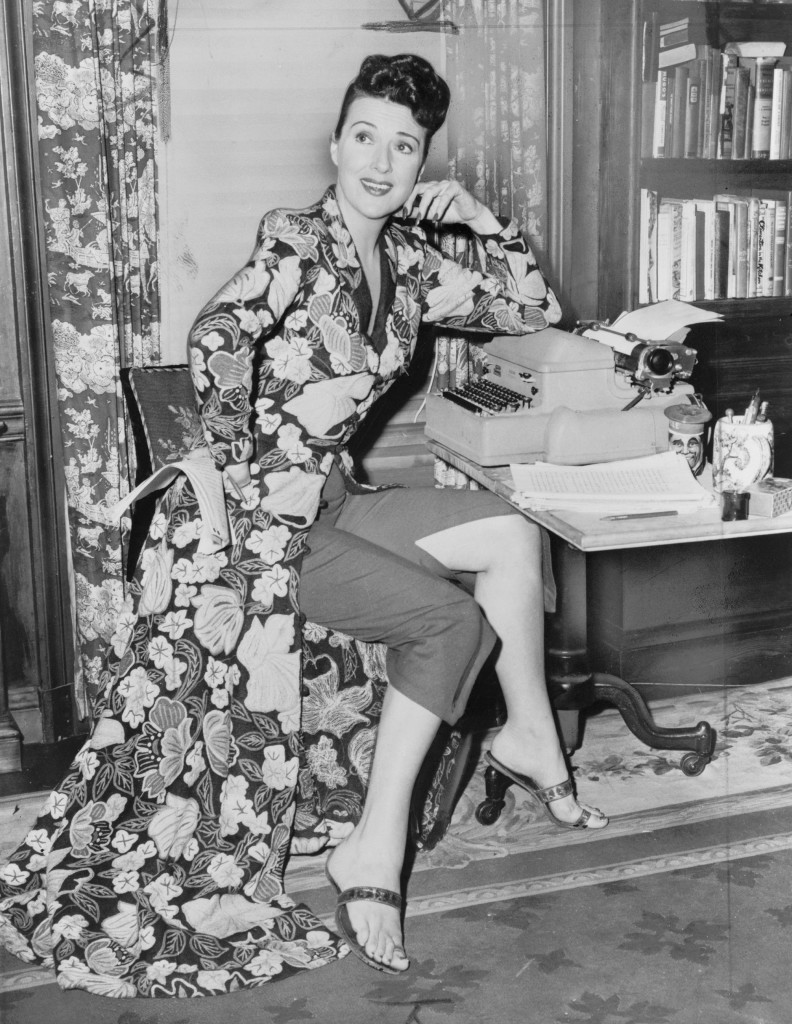
Gypsy Rose Lee seated at typewriter/ World Telegram & Sun photo by Fred Palumbo via Library of Congress.
The year was 1979. Ronald Reagan was in the White House, Leonid Brezhnev was in the Kremlin, and I had just tumbled, fresh-faced and clueless, from the idyllic confines of a Seven Sisters college in the mid-Hudson valley. I had a plan–graduate school at Columbia University in September–and my very first apartment, a shabby walk-up on 107th Street and Amsterdam Avenue, then a sketchy neighborhood just south of Harlem. But I needed an income, so I found a job as a waitress. On my first day I inadvertently charged one customer $14.60 for an iced coffee, splattered another with gobs of cheesecake from the slice I dropped, and was fired by the end of my shift. Time for plan B. I pored over the want ads in the Village Voice. Telemarketer? Nurse’s aide? Nothing clicked until I read this one:
STAFF WRITER
ADULT FICTION
I called the number and spoke to a woman who was far more interested in my typing skills than my literacy. She told me to write the first chapter of School Girl Crush, a playful, Sapphic romp set in an East Coast boarding school. “It should be around 20 pages long,” she said. “And it shouldn’t take more than four hours.” I’d written a lot of term papers over the past few years, but I had never churned out 20 pages in four hours. Then I thought: East Coast? Girls’ school? Hey, I was a natural. I conjured my own college campus: the scenic pond—where I had three characters go skinny dipping—and the gym’s communal showers—where two others had a passionate, lesbian encounter—and pretty soon, the chapter was written. The next day, I sat across a desk from Flo, a zaftig middle-aged woman with a head of corkscrew ringlets and a big, toothy smile. As she read my chapter, the smile got even bigger. “This,” she said, “is perfect. When can you start?”
- No Comments
May 8, 2012 by Patricia Grossman
A Conversation with Alix Kates Shulman

Alix Kates Shulman has been a passionate feminist voice for over 40 years, bringing to light questions of marital parity and other front-line issues of women’s rights in her memoirs and other nonfiction. Beginning with her first novel, the now- classic Memoirs of an Ex-Prom Queen, Shulman’s fiction has been praised for its wit, insight, and compassion. She is a past contributor to Lilith—the 1993 article “Gentiles and Jews at the Hop” and, most recently, an excerpt from her 2008 memoir To Love What Is. Readers will welcome this spring’s back-to-back publications, A Marriage Agreement and Other Essays and the novel Menage,“a brilliantly wry and entertaining comedy of desires” (Booklist), that is “delightfully wicked” (Kirkus).
In your sharp and funny new novel Ménage, Heather McKay is a stay-at-home mother and, for most of the novel, a would-be writer who puts up with her husband’s affairs in exchange for the extravagant and trouble-free life he gives her. Yet when Mack brings a notable dissident writer to live with them, she is bold in her seduction of him, as if she has nothing to lose. What drives her?
What drives her is a combination of literary ambition and ambivalence about the status of stay-at-home moms. Also, since Mack roams freely in the world while she’s lonely at home, she’s angry at him for his affairs and feels no qualms about having one herself. Ambivalence concerning both stay-at-home and working mothers is something that does not go away—note its renewed flare-up over Ann Romney. A recent Nation column by Katha Pollitt has the best analysis of that conundrum I’ve seen in ages.
- No Comments
May 7, 2012 by admin
PAULA HYMAN (1946-2011) At the Center of Change

Paula Hyman, pictured here with her daughter Judith Rosenbaum. Photo by Amy Stone.
At the time of her death in December, Paula Hyman was the Lucy Moses Professor of Modern Jewish History at Yale University. She had been the first female dean of the Albert A. List College of the Jewish Theological Seminary, the first woman president of the American Academy for Jewish Research, and co-founder of of the germinal Jewish feminist group of the 1970s, Ezrat Nashim. While still a graduate student, she authored what may have been the first social history of Jewish women, The Jewish Woman in America [1976], and then proceeded to transform the way that Jewish scholars think of such basic historical paradigms as assimilation and acculturation by viewing these phenomena through the lens of gender.
Most of the Jewish girls born in America today will take it for granted that women can be rabbis, count in a minyan, and read from the Torah. And Jewish historians being trained today are called to task when the do not take gender into account. Paula Hyman was at the forefront of the religious and intellectual struggles that generated these changes. Her influence extended both into the academy and far beyond it, affecting the lives of Jewish females in schools and congregations in ways of which many are still unaware.
The reflections that follow give some glimpses into her legacy, and the extraordinary ways in which she shaped the Jewish feminist world we live in today.
Read more in a free download from Lilith’s Spring 2012 issue.
- No Comments
May 2, 2012 by Yona Zeldis McDonough
Secret Agent Barbie

Photo via Mattel
Well, Barbie’s gone and done it again. Yes, the petite, plastic plaything has proved, once more, that she’s hardly a retrograde relic. Far from it. Barbie’s on the cutting edge—where, as a matter of fact, she has been since her inception in 1959.
Coming this summer, Mattel will bring out the Barbie Photo Fashion, a brand-new doll with an LCD implanted in her impressively toned tummy. A lens in her back allows her user—almost always a girl—to take pictures with the doll. In a word: Brilliant. Instead of the bimbo blonde who passively receives the male gaze, this new Barbie channels and harnesses nascent female power, by encouraging play of an entirely new kind. Yet again, Barbie has become a vessel and conduit, tapping into the inchoate desires of girls, and giving those desires a comprehensible form of expression in the world.
But to those of us who have known and loved her over the past five plus decades (and I count myself at the top of this list), there is nothing fundamentally surprising about this news. Barbie has always been a secret agent, a force for subversion and empowerment masquerading as a harmless, leggy pin up.
- No Comments
April 30, 2012 by Yona Zeldis McDonough
A Conversation With Debra Spark
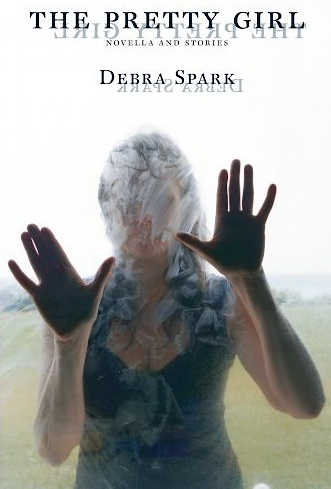 Debra Spark is a bit of a fabulist—her stories skirt the tantalizing territory between what’s real and what’s imagined. In this new collection, The Pretty Girl, Spark’s imagination creates a group of stories that are wholly off beat. She talks to Lilith’s fiction editor, Yona Zeldis McDonough, about where she gets her inspiration, her attraction to the visual arts and her fascination—and occasional frustration—with toy theaters:
In your linked short stories you create radically different characters, settings and even time periods in each of your stories. Can you say more about this decision?
I wrote these stories over a very long period of time, so that may be part of the answer. I actually think of the stories as connected, despite the variety, since many of them circle around the theme of art and deception.
You have written both novels and stories; do you have a preferred form?
I think I like novels better, since with a novel you only have to think up a new idea every few years, but with stories you have to do it ever few months!
The freshness and originality of your dialogue is really notable. Do you have any interest in writing a play or any other dramatic form?
Thank you. I love the theater, and I would love to write a play at some point, but I just don’t think I have the skills. I frequently go to the theater here in Portland, Maine, and whenever I do, I am newly amazed. Often when I know a play’s conceit in advance, I try to imagine how things will unfold, before I actually see the play. Invariably, what is to come is far richer than what I am able to imagine.
- No Comments