 Please wait...
March 1, 2013 by Yona Zeldis McDonough
A Conversation With Maryann MacDonald
My name is Odette.
I live in Paris,
on a cobblestone square
With a splashing fountain and a silent statue.
My hair is curly.
Mama ties ribbons in it.
Papa reads to me and buys me toys.
I have everything I could wish for,
except a cat.
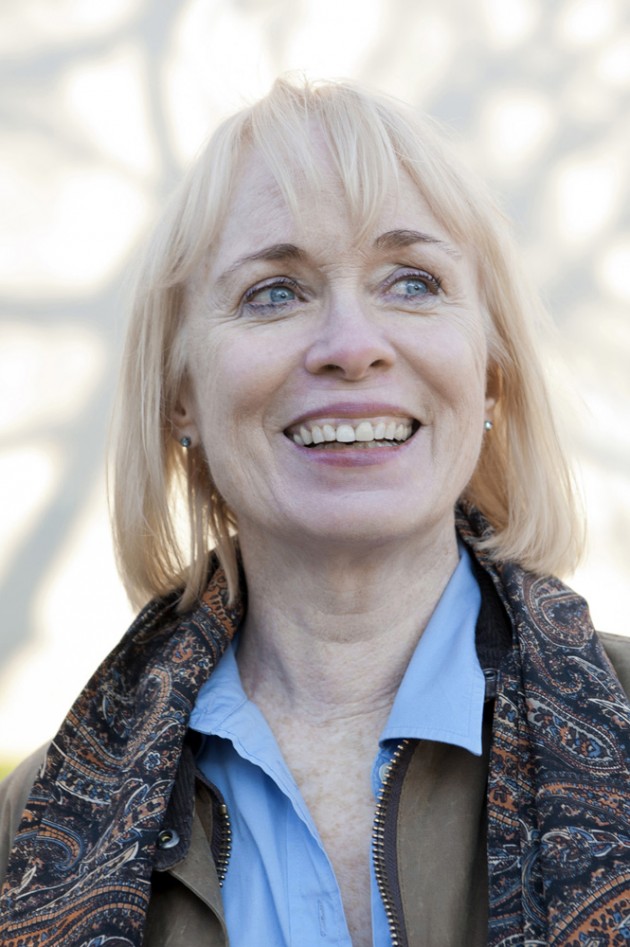
Photo credit: Stefan Falke
So begins Odette’s Secret (Bloomsbury 2013), a lyrical and haunting tale that was drawn from an actual story and reimagined by children’s book writer Maryann MacDonald. Lilith fiction editor Yona Zeldis McDonough talked to MacDonald about inspiration, Francophilia and the salvation offered by poetry.
Tell me, what inspired you to write this book?
One late August afternoon a few years ago, I was walking around the old Jewish neighborhood of the Marais in Paris with my husband. We passed an elementary school with a bronze plaque. The plaque honored the memory of the Jewish children, students at the school, who had been deported from France during WWII. I kept thinking about those children…who were they? What were their lives like in France during the war?
I began reading about life in Paris during World War II, especially about the life of French Jews. I learned that 11,400 children were deported. Most of these died. But more children survived in France than in any other European country. They were hidden in homes, convents, monasteries, farms and schools all over the country. To stay successfully hidden, these children had to “reinvent” themselves, to become Christian children. How had they been able to do this? And what was it like for them to readjust to reality after the war?
While I was at the American Library in Paris…by chance, I found Doors to Madame Marie, the autobiography of Odette Meyers, a woman who had been one of those hidden French children during the war.
I became fascinated by Odette’s story, and one night I shared it with my husband. Together we went to the 11th Arrondissement, to stand in front of the building where Odette had lived. “I so wish we could go inside!” I said, looking at the heavy oak door at the front of the building, a solid street door of the type that is always locked.
- 2 Comments
February 27, 2013 by Susan Weidman Schneider
Can You Make a Marriage More Equal?

www.kengoldmanart.com
Did you see MAKERS on PBS, with those many Jewish women trailblazers–like Sheryl Sandberg, Tiffany Shlain, Marissa Mayer (and many Lilith authors)?
Alix Kates Shulman talked about her classic “Marriage Agreement.” It still jolts people after all these years!
Shulman’s iconic, and iconoclastic, argument — that a woman and man should share equally the responsibility for their household and children — was derided when it first appeared in 1970. Norman Mailer, Russell Baker and Joan Didion were shocked, affronted. The real shock is just how resonant Shulman’s take on family politics still is today.
Check out the Marriage Agreement, which we reprised in Lilith’s Summer 2012 issue, along with a new ritual for egalitarian marriage in the 21st century.
Judge for yourself how much progress women have made.
- 1 Comment
February 26, 2013 by Hanna Sender
Seth MacFarlane Said WHAT?!
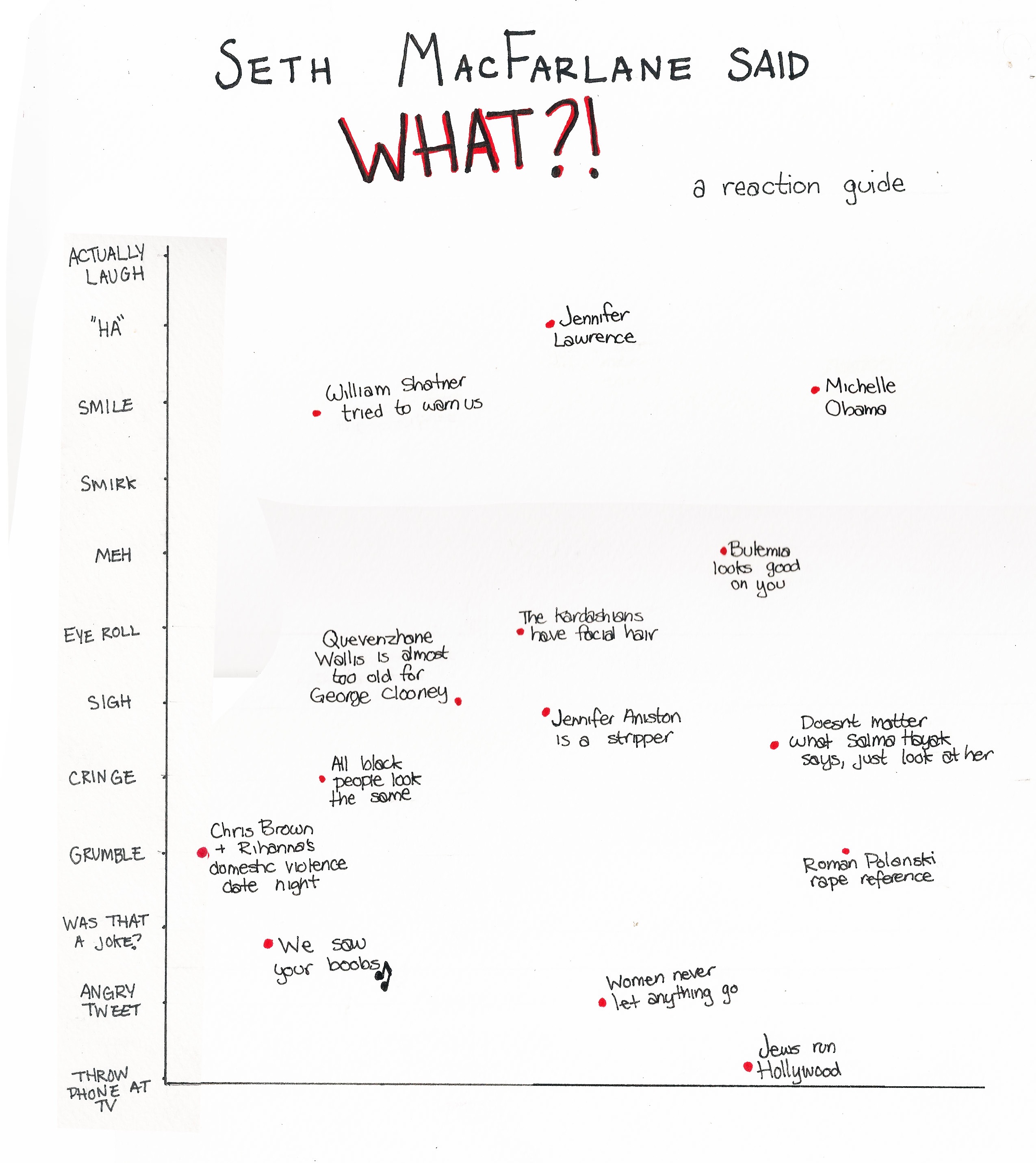 Chris Brown & Rihanna’s domestic violence date night
Seth MacFarlane opened the night as most hosts do, calling out nominees and talking about this years films. On Django Unchained he said, “This is a story about man fighting to get back his woman who as been subjected to unthinkable violence, or as Chris Brown and Rihanna call it – a date movie.” Apparently you CAN make a Tarantino movie more offensive.
We saw your boobs
An entire song, dance and chorus dedicated to seeing actress’ boobs. Because that is what is significant about their work.
Quevenzhane Wallis is almost too old for George Clooney
This ‘joke’ was directed more at George Clooney dating young women than at the always-sassy and talented NINE YEAR OLD Quevenzhane Wallis, but it is still a joke that sexualizes a 9 year old.
All black people look the same
MacFarlane explained Flight using puppets (just go with it) and when William Shatner as Captain Kirk (again, just go with it) told him “In this day and age, you can’t do black-hand any more!” Macfarlane’s response was: What? I love Denzel Washington! He has a great sense of humor, I mean, he did all those Nutty Professor movies…
Related racism: Macfarlane asked Daniel Day Lewis “If you bumped into Don Cheadle on the studio lot, did you try and free him?
The Kardashians have facial hair
Untrue and irrelevant. Moving on…
Women never let anything go
Zero Dark Thirty is a movie about a woman’s 12 year vendetta to find Osama Bin Laden which showcases “a woman’s innate ability to never ever let anything go.”
- 2 Comments
February 26, 2013 by Diane Balser
Non-Motherhood-by-Choice
For decades, the Jewish community has bemoaned the declining birthrate among Jews (except among the ultra-Orthodox). Now, secular America has caught up with Jewish worries, with reports examining what it means for the economic and social fabric when an entire population falls below replacement level.
But for many women, a decision not to have children plays out in more personal ways, as the numerous responses to a recent article in Newsweek’s The Daily Beast attest.
In a preview of an article to appear in a forthcoming issue of Lilith, read one woman’s journey through her choice not to become a mother.
As a Jewish woman who has chosen not to have children, how do I make sense of my life in the context of Judaism’s first commandment—God enjoining Eve and Adam, in Genesis 1:28, to “be fruitful and multiply, and fill Earth”?
I was raised in a religious home in the 1940s and ’50s, but I don’t remember either of my parents pressuring me to be a mother when I grew up. Still, isn’t that what Jewish females do? We grow up, get married, and then multiply.
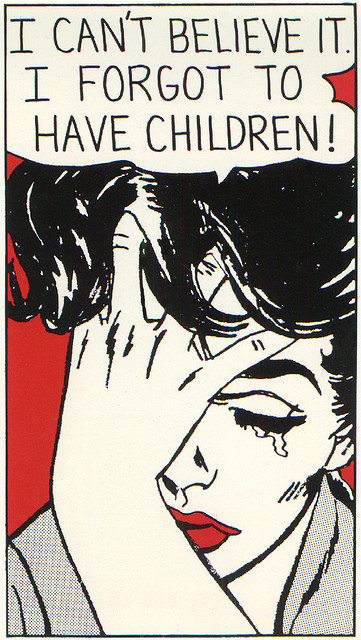
By early adulthood, I had left religious practice behind, believing, as a feminist, that a secular life would give me access to a lot more freedom. One day in the mid-1970s, I bought myself the iconic t-shirt of the era, the Roy Lichtenstein cartoon of a distraught woman with hot-red lips and the text bubble, “I can’t believe it. I forgot to have children.” I wore the tee as a joke until I realized it wasn’t. I needed a plan.
Would I be fruitful and multiply, or not?
I started an inventory of my girlfriends in the women’s liberation movement. Some had chosen single motherhood, some were helping their married friends raise their children, some, mostly lesbians, were choosing motherhood via artificial insemination. Some were going the conventional route, as had most of our parents. There were definitely options. I didn’t want to “forget” to have children, though. I wanted to make an informed, solid decision.
- No Comments
February 20, 2013 by Dasi Fruchter
Rabbis in Red Lipstick
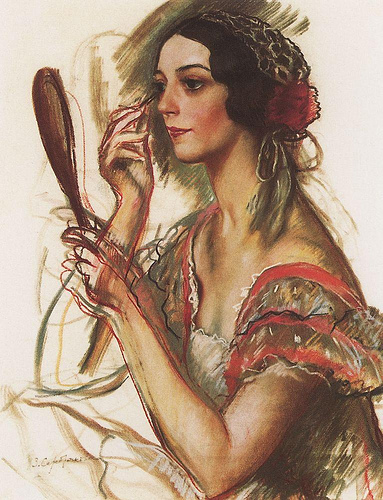
There are many things that play an important part in my morning ritual — a nice hot drink, a shower, morning prayers. One of the most important elements of my morning routine, however, is putting on my red lipstick. There is something so satisfying about applying the final smear of the creamy red across my lips before I walk out of the door–I feel instantly like a brighter, better version of myself.
My red lips have been my trademark for the last several years, and though the shade has varied, it’s always been red, red, and red. I’ve ventured from candy pink to seductive purples, and my personal favorite and general default, a true candy-apple red. In college, I spent hours defending my cosmetic habits to my feminist friends, who accused me of buying into patriarchal conceptions of beauty. I knew, however, that they didn’t quite understand why the contents of that tiny red tube were so vital. It was about making an active choice about my own gender expression in a way that made me feel all at once powerful, beautiful and uniquely feminine.
These days, as a person embarking on a lifelong journey of Jewish professional leadership — beginning my studies towards non-profit management at New York University’s Wagner School for public service — I continue try my hardest to bring my authentic self to the table as often as I can. Be it at a fundraising dinner, a board meeting, or in the office, I attempt to be fully present, bringing the traits I know to be my strengths — my energy, my genuine desire to connect with others and my drive to create inclusive community spaces — to my work. Oddly enough, the lipstick has become an essential part of making this happen. It is a final, dramatic touch — a flash of vibrant color — that urges me to truly turn up in the fullest way possible, wherever I am.
- 19 Comments
February 18, 2013 by Liana Finck
Overheard in New York
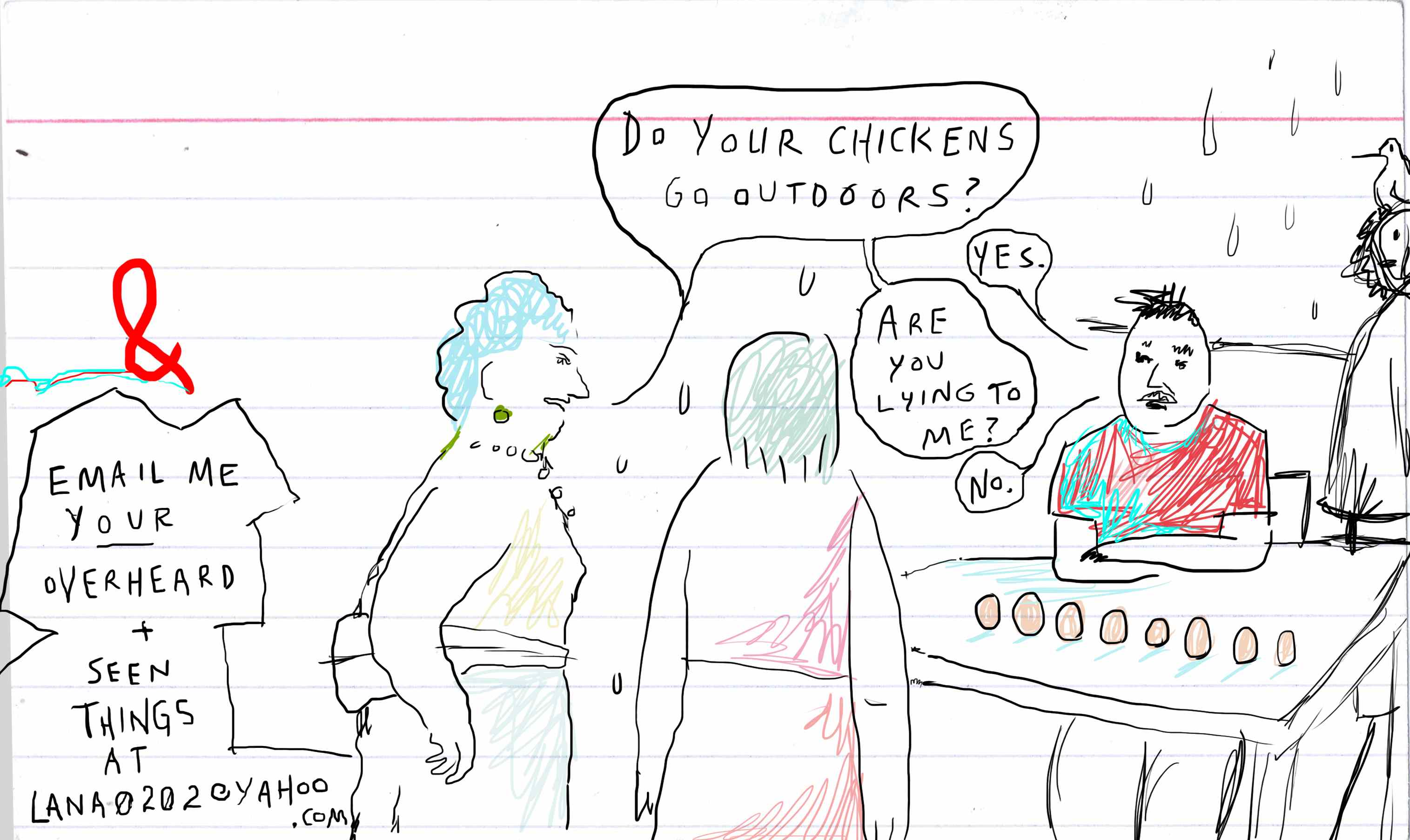
Liana Finck received a Fulbright Fellowship and a Six Points Fellowship for Emerging Jewish Artists. She is finishing a graphic novel, forthcoming from Ecco Press, based on the Bintel Brief, a beloved Yiddish advice column that was published in the Forward newspaper beginning in 1906.
- No Comments
February 14, 2013 by Amy Stone
Where the Women Are (At the 22nd Annual NY Jewish Film Festival)
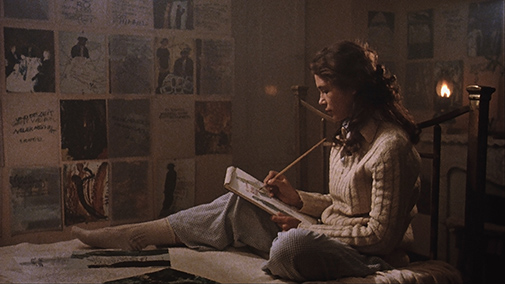
Life? Or Theatre?
Dutch director – male – obsessed with tragic German artist – female. German auteur filmmaker – female – honing in on interplay of intellect and sexuality driving renowned German-American political theorist – also female. Polish filmmakers – male – documenting a Polish town’s response to death camp transports but failing to get the only known survivor dropped from a train, a woman, to talk.
What do this year’s NY Jewish Film Festival offerings say about the roles of Jewish women when women and men make film? From a wide-ranging two weeks of domestic and international films, here come snapshots of three Shoah-related films: one documentary, one feature, one documentary short.
Long-time Dutch filmmaker Frans Weisz is a man obsessed with artist Charlotte Salomon, the subject of his 1981 feature film “Charlotte” and his freewheeling documentary, 30 years later, “Life? Or Theatre?”
Poor Charlotte. The shy, almost invisible, middle-class German Jew. She had one passionate relationship in Nazi Berlin before fleeing to the relative safety of a wealthy American woman’s chateau in the south of France. As Hitler destroyed European Jewry, Charlotte worked out her own life story in Leben? oder Theater? Diving into this massive work was her response to learning of her family’s hidden history of suicide, including her own mother. (Now in Amsterdam’s Jewish Historical Museum, the nearly 800 gouaches are like the storyboard for a musical, a three-part life story with acts and scenes, with tracing-paper overlays of comments and musical notations. The artist pared them down from an outpouring of some 1,300 pieces.)
- 1 Comment
February 13, 2013 by Tara Bognar
Sisters in Law
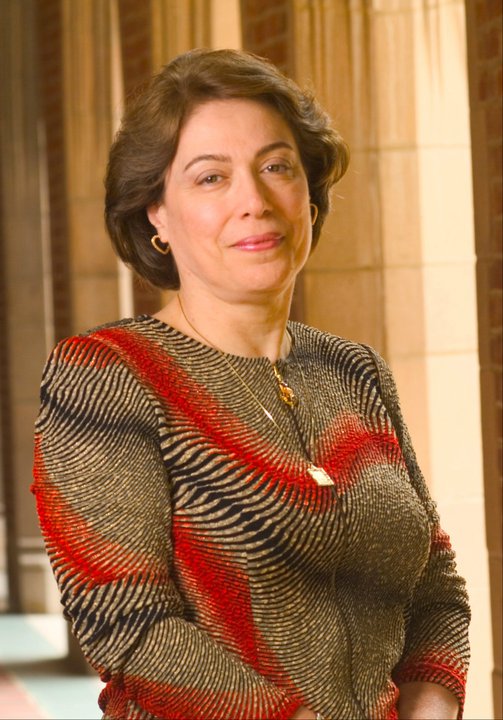
http://karamah.org
February’s ABA Journal ran an excellent article by Kristin Choo about Muslim women practicing law in the United States and abroad.
These women are looking to their interpretations of Islamic scripture and tradition to fight inside and outside: inside to justify their work to Muslims who do not agree that women should have a voice in the legal tradition, and outside to be taken seriously by a mainstream culture that makes many harmful assumptions about Muslims and especially Muslim women’s roles.
Azizah al-Hibri (who wrote “My Muslim Ancestor Hagar” for Lilith in 1997) is a law professor who founded Karamah: Muslim Women Lawyers for Human Rights. “The chief mission of Karamah is to develop new Islamic jurisprudence from a women’s and human rights perspective, looking with fresh eyes at Islamic religious texts and traditions, re-examining passages and translations, and researching the historical context in which they originated to uncover a faith stripped of patriarchy…the development of new Islamic jurisprudence and the development of a network of jurists trained to apply these new ideas.”
As a Jewish lawyer, feminist, and student of Jewish law, I found this article and the spirit conveyed fascinating and exciting. I wonder whether the idea of developing a new Islamic jurisprudence feels as tremendously ambitious to al-Hibri as the idea of a new Jewish jurisprudence sounds to me. I do not know enough about Muslim law to know whether the idea itself is as groundbreaking and potentially destabilizing in Islam as it promises to be in Judaism, but I am inspired.
- 1 Comment
February 11, 2013 by Nancy Sinkoff
What’s a Friend to Do?
Dispatches from the New York Jewish Film Festival
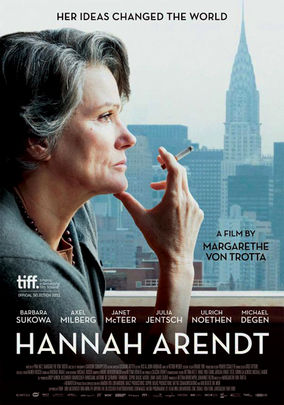 Light up a cigarette. Or, better yet, have some charming, young male student acolyte do it for you. There will be smoke in your eyes after you see “Hannah Arendt,” the 2012 German biopic directed by feminist auteur Margarethe von Trotta and starring Barbara Sukowa as Arendt and Janet McTeer as her dear friend Mary McCarthy.
The film’s New York premiere closed the New York Jewish Film Festival to a full house Jan. 24. Its commercial run opens at the Film Forum in New York May 29, followed by national release.
“Arendt” is a sexy film which wants to be a film about ideas.
Retelling the well-known story of the furor created by Arendt’s Eichmann in Jerusalem: A Report on the Banality of Evil (1963), “Arendt” does so through the lens of friendship and its limits, shot with a “Mad Men” aesthetic in Manhattan and Jerusalem. Dialogue is in English and German, with subtitles as needed.
Arendt, a German-Jewish refugee from Nazism, rose to prominence among the largely Jewish and male group of New York public intellectuals with The Origins of Totalitarianism (1951), a penetrating study of Nazism, Stalinism, and the modern state. She taught at the New School for Social Research and at the University of Chicago. Eichmann, Arendt’s report of the 1961 trial, set these intellectuals on edge because of the work’s charge that Jewish leaders had collaborated with the Nazis in the destruction of the Jews and that Eichmann was not a murderous anti-Semite. Arendt depicted him as an ordinary man following bureaucratic orders. His compliance was evil’s “banality.”
- No Comments
February 11, 2013 by Elizabeth Mandel
The Challenges of Raising Jewish Daughters
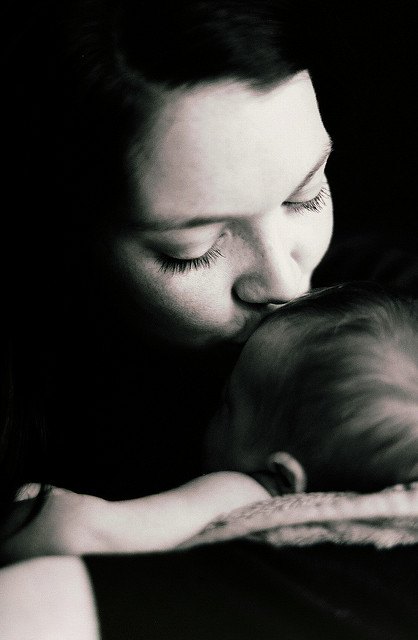 Raised in a Modern Orthodox home, I have long struggled with the contradictions I have found inherent in being both a committed Jew and a feminist. I have managed to carve my own path, create my own rationalizations, and find a space that makes sense to me at the juncture of my religious practice and my political and personal commitment to gender equity.
I am the mother of three girls, G, aged 5, P, 3, and M, two months old. Parenthood changes and challenges so many things, not the least of which is self-identity. It also requires one to articulate and form a cogent explanation for one’s choices, choices that previously required no justification. Becoming the mother of three girls has brought into high relief for me the challenges of living a life dedicated to both Judaism and feminism, and forced me to reflect closely on my priorities.
When G was born, I was frankly relieved that there would be no bris and that therefore I would not to have to throw a party eight days post-partum. Yet I was also unprepared for the strong sense of exclusion I felt at the lack of a religiously mandated ritual welcoming my precious, perfect first child into the community. What did this say about her value and worth to the community I expected her to cherish as much as I did, and which, I in turn, expected to cherish her?
My husband and I carefully designed a simchat bat (a baby naming ceremony, literally translated as “joy of the daughter”) to welcome G, incorporating ritual with personal expression. We held it in our synagogue, we included the rabbi, and it felt spiritually fulfilling. Yet, I could not escape the fact that it was voluntary, not mandatory, and that it was not something she shared with all other affiliated Jewish females the way a bris binds all affiliated Jewish males together. And indeed, when our second daughter was born, we neglected to hold the same ceremony for her. I justified this by telling myself that it was because I suffered a serious injury just prior to delivery and I was not fully mobile for several months afterwards; but the truth is, we would have held a bris no matter what the circumstances. There is something about a ritual being obligatory that makes it…obligatory.
- 9 Comments