 Please wait...
The Lilith Blog
February 12, 2008 by Mel Weiss
The Rock and the God Place
So here, essentially, is my conundrum: I started in on Mordechai Kaplan. I got through just enough of Judaism as Civilization to know we’re pretty doomed if we think of Judaism as just a religion—don’t build it to be something more encompassing. And I’ve gotten just far enough through a brand new book, Righteous Indignation, to be convinced that the grassroots are definitely already there. Forty articles about how to integrate Jewish values and social justice, by the people out there in the field doing it. Every day I think about the real race coming up after this summer—how hard the Democrats, in either case, are going to have to work to remind the general public that the Left can have the moral hand, too. And now the Atlantic shows up in my mailbox. With several main articles on religion as a global political phenomenon, my attention piqued at the theory that, since state-mandated religion has passed out of fashion and religions now follow a more market-place lifecycle, there’s bound to be some major niche-attracting going on. So we’re looking at a rise, I’d like to wager, of religiously-identified lefties. Are we all going to play nice? And am I really comfortable with this trend?
I’m discomforted by my own discomfort. But there it is. What do we do with this, we adamant separation-of-church-and-state nuts? Especially those of us who are willing to locate some of our progressive values in a religious place? I’m eager to hear from y’all out in the blogosphere, because I’m finding this one pretty slippery, and I think it’s important. So leave your thoughts below!
–Mel Weiss
- 1 Comment
February 8, 2008 by admin
Worshipping at the Altar of the Jewish Dating Gods. Or, Jews of the World Unite, on JDate!
In one of those seemingly random convergences of synergies, the current issues of both Lilith and the online Jewish women’s mag 614 feature articles on JDate. In different ways, the publications explore the huge impact it and other Jewish e-dating sites have had on how the Jewish world hooks up.
Before I go any further, I have to admit I’ve never been on JDate. And, after reading this month’s Lilith cover article, boy am I glad. As Susan Schnur writes it, it’s not pretty out there. On the other hand, several of the people closest to me have met their significant others on JDate and are in very committed and happy relationships, so I can’t help but think it’s for the good. So the underlying question is, as always — Is JDate good for the Jews or bad for the Jews?
The answer is, undoubtedly, good for some and bad for others. Another way to put the question, more practically — and bluntly: are more or fewer Jewish babies being born because of Jewish e-dating? Surely the world will never know. But let’s take some guesses, just for fun.
Perhaps it’s fewer, because you can’t make babies over the internet. (Reproductive technology is not that advanced … yet). As Schnur suggests in Lilith, people are spending more time fussing around the internet, hemming and hawing and being nitpicky over potential partners, instead of just choosing someone and hopping into marriage and babies. The plethora of dating options that the worldwide web provides causes some daters to hedge their bets and take more time to explore the entire field, until they find that elusive Mr. or Ms. Right. Or don’t. In the meantime, precious eggs are going to waste.
But that’s not just a Jewish problem. JDate doesn’t exist in a Jewish vacuum. The whole world is e-dating. It’s not a choice between JDate or internet-less dating, but between JDate or Match.com (or e-Harmony.com or one of the numerous other dating sites serving the general population). So in the world of internet dating the mere existence of JDate and its ilk is a definite boon for the Jews, a haven from the wider world of e-dating, where, if one is not vigilant, one is as likely as an unsuspecting college co-ed to haplessly fall for a non-Jew (shudder).
And it would stand to reason that people who meet on JDate are likely, when they do procreate, to raise their children at least nominally Jewish. Why bother signing up to meet other Jews as potential mates if you don’t want to identify as Jewish?
In fact, a couple of the articles in 614 made me realize the potential that JDate has as a unifier of the Jewish people — across denominations, affiliations, levels of observance and commitment. Michelle Cove recalls how the process of filling out her JDate profile made her reevaluate her religious status and consider how far to the right or left she would be willing to go for a potential partner, while Marnie Alexis Friedman writes about her experiences dating men of different observance levels and denominational affiliations from herself. Implicit in both of these pieces is the idea that JDate supplies individual Jews with easy access to meeting Jews who are different from themselves. Though individuals might, the website doesn’t discriminate based on affiliation or practice. It’s one of the few forums in which Jews are Jews, and that’s that.
It’s come to the point where, no matter how irreligious or unaffiliated a person is, just joining JDate — an expression of desire to meet someone Jewish — is itself an act of religious devotion. So, next time you’re feeling frustrated with JDating, just think of that monthly subscription fee as a ritual e-sacrifice on the e-altar of love.
–Rebecca Honig Friedman
- 14 Comments
February 8, 2008 by admin
Happy Birthday, Judy!
Judy Blume turns 70 next week, and The Guardian profiles the author for the occasion. “I’d imagined her as a busty Jewish mamma, dishing out advice in gigantic, homely portions,” writes Melissa Whitworth. “But in person she’s delicate and small, with the body of a ballet dancer. She’s wearing a loose-fitting turquoise shirt and black capri pants. Her hair is in a short, girlish bob. With her high cheekbones and wide, easy smile she could be mistaken for Jessica Lange.”
When I was a kid, I had some interesting ideas about what some of my favorite authors looked like. But I never had any illusions about Judy Blume. On the back of my 1981 edition of Tiger Eyes (a hand-me-down from a favorite babysitter) was a black and white photo of the beaming author, with what I assume is the Sante Fe desert to her back. The portrait was sort of an odd juxtaposition with the painting on the book’s cover, which featured a sallow-cheeked girl, looking seriously haunted.
I read that amazing, unsettling book about a thousand times. Actually, I don’t think I read any of Judy Blume’s books just once. I studied the tense friendships in Just As Long As We’re Together until the yellow paperback fell apart. Starring Sally J. Freedman as Herself, with its paranoia and Holocaust ghosts, spooked me deliciously. I read and re-read Deenie and Iggy’s House under my covers with a flashlight. Are You There God? It’s Me Margaret may be considered Blume’s ultimate classic, but it didn’t have the same impact on me as the others. It featured characters memorably chanting, “We must, we must, we must increase our bust,” which sure resonated with me as a kid, but all the stuff about menstruation didn’t shock me as much as it might have. By that point I’d already learned about periods from some other novel that I was too young to really understand.
I pored over the famous sex scenes in Forever; spent tent cents on a copy of Wifey, one of Blume’s “adult” novels, at a garage sale, but never got around to reading it: my well-meaning mother thought it was a little too advanced for a ten-year-old. I was lucky that there were plenty of other steamily intriguing paperbacks in the swivel rack at our local library. Thanks to Norma Klein, there were books even more unabashed in their sexuality than Blume’s, with titles like Beginner’s Love, Love Is One of the Choices and It’s Okay If You Don’t Love Me. I didn’t know at the time that Klein had died in 1989 at the age of 50, after a brief and somewhat mysterious illness. And I’m not sure how conscious I was that both of these masters of Young Adult fiction were Jewish.
Blume is maybe best known — and people are most grateful to her for — her frank talk about sex, which many of us read before we knew quite what we were reading. In that spirit, Rachel Kramer Bussell recently interviewed Rachel Shukert, whose memoir Have You No Shame? And Other Regrettable Stories comes out in April. They talk about a piece Shukert wrote for Heeb about Jewish women and blowjobs, which can now be found in Best Sex Writing 2008, edited by the ever-prolific Bussell. Shukert reflects, “I don’t necessarily subscribe to the theory that if you eat like a pig, that must mean you’re great in bed, but I think there’s some kind of link. I think it’s appetite, and more than that, it’s a kind self-determination that Jewish women have, which I think we actually acquired from never being part of high society, from never really being seen by men as these kind of dainty flowers.” The whole thing is worth a read.
–Eryn Loeb
- 1 Comment
February 7, 2008 by admin
Introducing: The Domestic Agenda
I am a mother. I am other things too, of course: a woman, a wife to M, a sister, a daughter, a friend, an American, a Jew, an editor, a reader, a consumer—but ever since my son N was born six years ago, what I am, primarily, is a mother. In the course of an average day I nurse and care for R, our 14-month-old girl, and wage what my mother calls “the battle against entropy.” I wipe little behinds and fold laundry. If I can get dinner cooked, more’s the better. It is not glamorous work, but at its best it is deeply satisfying and joyful. At its worst, it is stupifyingly dull, exhausting, and demoralizing. I try to appreciate the little things: a visit from a friend while the baby naps, a good book and the time to read it, a smile on my son’s face when he gets off the bus in the afternoon.
I am also a writer. It is hard to write at 1:19 a.m., especially with the repetitive melody from the baby’s noise machine coming through the monitor. I am worn out, tired from a day of clashes and truces with a testy first-grader, tired from a day of trips up and down the stairs with a 23-pound baby, tired from a day that begins with one mess and ends with a different one.
Simone de Beauvoir was right: The soiled is made clean; the clean becomes soiled. Again, and again, and again. I feel lucky, though. I can write now because M is cleaning the kitchen. Actually, that’s not quite true—if he weren’t cleaning the kitchen, I’d still be writing, I’d just have a dirty kitchen.
Soon M will go up to bed and the house will be mine. The rest of the day it’s not possible to follow a thought through to its end, to sit still and reflect. Before my children were born, I was a long-range planner—I even had a five-year fold-out calendar insert for my Filofax. (Nothing I wrote down on it has actually come to pass.) Now I live one day at a time, not out of any spiritual practice, but because that’s all I can manage. M doesn’t understand this, doesn’t recognize the woman who greets with genuine surprise the event she has known for weeks was coming.
–Claire Isaacs
- No Comments
February 7, 2008 by admin
Keeping Quiet
Some writers would say I’ve officially made it. No, I’m not making a million dollars a year as a freelance writer yet (and word on the street is, I probably never will). But yesterday, while reading the most recent issue of PresentTense magazine, I saw that I got slammed in a Letter to the Editor. That counts for something, right?
The article I’d written was called “The Death of Eco-Kosher,” and it highlighted why I think, despite its good intentions, eco-kosher is actually a troublesome term for health and environmentally-conscious Jews, strictly observant Jews, and those folks who fall into both categories.
My dialogue-partner/the-guy-who-ripped-me-a-new-one, had no particular beef with my argument because, from what I could read in his response, he completely missed the point. He started in about “Contrary to Koenig’s implications, most Jews would not like to see Kashrut elided with a fair-trade eco-agenda” (I didn’t say that – in fact, the word “most” didn’t appear in the article at all), and “Furthermore, many people do not take nearly as kindly as Koenig seems to think to being lectured by ostensibly tolerant liberals on what is and isn’t ethical” (I would absolutely never assume such a thing).
The point is, on the one hand, I’m completely delighted to have someone get so riled up about something I wrote. In a sense, that’s the best compliment to a writer – knowing that someone either cared enough or was provoked enough by your words to actually sit down and pen a response. On the other hand, the way in which this reader responded to me was particularly irksome.
It’s pretty clear to me that he’s got some serious baggage around “liberal Jews,” and depending on where he’s coming from and how he grew up, that’s totally understandable. But his method of making his point was so hostile and obstinate, I couldn’t help but be reminded of those jerky guys (and sometimes girls, but less so) in college who would argue just for the sake of arguing. It also forced me to remember how I would respond to those guys – with flustered silence.
I’m not about to say that stubborn debating and trying to run intellectual circles around one’s opponent (while often not saying much of anything) is an inherently male trait. But I will say that growing up female and in the midwest, I feel like I was explicitly NOT taught how to argue in that way. I was taught how to make a rational point while hearing and acknowledging the other person’s point of view. And while I think that’s the higher road to take in any debate, I find it leaves me ill-equipped to respond in a satisfactory way when situations like this arise.
After some internal debating, I’ve decided not to write in a counter-response to the reader (I suppose I’m writing one by posting this – but I somehow doubt the reader reads a magazine like Lilith!). Ultimately, I don’t think it’s worth my time to argue with someone who can’t hear me. But I’m not entirely at ease with the decision – there’s still a small part of me that wishes I was indeed better at responding in kind to this sort of attack because, in truth, taking the high road often leaves your opponent feeling like he/she won.
To read my original article in PresentTense, click here.
–Leah Koenig
- No Comments
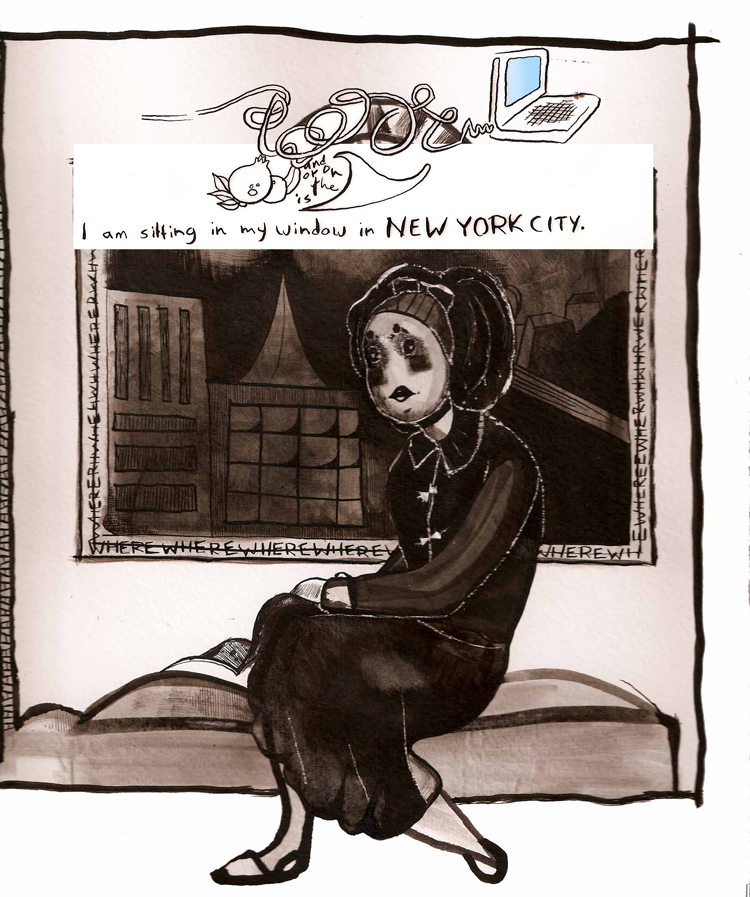
February 4, 2008 by Mel Weiss
Touchdown?
There is much—much, much—to think about, as we sit during one Super day, anticipating another. (Non-US blog readers: It’s Super Bowl Sunday, meaning there’s a lot of yelling in the apartment above me about American football, and Super Tuesday, when over half the nation’s primaries are held, is fast approaching.) I, myself, am extremely gratified at the voter turnout we’ve been seeing. Read the headlines for any of the recent primaries or any predictions for the upcoming one. Other than some concerns about the weather, everyone’s generally optimistic. I’m immensely pleased by that. To be honest, although I’ve given my own private endorsement, I could pretty easily live with an Obama or a Clinton presidency. I’m just ready for it, and grateful that so many people have become motivated. (There’s a great article on the real fundamental difference between the two available here.) I have noticed in myself a happy willingness to discuss politics anywhere, any time, and as often as I can. This is not necessarily a trait I share with all of humanity. But with this election, people who have never ever wanted to talk politics before are citing polls to me. I haven’t had to wait more than an hour after a primary to know the results—if I didn’t look them up, someone else had. It’s actually pretty amazing, and its doubly gratifying to feel it amongst my peers, a generation constantly accused of untoward levels of apathy.
But then, there’s often that attempt to divide us generationally, if we can’t be gotten at any other way, isn’t there? I definitely felt that way reading the New York Times article on how hard it is for feminists to find unity. The article managed to reduce Jessica Valenti, of the excellent blog Feministing.com, and Marcia Pappas, head of NOW-NY, to tired simplifications–the former to flirty flippancy and the latter to frumpery. Awesome.
Look, it’s not a big deal, certainly not given the other things we could worry about. But since I often feel these sorts of generational divides in the Jewish world as well, it’s something I think about a lot. And in an election that some claim is being fought generationally, I do think it’s relevant to worry about. My dad, a very middle-of-the road, politically reasonable fellow, is quick to remind me that if the Democrats have the slightest chance of messing something up for themselves, they probably will. So given this chance to fumble over some social scientists’ population breakdown, I’m afraid we’re go to lose possession of the ball on the first down, if you know what I’m saying.
So when you vote on Tuesday, if you’re in the half of America that will, vote your heart and your values—and don’t worry about what it signifies about you. And when Wednesday morning comes, let’s get together behind whoever we choose and say, onward into the future, young and old and everybody else together.
And, just for fun: file this under um….guwah?.
–Mel Weiss
- 2 Comments
January 31, 2008 by admin
Having It All, Jerusalem-Style
On Friday morning, I was cooking for Shabbat and cleaning my Jerusalem apartment while listening to a radio station that shall remained unnamed. While I cut up cauliflower, I listened over the airwaves as someone leyned selections from the Torah portion and haftarah. (This is generally good review for my own leyning the next day in shul – except when the radio rabbi leyns in Sephardi trope!) Then, while chopping onions, a new program came on: a d’var Torah about the leadership skills we can learn from Moshe
Rabbeinu in sefer Shmot. This was followed by the 11 o’clock news, which concluded with, “Shabbat begins at 4:32 and ends at 5:49. The times for Shabbat this week are sponsored by Hepi diapers. We remind you that Hepi diapers have special adhesive that can be used on Shabbat. Make your baby a Hepi baby all week long!”
By the time my vegetable kugel was in the oven, it was time for my favorite program: Chidat Haparsha, a trivia question about the weekly Torah portion. The question this week, in honor of the Ten Commandments which were inscribed “from one side and from the other side,” was about a palindromatic word that appeared in the parsha. As soon as the riddle was announced in full, listeners began to call in with answers. It turns out that there are a lot of palindromatic words in this parsha, as I learned, though no one gave an answer that met all the qualifications. I stayed tuned.
I was surprised at what happened next: A woman called in, Shulamit from Be’er Sheva, the first woman I’d ever heard on this program. She answered, “The word is Hineh,” and then proceeded to explain how this word answered each part of the riddle. The radio announcer heard her out, and then asked, “And what is the verse in which this word appears?” Over in Be’er Sheva, Shulamit paused. “I’m in the kitchen,” she said, “I don’t have a Tanach in front of me.” The radio announcer apologized; the answer had to be
accompanied by the full text of the verse. But it seems that woman had made an impact, because the next caller was also a woman – Chedva from Netanya. Chedva gave the same answer as Shulamit, but cited the verse, albeit incorrectly. “I’m sorry,” said the announcer. “That’s not the verse.” She had just one or two words wrong, I noted. Chedva sighed. “I’m also in the kitchen,” she said, and I felt the weight of thousands of years of Jewish women’s kugels bearing down on her shoulders as she sighed and hung up.
Not surprisingly, a man called in next, gave Shulamit’s original answer with the correct text of the verse, and the Hasidic choir on the air broke out in a round of rousing zemirot. And so, as happens each week, a man won Chidat Haparsha, and the radio announcer moved on to the pre-Shabbat traffic report.
I was not planning to travel anywhere that afternoon, so I turned off the radio and went back to my cooking. I have nothing against
women in the kitchen—someone has to cook for Shabbat—but I do wish that more women leyned the parsha. The secret of leyning well is that you really do learn the Torah by heart. This means that you can cite the right answer to Chidat Haparsha even while your hands are stuffing a chicken. Who said women can’t have it all?
–Chavatzelet Herzliya
- 3 Comments
January 30, 2008 by admin
Checking the Boxes
A new collection of Hannah Arendt’s writings on Jewish subjects is about to be published, cleverly titled “The Jewish Writings.” Arendt
wasn’t known primarily as a Jewish writer (even though Eichmann in Jerusalem may be her best known work), but she wrote a lot about Jewish themes and issues, maybe even more than she wrote about anything else. In the current issue of the Boston Review, Vivian Gornick considers this group of Arendt’s articles and essays. It’s an interesting piece overall, but I’m going to skip right to the end. Gornick describes the letter Gershom Scholem wrote to Arendt after the publication of Eichmann in Jerusalem, famously accusing her of having “no love of the Jewish people.”
Here’s Gornick’s assessment of Arendt’s response:
“[B]eing a Jew had been a given of her life. Not only had she never wished to be anything else, but being Jewish had made her appreciate, as nothing else could have, the significance of being allowed to be what one is: ‘There is such a thing as a basic gratitude for everything that is as it is: for what has been given and not made.’
This regard for the givens of individual human existence had led her to think deeply about everything she had thought mattered during the previous thirty years. What she loved was the experience of the Jewish people: it had taught her how to consider the human condition at large. How much more Jewish did she have to be?”
How much, indeed? I came across Gornick’s piece while poking around for stories that dealt in some way with both Judaism and feminism. It’s the “and” where things get tricky. For something to qualify as “Jewish feminist,” do both boxes have to be checked? And how do we go about checking them?
This question is hardly new to readers of Lilith, or to other folks who identify as feminists, Jews or any combination of the two. But it’s one I can’t get away from, and it’s thrown in sharper relief when I’m sifting through other people’s material and trying to figure out what fits. “Jewish feminism,” is seems to me, can be awfully specific.
Identifying whether or not something is feminist has always been easy for me; even if the definition of that word remains in question, my “test” for feminism is basically a version of what the Supreme Court said about obscenity back in 1964: “I know it when I see it” – and just as importantly, when I don’t (though the gray areas are where things get the most interesting, anyway).
Judaism is more specific. There are basically two “tests” to determine whether a book or movie or whatever else is Jewish enough to be discussed in terms of its Jewishness: does it involve or address Jewish ideas? And, is the author Jewish? To get the attention of the Jewish press, the answer to one of these questions generally has to be yes. Of course, it depends who’s doing the answering.
The second question would seem to be the easier one to determine, but really, neither is all that straightforward. There’s a basic way to know whether or not a person is Jewish: is her mother Jewish? But lineage rarely tells the whole story. And when publications like the Jerusalem Post keep score of every Oscar nominee who’s even remotely connected to Judaism (references to Daniel Day Lewis being the son of “British Jewish actress” Jill Balcon particularly smack of desperation), I’m not sure what value the easy definition really has.
Which is not to say I’m in favor of a stricter one, one that would mean the Post ignored actors of Jewish descent unless their
Judaism was, in Arendt’s terms, made as well as given. For the purposes of my nascent blogging here, it can be tricky to avoid using overly simplistic tests when deciding what counts as Jewish feminist arts and culture. It drives me crazy.
–Eryn Loeb
- 1 Comment
January 28, 2008 by Mel Weiss
Buy, Buy, Buy (A Round Up)
This week saw the breaking story—sorry—of Gazans blasting their way into Egypt to buy such advanced commodities as…milk. The world at large seems to have collectively looked at this with a resounding, “meh.” I don’t like to comment too much on Israeli/Middle Eastern politics because a) I have a fear of hyper-flammable materials and b) I don’t know enough to speak with much authority. In this case, however, whether you think this is good for Israel or bad for Israel, a sign that Egypt will take more responsibility for “the Palestinian issue” or that America should get more serious than Anapolis showed we were—you have to admit, people willing to blow a hole in a seven-mile wall to buy milk probably means that the ostrich approach won’t work for too long.
Speaking of buying things, welcome to morning in America. Yes, there may be a recession on the way; yes, the housing market may be imploding (thanks, subprime lending!); yes, things may not be looking up. Don’t worry: the U.S. government says “buy!”. (We’re good at that.) And to help us buy, we’re looking at a $150 million economic stimulus plan. I am not an economist, but $600 in my pocket sounds fine.
Except maybe I’d like to give mine back. I am so furious at the S-CHIP veto override that I could honestly vomit, and I can’t help but feel that this is, if not blood money, something pretty dirty. To recap, S-CHIP, a bill providing additional spending for children’s healthcare, passed the House. It passed the Senate. It got vetoed at the White House. A slightly revised version passed the House. It passed the Senate. It got vetoed at the White House. The House tried to override the veto and fell short by 15 votes. (Please, please, please, demand accountability from the people who represent you in our government.) This next step towards the nightmare of socialized medicine would have been paid for pretty much in its entirety by an increased tax on tobacco products, removing precious funding from nothing at all.
(Look, even if it doesn’t come across in my writing here, I am, by and large, a relatively reasonable human. I want to have the wisdom and patience to appreciate multiple points of view, and the understanding that there can be different paths to solutions and different values in play for various people. Diff’rent strokes for diff’rent folks, and so on. But I really, really don’t have the patience for this one. We’re talking about healthcare for kids. Kids! They can’t possibly have hurt anyone, haven’t “chosen” to go on welfare, haven’t voted for the wrong people. There is. No. Reason. To punish them. I come from a family where the phrase “As long as you’ve got your health…” was oft-heard and considered a Jewish value as much as—more than—most rituals. This sort of devaluation of children is anathema to me.)
So we’ll have more money in our pockets. As it turns out, buying stuff may not be that great for us, anyway. (Click through that link to see Annie Leonard’s fantastic mini-movie, The Story of Stuff. It’s a lesson in basic “eco” knowledge—economics and ecology—with a decided feminist twist. [Who else talks about breast milk?].) However, if you happen to be in front of a computer or tv Monday night, consider buying yourself a beer—it’s State of the Union time!
—Mel Weiss
- 2 Comments