 Please wait...
The Lilith Blog
July 23, 2012 by Mel Weiss
A Busman’s Holiday in Tel Aviv
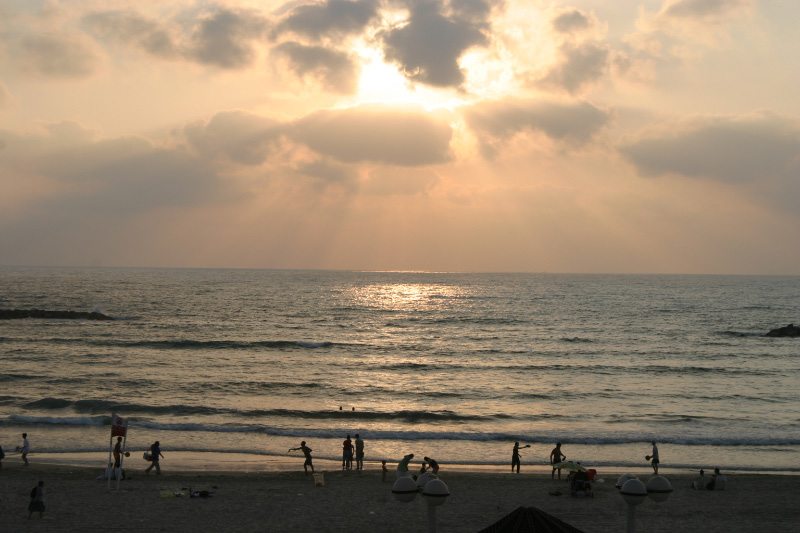
Sunset in Tel Aviv-Yaffo beach
There’s seriously nothing like a two-week stint in Israel, with an extended weekend layover in New York City, to throw one’s shlicha mission in mid-Maine into a serious sort of relief. At least, that’s how it was for R. and me, coming back to the small town in Maine where she basically serves as the town rabbi and I, well, I do many of the things a rabbi’s partner does in a small town, even though in the old days, the rabbi wasn’t a woman—nor was she partnered to one. We returned to what we jokingly, or not so jokingly, refer to as our role as the Lesbian Chabad of Mid-Maine.
We’re just back from a well-deserved vacation, in a place where even the vacation have a veneer of the hectic. (Plus, a rabbi on vacation in Israel can, at times, feel a bit like a busman’s holiday.) Having eaten schwarma, spoken Hebrew, argued in the shuk and visited a vast array of friends, teachers and family, we’re back in the Northeast, having lugged as much of the Middle East home in our backpacks as we could.
It was a fun experience, telling Israeli friends about what we’re doing up here. The Lesbian Chabad joke works both much better and far worse: some of our friends laugh harder than any American at the idea, while my extremely secular cousin worriedly asks if I have to pass out candles in the bus station on Friday afternoons.
And the fact of the matter is that it is hard—it might actually be impossible—for Israelis who haven’t spent time in America (outside, perhaps, of New York and LA) to imagine not only why on earth we’d want to spend our time doing what we do, but how such a thing could possibly be necessary.
- 2 Comments
July 18, 2012 by Yona Zeldis McDonough
A Conversation With Sally Koslow
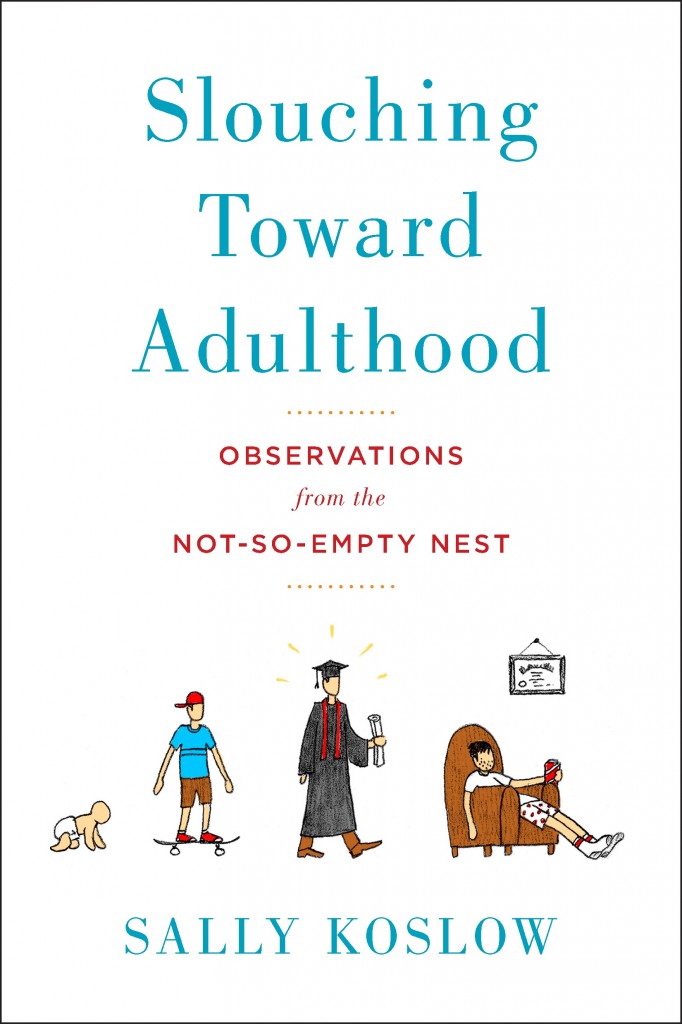 In addition to being the author of three novels and the former editor-in-chief of McCall’s Magazine, Sally Koslow has earned her chops as a crackerjack reporter. In her newest book, Slouching Toward Adulthood: Observations from the Not-So-Empty Nest, she draws on that background and comes up with a penetrating analysis of today’s boomer parents and their frequently failed-to-launch offspring. She talked to Fiction Editor Yona Zeldis McDonough about the need to establish boundaries, the Jewish tradition of über-parenting and how 34 has become the new 24 for a whole generation of young people.
How did the idea for this book come about?
Eleven years ago my oldest son moved from New York City to San Francisco after college graduation and two years later returned to Manhattan to start a new job. The plan was for him to live with us until he found his own apartment. When 9/11 happened a week later, however, his new job evaporated. He began collecting unemployment and seemed in no hurry to job-hunt. After ten months, my husband and I found out that our son had, in fact, been offered a job that he was thinking of declining—it wasn’t, in his eyes, perfect. After receiving a significant shove, he accepted the offer and moved to an apartment in Brooklyn with members of a band called, fittingly, The Oddjobs. Cut to three years ago. Having a young adult child return to the womb became something I noticed all around me. I also observed growing numbers of college grads in a state of constant improvisation, often shackled to their parents by cell phone and/or purse strings in a three-legged raise toward an undecided destination. Since I myself had been 24, or even 34, something new and interesting was clearly afoot. As a journalist, I decided to explore it and my research become Slouching Toward Adulthood: Observations from the Not-So-Empty Nest.
- 4 Comments
July 9, 2012 by Mel Weiss
Fridays with French Fries
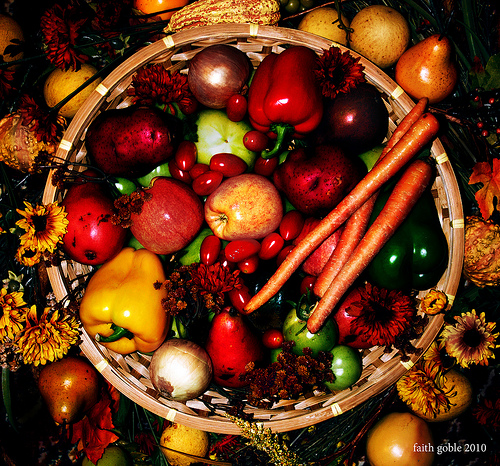
http://www.flickr.com/grafixer
It’s a system I have just about down, and R. knows it.
Fridays, particularly when school is in session at the college where she advises the Jewish student group, are frankly epic. By the time she stumbles out of our bedroom at what most people would describe as a normal hour, I have inevitably brewed some coffee, cranked up my Rachel Maddow podcast, rolled up my sleeves and started chopping onions as though we’re going to have to feed an army. And, well, sometimes, close enough.
R. launders the tablecloths and sets the table, unfolding the plastic chairs we’ve borrowed from the college. We estimate the number of student dinner guests in intervals of a half-dozen. I proceed from chopping veggies to rubbing down chicken with herbs, roasting homemade spicy French fries, setting the slow cooker with beans, garlic, onion, root veggies, kosher meat—tonight will be yet another night of explaining what cholent is to wary-looking teens.
Maine is, as you might know, pretty far north. This means that in the summer months, R. and I have a leisurely day of cooking that will still result in us bringing in an early shabbos. In the winter months, which are incidentally the months when we’re most likely to have twenty hungry students over for dinner, and another ten lined up for Shabbat lunch, our prep time shrinks precipitously. The week Shabbat rolled on in before 4pm—well, I won’t admit to frustrated crying. I might admit to a frustrated early cocktail hour.
- No Comments
July 3, 2012 by Yona Zeldis McDonough
A Conversation With Dawn Raffel
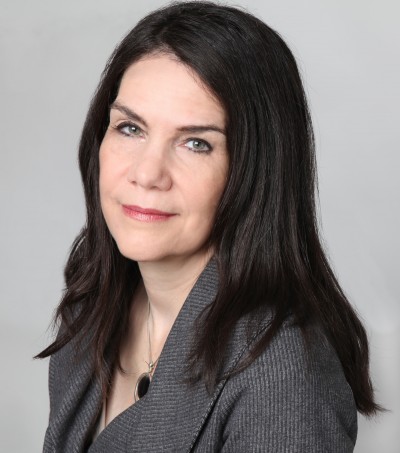 Dawn Raffel is a brilliant miniaturist. From her exquisitely crafted short stories (In the Year of Long Division, Further Adventures in the Restless Universe) to her slender but ice-pick sharp novel (Carrying the Body), her canvas may be restricted but it is never slight; Raffel finds big meaning in the seemingly small, be it word, gesture or in, the case of her newest book, object. That book, fittingly called The Secret Life of Objects, is a collection of prose poems/love songs/tributes to the stuff—a mug, a pair of lamps, a sewing box, a ring—that make up the warp and woof of her daily life. Raffel answered questions posed by Lilith’s fiction editor, Yona Zeldis McDonough, about the genesis of her newest collection, where she finds inspiration and the surprises that she uncovered when she was willing to probe just a little bit deeper.
Did you know you were writing a book from the outset?
The whole thing happened very fast. One morning I was drinking coffee from the mug I always take from my cupboard, even though I have a dozen other mugs. I go straight to that one because I took it from my mother’s house after she died, and for me it contains not only coffee but also a whole story about my mother and my aunt. Then I realized that I have a house full of objects like this—things that have a secret personal value that far transcends their surface worth. I wrote them all down very quickly, resisting the urge to over-analyze; it felt like creating a watercolor where you don’t want to muddy things with too much revision. When I was done I saw that what I had written was a book and that it told a life story.
How did you go about organizing these pieces?
I wrote these in the exact order you see them in the finished book, which was intuitive. At one point, an editor asked me to organize the book chronologically, ordering the objects by when I received them. For me, that effort fell flat, I think because so many of the objects are saturated with stories from multiple generations, and in part because memory and feeling simply aren’t linear.
- No Comments
June 25, 2012 by Susan Weidman Schneider
A Journalistic Room Of One’s Own
Cross-posted with The New York Jewish Week.
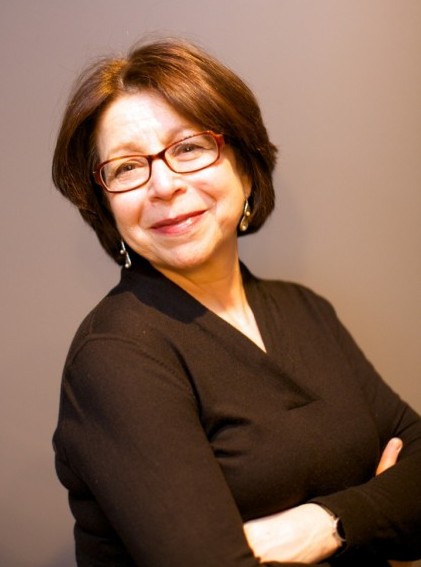 Thirty-five years of ‘amplifying women’s voices.’ An interview with longtime Lilith editor in chief, Susan Weidman Schneider.
In a feat of journalistic longevity, Lilith: The Jewish Women’s Magazine, has been around for 35 years now. Along the way, the quarterly has sought to merge the wider women’s movement with the world of Jewish feminism. On the occasion of its 35 anniversary, The Jewish Week asked Lilith founding editor Susan Weidman Schneider to reflect on the issues that have animated the magazine’s coverage.
The Jewish Week: The early days of Lilith must have really been heady, as you were trying to take the lessons of the wider feminist movement and translate it into the Jewish realm. What was it like starting out?
Susan Weidman Schneider: It’s still heady! Our daily conversations with our interns and writers and editors over lunch at Lilith’s conference table and at Lilith salons are all about taking gender justice, in all its forms, into the Jewish world. Lilith’s tagline says this explicitly: “independent, Jewish & frankly feminist.”
In the beginning we were asked persistently, “Is feminism good for the Jews?” The answer now seems self-evident. Women have energized Jewish life and practice everywhere, from big organizations to the more intimate settings of our own families. Let’s take text as one example. For decades, women in mainstream congregations, small havurot, on college campuses, and in their own kitchens have been writing new liturgies, referring to the feminine aspects of God, and using imagery from women’s bodies and experiences; many of these are now published between hard covers in widely used prayer books; women have expanded the possibilities of prayer and ritual, highlighting the elasticity of Judaism.
- No Comments
June 14, 2012 by Sophie Danis Oberfield
Food and Fadwa–Closing soon!
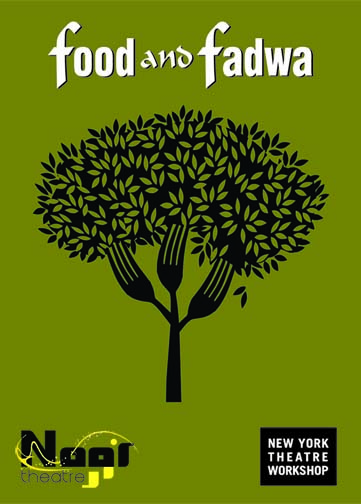 “Food and Fadwa,” Lameece Issaq and Jacob Kander’s play, directed by Shana Gold and co-presented by New York Theatre Workshop and Noor Theatre, is wonderful, entertaining, funny, moving, and thought-provoking. It’s a well-made family comedy/drama, with familiar archetypes—young lovers, a disapproving father, an unworthy woman coming between the heroine and her man—rendered fresh and nuanced here.
Less centrally, but equally importantly, it’s also a play about Palestinian life in the West Bank under Israeli occupation, demonstrating its challenges and difficulties in theatrical moments that are, in turn, quiet and shocking, hilarious and bitter, and moving. Another way of putting this is that the young lovers face obstacles both from classical comedy (a disapproving father, a rival) and current international-political reality (the groom’s disappearance the day before the wedding, a curfew trapping the family in their home). Their lives are out of their control in more than one way. The play focuses on a family while also dealing with political realities, touching on larger political issues, coexistence, from an authentic-feeling place rooted in traditionally female spaces (home, kitchen) and activities (cooking, caring for family, preparing for a wedding).
- 1 Comment
June 12, 2012 by Mel Weiss
A Near Miss
 It ended up being one of our favorite lesbian Chabad stories, but it was almost a tale of tragedy.
Mid-January, mid-Maine—even in the era of global warming, we sometimes get snowstorms that blanket the streets and muffle every possible noise. When R called me moments before I entered a staff meeting, I expected a gripe about shoveling out the car. Instead, she was calling to tell me that our favorite octogenarian congregant was in the hospital, and it didn’t look good, and could I make some calls to find someone to cover her class?
A lot of that entire week is a blur. Once it became clear that this congregant was out of imminent danger, I remember holding an exhausted R, who’d spent the whole day in the most chaotic day-long pastoral visit of her life. I remember driving through the night snow—my very first time, shekhekhiyanu!—to the hospital, chatting with our friend for a couple of hours, trading Yiddish jokes and explaining the punchlines to her kids and grandkids. I remember some sort of cook-a-thon, stepping back an hour before Shabbat to realize I miraculous had enough food for the twenty guests we’d have over the next 25 hours.
- No Comments
June 7, 2012 by Mel Weiss
Lesbian Jewish Missionaries
 Let me start by saying this: the whole “Lesbian Chabad” thing began as a joke.
Okay, actually, maybe that’s not the clearest point to pick up. Let’s try that again: my name is Mel, and I’m one-half of what is jokingly (sort of) known as the Lesbian Chabad of Mid-Maine.
Okay, one more time: my name is Mel. My partner is a rabbi, and though I’ll just refer to her as “R.” here, if you’re even a remotely talented Google-stalker, yes, you can probably figure it out. I am a New Yorker, born and bred, but I spend my time these days a bit farther north. Maine, to be specific, a lot of it, along with R., in the town where she serves as the rabbi for a local synagogue.
(This would be a good time to state, for the record, that in my house we don’t use the word “rebbitzen.” Rather, I am the only one ever allowed to use it. This is not intended to offend anyone who chooses the term. It’s just that quirk of courtesy that lets us reclaim words that pertain to us, and screw anyone else who tries to use them.)
So, anyway, though I’m from New York and R’s from New Jersey and between us we have a pretty serious case of mid-Atlantic-accented potty mouth, along with a seriously dorky habit of making Talmud jokes, we spend half our time up in a town about twenty minutes north of Augusta, that for reasons I’ll also ascribe to quirks of courtesy, I won’t call by its real name. Let’s just call it C-town.
- No Comments
May 25, 2012 by Julie Sugar
Between All and Nothing: A Blessing for a Running Catch of the Torah
 Before I skipped the holiday of Shavuos last year, I secretly broke Shabbos for months. I would check my BlackBerry in the bathroom, reading emails and Facebook but never responding. Eventually I grew bolder and started Gchatting with two or three friends on Shabbos—and blocking everyone else. By Shavuos, I was reeling from a major transition in my life, and decided to no longer pretend to be observant of halakha, traditional Jewish law. I had grown up totally secular and observing Shabbos and holidays is still far from second nature to me; as I scaled one emotional mountain, I slid down the other, and took a break.
Shavuos this year has been looming as a personal deadline of sorts. It is the holiday where the children of Israel stood at the foot of Mount Sinai (speaking of mountains) and received the Torah from God. They didn’t just passively receive the Torah, either—they committed to it, to all of the commandments, to Shabbos, to the holidays, the whole shebang. So it feels like a fitting time to recommit myself to halakha, both in terms of the significance of the day and the fact that a whole year has gone by since my life was turned upside down. I do like anniversaries; I like the cycle of the calendar, of marking special days—even, or especially—the difficult ones.
- 3 Comments
May 15, 2012 by Amy Stone
On the Dangerous Dykes Book Tour
 This past week was a good one. President Obama finally came out in support of same-sex marriage. In contrast, homophobia still holds sway in the worlds of Orthodox Judaism, even within the enlightened academic stronghold of modern Orthodoxy — Yeshiva University (YU) and its women’s undergraduate school, Stern College, both in Manhattan.
Two days before Obama made his announcement, a crowd of more than 100 piled into the offices of JOFA (Jewish Orthodox Feminist Alliance) for the book tour of the anthology Keep Your Wives Away from Them – Orthodox Women Unorthodox Desires. The event was sponsored with Eshel, an organization working to build support for lesbian, gay, bisexual and transgender Jews in traditional Jewish communities.
You’ve got to love a book whose cover looks like a photo from yesteryear of a sweet looking dyke in drag, straight out of the shtetl. The book’s essays speak personally and halachically (according to Jewish law) of lesbian, bi and transgender sexuality within Orthodox Judaism. The book tour’s goal is to connect traditionally Jewish and Orthodox lesbian, bi, trans and queer people to each other and to raise awareness in the Jewish community about being LGBTQ and Orthodox.
- 3 Comments