 Please wait...
The Lilith Blog
May 10, 2013 by Julie Sugar
For the Women Who Mother Me
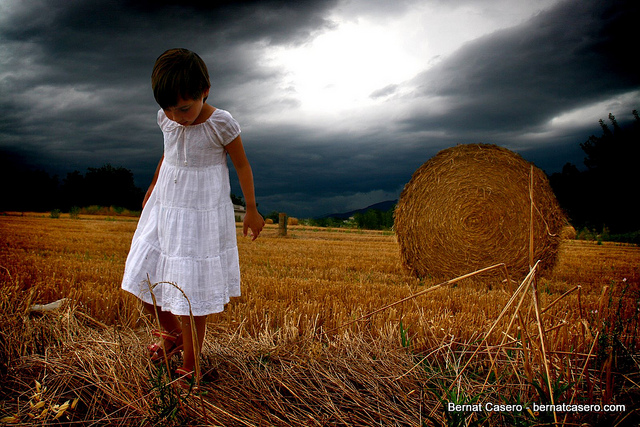
Photo: Bernat Casero
When I was in second grade, I didn’t want to make a Mother’s Day card with the rest of the kids in class. My teacher, a kind person who I’m sure meant well, insisted. “You can write to her in heaven,” she said. I thought it was a stupid idea, and refused again.
My mom died when I was five years old. My father remained single throughout my childhood, and only very recently–to my twenty-something surprise–did he fall in love again, getting married at City Hall to his lovely wife one year ago, at sixty-five. Because he raised me and my brother by himself, I grew up without a mom or a stepmom. The absence was felt keenly and mundanely at the same time: I internally corrected teachers who told us to take permission slips home to our “mom and dad”, I answered small talk questions about my parents with the phrase “my family” (“my family moved here when I was five”), and I cringed at every TV show, movie, or book that used the backstory of a dead mom to explain a character’s troubled emotional landscape.
When I was a freshman in college, I called my father to let him know that I would be attending Yom Kippur services for the first time. He told me that there was a special prayer read by people who don’t have a mother, and asked me to find it and read it. I was moved that Judaism–my own religion, and one I knew next to nothing about–had such a prayer. Today, I read it four times a year: Yom Kippur, Passover, Sukkot, and (right around the corner now) Shavuot. Sometimes I cry. Usually, I don’t. In many ways, I’m accustomed to the idea that I don’t have a mom.
- 2 Comments
May 9, 2013 by Amy Stone
The Wall and I
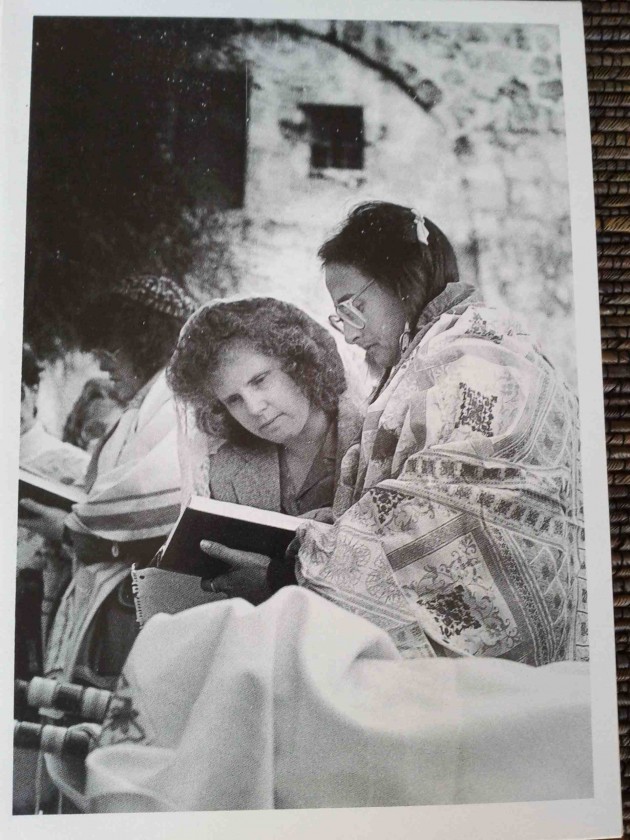
Historic c Barbara Gingold, Jerusalem.
The Wailing Wall is dead – hopefully.
Not just because the term “Wailing Wall” has long been replaced by “Western Wall” or “Kotel” for the remains of the temple mount in Jerusalem but because of the victory – hopefully not short-lived – of Israeli state justice over Black Hats with political pull.
Separate and hopefully finally equal. In the women’s section of the wall, women can now put on all the ritual accoutrements of prayer traditionally worn by men and can conduct services, read from the Torah without getting hauled off by police for offending some Orthodox males in the men’s section of the wall.
Thank God. Or, more precisely, thank the sanity of the Israeli court system, not to be confused in any way with the beit din, the religious court where women are forbidden to give testimony, let alone judge.
The Wall and I Part One
My own relationship to the Wall goes back to the ‘60s. Heading home to New York after three years in Thailand (Peace Corps teacher then Bangkok Post reporter), I stopped in Israel. I landed in Lod (now Ben-Gurion Airport) on Shabbat – like landing in the bottom of an elevator shaft. Almost no way out.
- 3 Comments
April 24, 2013 by Tara Bognar
To Whom Does a Child Belong?
 When a Jewish child is adopted and raised by non-Jews and not brought up to observe Judaism, traditional Jewish law calls him or her a “kidnapped child” (תינוק שנשבה). Still considered Jewish, they have been torn from their people and are raised without the knowledge of how to be a Jew, and thus cannot be held responsible for their transgressions of Jewish law. (This concept has been applied by some also to Jewish children raised by Jews who do not practice or teach them ‘proper Judaism’, as defined by those applying the term.) Historically, captive children were sometimes torn from their communities without their parents’ consent, but not always. Many of the Shoah’s “hidden children,” for example, were raised by non-Jews, sometimes without even the knowledge that they had been Jewish. Their lives were saved and that is a blessing, but from a traditional communal perspective, there is also tragedy. Some Orthodox Rabbis still prohibit Jewish women from donating an egg to a non-Jewish woman or acting as a surrogate for a non-Jewish woman, out of concern that this might lead to a Jewish child being raised as a non-Jew.1
In not so distant American history, Native American children were taken from their communities in such numbers (25-35% of Native children2) that leaders, already struggling with the after-effects of centuries of broken promises, exploitation, oppression, and multigenerational poverty, feared for the future of their community and their children. Rather than supporting Native American communities to provide for and protect their children, predominantly white government representatives ‘saved’ native American infants and gave them into the hands of outsiders.
- 1 Comment
April 23, 2013 by Helene Meyers
Yentl, Me, and 1983
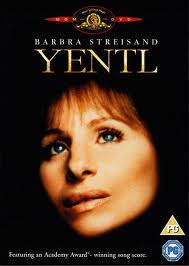 Yesterday, April 22, Barbra Streisand received the Film Society of Lincoln Center’s Chaplin Award. In announcing the award on behalf of the Film Society, Ann Tenenbaum cited Yentl as representative of Streisand’s achievement, a “milestone film.” Yentl was the first flick to have an American woman serve as writer, director, producer, and star. But Yentl also was and is a milestone film because it gave voice, loudly and unrelentingly, to the frustrations and longings keenly felt by a generation of smart, mouthy Jewish women. Born of the old world, Yentl spoke to new world Jewish feminists.
Of course, long before Yentl, Babs had become an icon for Jewish women. A great deal of attention has been paid to the ways in which Streisand made Jewish beautiful. While some of us don’t regard her being featured on the cover of Playboy in 1977 as a compliment, her refusal of nose and surname changes have always been cause for kvelling. The drama of her hair from wild Jewfro to WASPY wisps and back again in The Way We Were struck some of us as a form of talking back to culturally dominant standards of beauty (and I know that I’m not alone in thinking that she was more beautiful before her makeover in The Mirror Has Two Faces). Those of us who hail from Brooklyn, Babs’s old stomping ground and the site of her recent Barclays Center homecoming, also felt the power of identification born of Jewish geography. But Yentl was different. That milestone film indirectly projected on-screen the experience of a generation that was confronting and transcending the impediments to living a full intellectual and spiritual Jewish life.
Yentl came out in 1983. Just a year earlier, I had been a college senior. The director of Hillel, who was also my academic advisor, recommended that I attend an institution where I would be likely to find a nice Jewish husband who would give me the Jewish children I had a responsibility to bear to counter the genocidal work of Hitler. I refrained from cursing this kosher pig out loud, but I left that office feeling at odds with my tribe and wondering whether feminism and Jewishness might be another marriage I didn’t want–or worse, couldn’t have.
- No Comments
April 22, 2013 by Chana Widawski
Green? Or Greeneh?
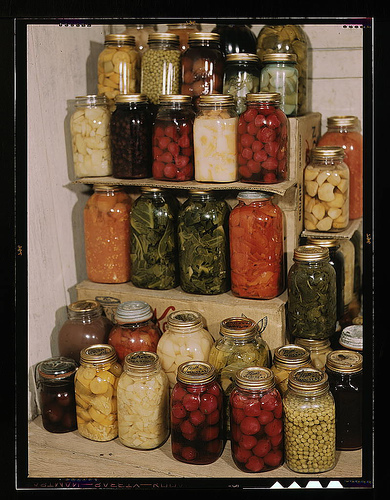
Photo via Library of Congress Flickr stream
As Earth Day rolls in this week, I’ll enjoy the extra attention devoted to the Earth and our environment, from movements to stop fracking and ban disposable plastic water bottles, to maximizing our public space and making it “green.” Likewise, each April we mark Yom Hashoah, Holocaust Remembrance Day, timed to commemorate the active organizing and resistance of the Warsaw Ghetto Uprising.
While the themes of Earth Day and Holocaust Remembrance Day shape who I am and how I embrace the world, I appreciate our calendar’s call to action on each. Later this week I will ride my bicycle to meet with 11th graders at a public high school in Brooklyn, where I will have the opportunity to share my father’s experience of survival during the Holocaust. Together we will explore the power of personal stories and the influence they have upon our own identities. And what ideal timing to do so, the weeks of Earth Day and Yom Hashoah. I feel honored during this time to share my own story–of being “green”, and also “greeneh.”
Growing up, green was the color of the aluminum siding on our house and of our painted garage, teeming with a full assortment of scrap—wood, metal, plastic, heavy paper and anything else that might somehow serve a future purpose. Green was the color of the lawn I often mowed, watered only when needed and early in the morning. My Girl Scout uniform was green. And so were the glasses filled with warm tea left out every morning for me and my sisters, the intentional love-filled leftovers from the big stove-cooked pot of tea our Dad filled his Thermos from each day before heading to his job at Gleason Works in our boat-sized American-made Chevy Impala, which he could fix himself.
Green was a shade of envy, too. Envy of the kids whose sandwiches were packed in throwaway Ziploc bags instead of bulky Tupperware that had to be schlepped home. Envy of all the other moviegoers, who got to socialize while waiting on line for buttered popcorn while we rustled through an over-stuffed tote to access a re-used plastic bag full of white kernels, air-popped at home. Envy of my friends whose families hired plows to remove their snow while we bundled up in hand-me-down snowsuits and shoveled all day.
- 3 Comments
April 16, 2013 by Chanel Dubofsky
Early Abortion: A Papaya Workshop
 I’m a little concerned that the bags under my eyes might be permanent, but more than likely, they’ll go away soon.
This happened last year, too, when I spent two and a half days in the hermetically sealed radical bubble that is the CLPP (Civil Liberties and Public Policy) conference.
My adrenaline is so high all day that it takes me hours at the end of each day to settle at the end of every day that it takes me hours to settle down enough to sleep, and when I can sleep, I resent it, because it takes me out of the space.
CLPP is held every year at Hampshire College in Amherst, Massachusetts. The full title of the conference is: From Abortion Rights to Social Justice: Building the Movement for Reproductive Freedom. It brings together folks (read: troublemakers) to strategize, present, discuss and build around reproductive justice.
On Friday, April 12th , I got on a bus in New York at 8 am, singularly (creepily) focused on getting to CLPP by 4 pm, which is when the first workshop slot of the conference began. I had planned to attend “The Papaya Workshop: An Introduction to Early Abortion,” presented by the Reproductive Health Access Project, since seeing the conference schedule. In the workshop, we would watch a simulation of an options counseling session, and learn how both early abortion procedures work, including a demonstration of a manual vacuum aspiration (MVA) abortion on a papaya.
- No Comments
April 8, 2013 by Yona Zeldis McDonough
A Bona Fide Medium
 Rochelle Jewell Shapiro is a psychic, novelist, essayist and poet. In her latest novel, Kaylee’s Ghost, she continues the saga of Miriam, a character she introduced in her first book, Miriam the Medium. Shapiro tells Yona Zeldis McDonough about how she first became aware of her unusual gifts, the distinctions between psychics and mediums, and Joseph, arguably the greatest Jewish psychic of all time.
So you’re a bone fide medium! Say more about your work.
A medium focuses on seeing the spirits of the dead. I’m more of a “nuts and bolts” psychic. I see a client’s relationships, finances, work life, health concerns, etc. But of course, the spirits are always around. As a psychic, I see in symbols. I get mental images such as the scales of justice signifying either that the client is a lawyer or in the midst of a lawsuit. I see pink flowers for a birthday, red for an anniversary, a couple of Silly Putty eggs for breast implants, etc. It’s like walking around with a unique tarot deck in my head. Each reading is as individual as a thumbprint, as unique as the client himself, which keeps me thrilled with my work.
When did you first discover you had psychic gifts?
There was not one specific moment when I first discovered that I had a gift. As a child, I didn’t know that people couldn’t see people’s auras or get glimpses of what they were doing when they weren’t physically around them. I didn’t know that I was seeing spirits when I saw the transparent forms, the people-shaped shadows. I didn’t know that words that slingshot from my mouth could be other people’s darkest secrets. I had to learn the hard way—A frassk in the pisk, a slap on my big mouth from my mother. It took me a long time to realize on my own how hurtful my unasked-for insights could be. At eleven years old, walking down the aisle of a beach club—anyone remember Roche’s Beach Club in Far Rockaway?—I blurted out, “Mrs. Berger takes Valium and drinks scotch.” I didn’t even know what Valium was. My grandfather had schnapps, not scotch. One of Mrs. Berger’s friends was changing inside one of the wooden lockers and heard me. I was banned from the Bergers’ house. After that, not many other mothers wanted me around either. I was forced to apologize to Mrs. Berger, tell everyone I made it up, even though I felt in my gut that it was true.
- 5 Comments
March 29, 2013 by Amy Stone
Stuttgart seder – where no Jewish feminist has gone before?
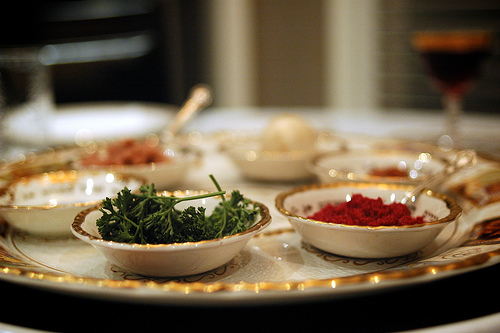
Prologue: Back in New York, the Stuttgart synagogue demands proof of our Judaism before admitting us to the seder given by the Jewish Religious Community of Württenberg (the part of Southwest Germany where Stuttgart is located).
They’re expecting an overflow and Jews get priority. Having to prove you’re Jewish in Germany? As one no-nonsense D.C. rabbi put it, “I’ve had to vouch for the Judaism of people making aliyah, but Germany?” I email a photo of our ketubah. All these years I’d been feeling guilty that I’d sold out and had two male witnesses rather than one female and one male sign our marriage contract. Now bowing to the Orthodox authorities has paid off.
Main event: Problems evaporate. All four of us are admitted to the Stuttgart Jewish community seder – my beloved and I, our raised-Catholic hostess, Christie, and 17-year-old son, Oskar. No security guards. No passport check. About 100 of the faithful are seated at long tables with the Orthodox rabbi at head table, rebbetzin at side. He’s in a kittel (white cloth robe), long white beard, black yarmulke over receding hairline. Christie, a former television newscaster, goes to shake his hand. He recoils. Welcome to someone else’s Judaism.
We get lucky. We end up with a bunch of what looks like Israeli hippies. Turns out they’re The Voca People. Oskar is impressed. We’re clueless. In performance, they’re a singing group of eight, dressed like something between all-white Smurfs and George Segal plaster-of-Paris sculptures with red lipstick. More than 12 million people have already clicked on their website. They’re all about how music needs no translation.
Back at the seder, forget Miriam’s Cup. I have no idea whether or not Miriam plays a role in the Israeli Jewish National Fund (JNF) edition of the parting of the Red Sea.
- 2 Comments
March 25, 2013 by Dasi Fruchter
I Will Never Stop Asking
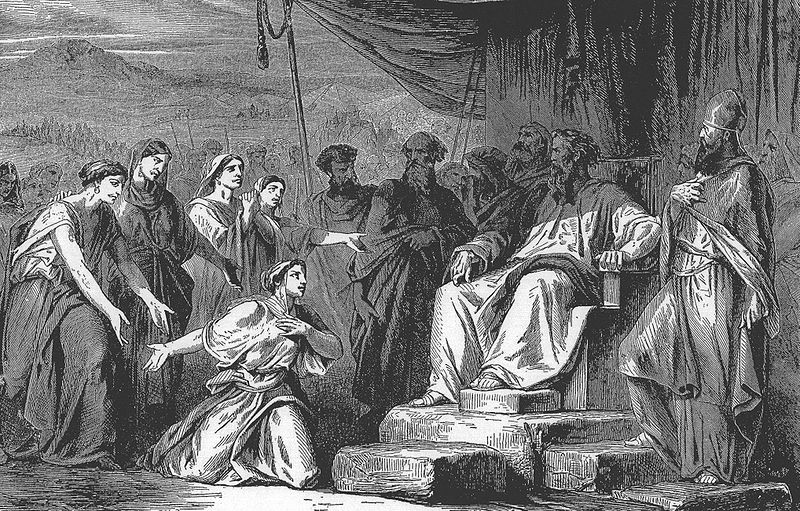 In the future, when your child asks you, “What is the meaning of the stipulations, decrees and laws the Lord our God has commanded you?” tell him: “We were slaves of Pharaoh in Egypt, but the Lord brought us out of Egypt with a mighty hand. (Deut. 6: 20-21)
When my sixth grade teacher asked a question, I kept my hand raised silently in the air until she called on me. If I got the answer right, I felt my skin glow gold. I was well-liked and I felt smart. If I got the answer wrong, I usually remained silent for a little while afterward, ashamed. But at least my hand had been valiantly and silently raised. I quietly groaned if someone interrupted the teacher with a silly question instead of offering an answer.
I think a lot about questions around this time of year, with the approach of Passover. Miriam, Yocheved, Shifra, and Pua’, the heroic women of the Exodus story, are not the only reason that Passover can be called a feminist holiday. I would argue that the centrality of questions in this Spring festival are also a integral part of Passover’s feminist undertones — after all, an important part of being a feminist is asking questions and not taking things for granted. My bookshelf is littered with my favorite books on women and power, women negotiating and women sitting at the table: women asking smart questions.
As a dear teacher David Elcott once said, the Passover seder is where we perform our first volitional act as Jews–we ask the four questions. At the seder, we turn everything upside down so that, indeed, there are questions to be asked. Dozens of them. Thinking of this, I intentionally took a bird’s eye view one year and watched my father in his white robe lead our family seder, mumbling in Hebrew as the guests took a simultaneous bite out of a matzo-mortar sandwich, and as my siblings and I looked each other apprehensively to insure that indeed, we were each leaning to the left and not to the right. I thought about how much these seemingly bizarre actions alone could generate the richest lists of questions.
- 1 Comment
March 13, 2013 by admin
“Be Prepared” To Protest The Boy Scouts’ Anti-Gay Power Play
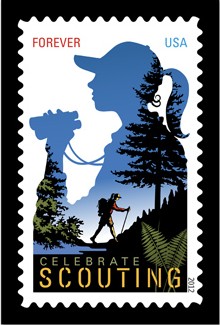 I guess I can’t really take any personal credit for this, but I’m gratified that a chorus of protest, including mine, has prompted the Boy Scouts of America to re-evaluate its policy banning participation by gays and lesbians. (The Girl Scouts have always had a policy of non-discrimination.)
After re-affirming the exclusionary policy as recently as last summer, the BSA announced in January that it may change the rule so that each local unit could decide whether to admit homosexual leaders and scouts. This proposal triggered so much heated debate — within and outside of scouting – that the organization tabled the matter until its next meeting, in May.
It will be interesting to see whether the families who left scouting in response to the BSA’s anti-gay policy would find this new approach to be acceptable. I don’t. When my husband and I enrolled our seven-year-old in Cub Scouts last year, we knew the BSA had a reputation for being homophobic, but we hadn’t realized it was actually written into the organization’s by-laws. We discovered it when the anti-gay policy was re-affirmed last summer, and we left scouting at that time. (Lilith, Winter 2012-2013)
I saw it as a social justice issue that was closely tied to my identity as a Jew. I was especially disappointed that with more than 160 Boy Scout and Cub Scout groups affiliated with Jewish organizations, there wasn’t a bigger protest from Jewish scouting leaders. I think that’s finally starting to change. According to an article in The Jewish Week, officials of the National Jewish Committee on Scouting, which serves as an advisory committee to the Boy Scouts of America, took a vote of their regional chairs and found overwhelming support for an end to the ban on homosexuals in scouting. Members of the committee will push the BSA to change its policy, the article said.
- 2 Comments