 Please wait...
The Lilith Blog
August 30, 2013 by Ilana Kurshan
The Pinnacle of Israeli Education
 I read Gabrielle Birkner’s essay on the high cost of early childcare during our annual August visit from our home in Jerusalem to our extended families’ homes in the New York area. We travel to the States each year in August because this is the one month when we do not have childcare for our toddler son and infant twin girls. Living in Jerusalem, we are fortunate to benefit from the network of excellent Mishpachtonim. This term, from the Hebrew word for family, is a cross between a home daycare and a playgroup. Most of our peers who are working parents of young children place their children in such settings, rather than hiring a private caretaker or sending to an institutionalized preschool. In a Mishpachton the caregiver is generally a young mother who assumes responsibility for several young children during working hours.
- No Comments
August 29, 2013 by Sarah M. Seltzer
Orange is Our New Obsession
 Summer 2013: the season that those of us blessed with Netflix accounts compulsively binge-watched the women’s prison dramedy, “Orange is the New Black.” The series follows a WASPy Smithie named Piper Chapman (the fictional avatar of memoirist Piper Kerman) during her year in the Fed for a youthful indiscretion: acting as a drug mule for her ex-girlfriend. In each episode, viewers not only encounter the sexually flexible love triangles, beefs, and tribulations of the inmates, but also heartbreaking flashbacks that show how they ended up behind bars.
My experience as a viewer was typically intense. I suffered acute insomnia from hours of overstimulation as my husband and I raced towards the final episode. I lay in bed pondering the characters’ fates (“They’re not real!” I reminded myself). I openly sobbed on my couch as the plotlines deepened, exploding the broader caricatures we had initially seen. One supposedly brash inmate, Taystee, returns to prison after struggling on the outside; another stoic inmate, Ms. Claudette, who had finally learned to hope for release, loses that hope. And the kicker: the unstable but observant Suzanne, who’s called “Crazy Eyes” by the other inmates, poignantly asks Piper to explain why they call her that–indicting the audience for laughing at her in earlier episodes.
After I finished watching the show, my obsessing continued. I followed the debate about the show’s accuracy, its race and gender politics, including its groundbreaking transgender character, Sophia, played by Laverne Cox, a transgender actress. Is it okay to use a morally ambiguous white protagonist as a “Trojan Horse” to illuminate the lives of women of color–as the show’s creator Jenji Kohan asserted she did on NPR’s Fresh Air? (Kohan, who’s Jewish, also noted in the interview, with some glee, that Piper Chapman is a “WASPy, cold shiksa.)
And as Roxane Gay asks, is the show’s glowing reception really earned, or are we so starved for decent content about diverse women, that any such show with reasonable smarts seems more revelatory than it actually is (I call this the “Juno Effect”)?
- No Comments
August 29, 2013 by Chanel Dubofsky
A Blue Slip and a Bag of Letters
 There are two new things of relevance. First is a blue slip, belonging to my grandmother, which I unearthed from a bag of other things of hers in a closet. (Also in the bag: letters and cards I sent her, a sweater of hers which used to be mine.) I kept the slip, and threw away everything else. The slip is narrow and stiff, and even though I aspire to be the kind of person who’s daring enough to wear it as a skirt, I never will. It’s strange that I’m keeping it, the memories that it carries are the least pungent.
The second thing is a set of wooden bookends in the shape of ducks. Mallards, I think, but really, I don’t know ducks. My uncle sent them to me after I replied yes to his email: “Your aunt and I are doing some cleaning and we found these bookends. I bought them for your mother years ago at Johnson’s Bookstore. Now that you have your own place, would you want them?”
I remember these bookends from our house- heavy, but oddly slippery on the bottom. They probably can’t be trusted to support too many books. They’re kitschy. When I said yes to them, I was thinking about my grandmother telling me that one day, when I had a house, I could put all the antiques she collected and would leave me in it. I couldn’t imagine owning a house and filling it with so many things that were so beautiful and so cumbersome. But these are just bookends.
- 1 Comment
August 27, 2013 by Merissa Nathan Gerson
Miley Cyrus and a Whole Lot of Wrong
 I have what I am going to term Miley fever. It started when I began watching the VMA replays and there she was, in her horrible glory, an emblem of America’s worst social ills. Then, what followed, an obsessive reading and re-reading of the articles meant to illuminate what we had just witnessed. And one by one I realized the writers were themselves exhibiting subtle sexism and racism of their own. Is Miley the social ill, or is she the catalyst to revealing our deepest issues?
It wasn’t just the sideways tongue, or the bad costumes, or the wannabe Katy Perry set. It wasn’t the poor allusions to Britney, or the fact that there was little to no actual dancing happening on that stage. It was the basic fact that first and foremost, not even naked and alone, not even on the most intimate of beds would anyone want to see or experience those lewd moves. They weren’t sexy, they weren’t strip club worthy, they weren’t elegant, they weren’t really anything. There was a kid on stage with a lot of stuffed animals dressed as black women, or black women dressed as stuffed animals, and she was acting out everything she learned and didn’t learn on TV.
- 2 Comments
August 27, 2013 by Ester Bloom
Finding Jesus in England

photo by author
If Jesus really had come back, wouldn’t he stay a while? Set up a carpentry shop somewhere in Bethlehem and live quietly there, making pita and salad in his flat, showing the wounds in his hands to the little ones who crowd his door, and turning water to wine to serve the drop-in guests who have one quick question about Paradise?
My husband, my 11-month-old, and I are standing before a Christian children’s souvenir store called “Shalom: The Rainbow Shop,” in the village of Bourton-on-the-Water. The baby is making noises like a raptor and eating her hat. We recently arrived in the British countryside from Vilnius, Lithuania, and are still adjusting to the transition from East to West. Kipling, that most English of poets, wrote, “East is East, and West is West, and never the twain shall meet.” What would he make of this mash-up of religions, a display with the same blue-
- No Comments
August 23, 2013 by Melissa Tapper Goldman
On the Jewishness of Minding Your Own Damn Business

Tony Fischer Photography
It’s been a banner month for sexting and moralizing about sexting. I offer no conclusions about Anthony Weiner’s most recent spate of online dalliances, especially (but not exclusively) since he’s not actually an elected official. But with Weiner and Spitzer entering the political arena again, we’re back to chatter on sex-related scandals. The human drama of the Weiner story is so attention-grabbing because of its extensive electronic documentation alongside its many unanswered questions, an open field ripe for our own projections. Did he betray his family? Or is it a non-traditional marriage? Speculation is cheap. But while it’s always necessary to take a stand when people’s rights may be violated, there’s another counterbalancing value to apply, and that is minding our own damn business.
I grew up in Barney Frank’s Massachusetts. If ever there was a sex scandal that transgressed the taboos of the time, Barney Frank had it cornered. Then he went on to spend 17 more fruitful and celebrated years in Congress. Like many other politicians who have successfully moved past sex scandals, Frank had developed a reservoir of goodwill through his work before the incidents. The opinions about him that mattered were the ones about his political record, not the politics of his love life. It’s easy to distract ourselves with politicians’ personal lives because that’s something we think we have in common with them, a foothold for making sense of their capacity for loyalty and common sense. That said, I’d never want to be married to a Congressman and I couldn’t begin to imagine my way into the mind of someone who would. When it comes to politicians who don’t make their careers by policing what happens in other people’s bedrooms, it’s worth inspecting the actual motivations behind our inclination to police theirs. I was shocked when Weiner stepped down. I can only assume there were circumstances beyond the aptly titled twit pics, since politicians have weathered much worse and refused to resign, even when, unlike Weiner, their deeds involved dereliction of their actual jobs.
- No Comments
August 20, 2013 by Elana Sztokman
Not Your Typical Story, Not Your Typical Cover Girl

It’s a thrill to see an image of yourself on the cover on New Republic. Well, it wasn’t literally me on the front cover, but it was an image of Orthodox Jewish women with a headline about Orthodox Jewish women, so it might as well have been. For Orthodox women, to see a story like this kind of feels like someone walked into your home and wrote a story about your life. Like I said, a little thrill.
Of course, last week’s story by Allison Kaplan Sommer and Dahlia Lithwick wasn’t a typical story about Orthodox women, not the Faye Kellerman type of soft, gentle, glowing obedience to a set of rules that glorify traditional gender roles and female body cover. This wasn’t Aish or Chabad or even Oprah sharing an idealized puff-piece about “The Jewish Woman” and how peace in the world rests on her divine, passive femininity. This was a very different narrative. It was about women who are definitely not content and satisfied with social demands placed squarely upon them. It was about Orthodox women fighting for change. Maybe that’s why I liked it so much.
The story of encroaching demands on women’s bodies – cover up more, be more silent, stay off the street, go to the back of the bus, don’t let anyone see your face or hear your voice — began decades ago but has been increasingly escalating. Today, demands placed on women are at times accompanied by violence, whether it’s chairs being thrown at the Western Wall or rocks being thrown in Beit Shemesh at women walking on a street where women are banned, or wearing a skirt that shows too much of her calf. This is a story about radical ideas and radical forces taking over religious Judaism while the secular world has remained largely indifferent.
This religious radicalism rests on an ancient misogyny, the idea that if women’s bodies and lives are controlled by the men in the world, all will be good in the universe. I think of it as the Ahashverosh model. We read this idea in the Book of Esther. When King Ahashverosh wanted to show off his power, he summoned his wife Vashti to “appear”, because we all know that having a gorgeous wife makes you powerful (heck, maybe I should get one, too). And when Vashti refused (you go girl!), well, the king was worried that all hell would break loose. So not only did he dethrone her and reportedly have her killed, but most importantly, he wrote to his entire kingdom about it. He told his aides: “When the king’s letter shall be published throughout all his kingdom, all the wives will give to their husbands honor, both to great and small…. that every man should bear rule in his own house, and speak according to the language of his people.” Meaning, as long as each man is ruler over his household – read, over his wife – there will be peace in all 127 lands. It’s the unfortunately resilient idea that political order relies on men keeping women in their place.
- 1 Comment
August 14, 2013 by Maya Bernstein
Leaning In Means Letting Go
 In her cover story of Lilith’s summer issue, Gabrielle Birkner takes a hard look at the economic challenge facing women who take seriously Sheryl Sandberg’s plea to “lean in” to their careers, even as they begin to have children. She points out that quality day care often costs more than women are earning, and concludes: “Leaning in necessitates not only a “will to lead,” but also a structure that supports women’s ambitions. Access to quality, affordable childcare is key.” In another recent cover story on this topic, Judith Warner, writing for the New York Times magazine, comes to a similar conclusion. She points out that the debate about women in the workplace, with its binary focus on whether or not women should opt to “lean into” work or “lean into” their home lives, is actually misplaced. She writes, “at a time when fewer families than ever can afford to live on less than two full-time salaries, achieving work-life balance may well be less a gender issue than an economic one.”
The “Lean In” debate, with its focus on women and their personal decisions, is masking a broader societal challenge, which is felt to the extreme by families in general, and women in particular. We have not figured out how to ensure that children receive quality care, and the work force quality and committed employees. The lightening rod of this debate has been the working mother, and she has been blamed and shoved from side to side, quite roughly. Warner points out that the pendulum has been swinging wildly, backed up by “scientific studies,” which seem to simply offer support for the latest trend. She implies that the currently popular plea to “lean in” to work life, and to avoid “excessive mothering,” is simply a reaction to the economic climate in which we reside:
The women of the opt-out revolution left the workforce at a time when the prevailing ideas about motherhood idealized full-time, round-the-clock, child-centered devotion. In 2000, for example, with the economy strong…almost 40 percent of respondents to the General Social Survey told researchers they believed a mother’s working was harmful to her children (an increase of eight percentage points since 1994). But by 2010…fully 75 percent of Americans agreed with the statement that “a working mother can establish just as warm and secure a relationship with her children as a mother who does not work.” And after decades of well-publicized academic inquiry into the effects of maternal separation and the dangers of day care, a new generation of social scientists was publishing research on the negative effects of excessive mothering: more depression and worse general health among mothers, according to the American Psychological Association.
- 2 Comments
August 14, 2013 by Guest Blogger
Priced Out of Participation
by Marcia Cohn Spiegel
 I just finished reading about the “Lean In” era and remembered that in the summer of 1980 there was a feminist preconference for CAJE (led by Sue Levi Elwell, Paulette Benson and myself). The main concern of the Jewish women educators and professionals who attended was how, on the salary they were paid and the hours that they worked, they could afford child care, religious school, camp and synagogue membership.
They were concerned that their work as Jewish professionals would not allow them to be part of the organized Jewish community. They were priced out of participation.
So what else is new?
- No Comments
August 13, 2013 by The Editors
Meet Amira Dotan!
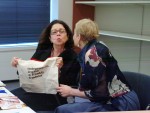
Amira Dotan is a former Knesset member and the first woman to attain the rank of brigadier general in the Israeli Defense Forces, where she served from 1965-88. She is the founder and joint CEO of the Mediation Center at Neve Tzedek, serves on corporate boards, and is a trustee of several of Israel’s academic institutions. She is currently involved in fascinating work with various populations in the Negev. General Dotan shares with Susan Weidman Schneider of Lilith and Rabbi Julie Schonfeld of the Conservative Rabbinical Assembly the honor of being named recently as a Thomson Fellow.
Last week, Amira Dotan addressed a breakfast meeting hosted by Lilith and the Rabbinical Assembly to talk about women’s roles in many sectors of Israeli society today.








- No Comments