 Please wait...
November 22, 2010 by Emma Gray
An Ode to the American Girl… Doll.
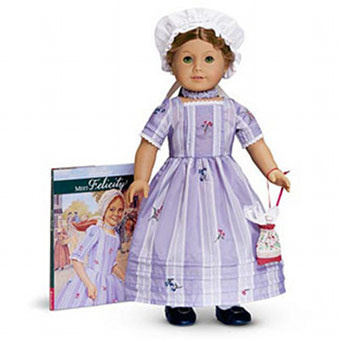 Recently, Jezebel alerted me to the fact that American Girl was retiring its Revolutionary War doll, Felicity Merriman. I got incredibly sad at the news, although my Felicity doll has long-been tucked away in the basement of my family’s house in Maryland. It also got me thinking about American Girl dolls, and their symbolic significance.
I recognize my own privilege in owning even one of these dolls. To buy one doll and one book costs nearly $100, which means that they are only available to a small sector of the population. The price factor alone greatly skews the company’s target audience and therefore determines what is produced.
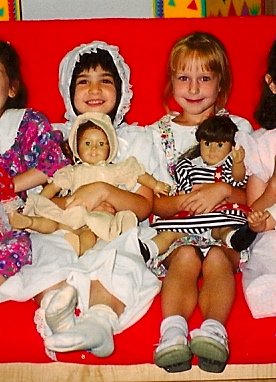 That being said, the dolls gave me a wonderfully empowering way to connect personally with US history. Their stories were fascinating and varied, and I read the books voraciously. From Swedish immigrant Kirsten and slave-girl Addy, to WWII-era Molly and suffragette Samantha, I connected to these girls and their narratives.
The experiences of women, and especially girls, are so often erased from our textbooks and collective historical memories. The American Girl dolls were one of my few reminders that women played immeasurable roles in the historical events that we cling to as a culture. Young women were immigrants, loyalists, revolutionaries, slaves and activists – even if they receive little recognition.
But when I worshiped these fictional ladies, every American Girl celebrated Christmas. In all of my empowered connectedness to these girls and their adventures, I always felt something lacking. Where was MY history?
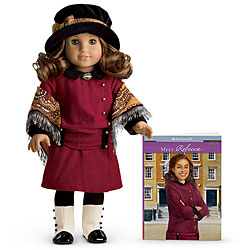 It was there partially, as I have always felt connected to my identity as an American. But my family’s trajectory was nowhere to be found in these girls’ stories. Each time the glossy catalogue was sent to our house, I doggedly perused it, secretly hoping that a Jewish doll would appear in its pages. As a child, it seemed so important that I find an AG story that validated my story. Rebecca Rubin now exists, but she did not become a reality until long after I lost interest in these American Girls.
The truth is that every girl deserves to see representations of herself and her history. American Girl dolls have the potential to be amazing educational tools and empowering symbols for all young women, but there is still much progress to be made in the AG universe. First of all, keep pumping up the racial diversity! Secondly, knock down the price! It’s not as though upper middle-class girls have a premium on history (or HERstory).
–Emma Gray
- 1 Comment
November 19, 2010 by Jill Finkelstein
Link Roundup: A Week in Women's Rights
Welcome to this week’s installment of Lilith’s Link Roundup. Each week we’ll post Jewish and feminist highlights from around the web. If there’s anything you want to be sure we know about, email us or leave a message in the comments section below.
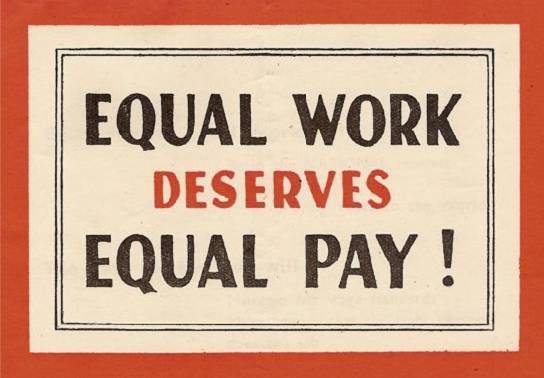
This past week has been a big, yet not so successful week for Women’s Rights. On Wednesday, the Paycheck Fairness Act lost by two votes in the Senate. The Act would have deterred wage discrimination by closing loopholes in the Equal Pay Act and by barring retaliation against workers who disclose their wages to coworkers. Women currently make 77 cents to $1.00 that men make. Last week, we reported that a study, conducted by Berman Jewish Policy Archive, found that there is also a significant pay gap among Jewish communal professionals. Check out the results to find out how your senator voted on the Paycheck Fairness Act.
In other Women’s Rights news, on Thursday the Senate held a hearing on CEDAW, the Convention on the Elimination of All Forms of Discrimination Against Women. CEDAW was adopted by the United National General Assembly in 1979; however it has yet to be ratified by the United States. [CEDAW2010]
The Forward had an interesting blog post this week about the struggles faced by Jewish women who opt not to have children. [The Sisterhood]
–Jill Finkelstein
- 4 Comments
November 18, 2010 by Jill Finkelstein
Reporting Back: The National Museum of American Jewish History
 This past weekend, I attended the opening of the National Museum of American Jewish History. I have to admit, I was blown away. Unfortunately, I did not attend the gala with Bette Midler and Jerry Seinfeld, however I was lucky enough to attend the Only in America opening ceremony, which included speeches from Philadelphia Mayor Michael Nutter, Governor Ed Rendell, and Vice President Joe Biden. Having the Vice President attend to celebrate the museum made it even more exciting. While many of the speakers discussed the significance of the museum’s location at “the most historic square mile in America,” Governor Rendell shared how his commitment to the museum came from a promise he made to his father as a young child. Though his parents chose not to give him a formal Jewish education, his father told him “I never want you to forget that you are Jews, I never want you to forget your heritage… the struggles Jewish people have taken for thousands of years.” The opening ceremony also included the affixing of the mezuzah, 50 shofar blowers who helped kick off the ceremony, and the Philadelphia Singers who led the crowd in Shehechiyanu and Irving Berlin’s G-d Bless America.
 The museum itself was quite impressive! Our open house tour began at 3:00pm, and the two and a half hours was definitely not enough time to explore. With its four floors, the museum’s layout is similar to the Holocaust museum beginning at the top floor. Most of my knowledge of American Jewish history involves the emigration of Eastern European Jews in the late 1800s to the mid 1900s. [Editor’s note: learn more about the history of Jewish women in America with a special peek into our Summer 2010 article, “What’s in that Diary?”] I was fascinated to learn about the Jews who emigrated during the 1600s to early 1800s and role that Jews played in colonial life. I was stunned when I came across a covered wagon. All those years that I played Oregon Trail, I never realized that there were Jews who made the same journey out west. Another exciting exhibit was the model home from the 1950s that gave visitors a look into mid-century Jewish family life. It even included a television that played classic Jewish TV moments, like Sammy Davis Jr.’s commercial for Manischewitz wine and clips from The Goldbergs.
 Unfortunately, just as I approached the section dedicated to feminism on the second floor, the docents quickly started escorting everyone out. Luckily the museum will be open to the public on November 26th and I’ll be able to resume my tour!
–Jill Finkelstein
- No Comments
November 16, 2010 by Amy Kronish
Feminists in Focus: David Grossman on Film
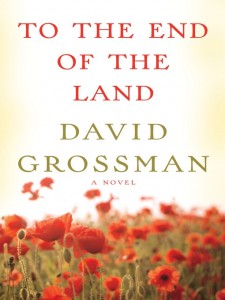 There has been a lot of attention given recently to David Grossman’s newest work of fiction, To the End of the Land, in which the novelist presents a tremendously human drama about the burdens of living in a society at war. And, as we know, Grossman himself paid a most bitter price, having lost his son in the Second Lebanon War of summer 2006.
But two of Grossman’s previous novels, not focused on issues of war, have recently been adapted into feature films: Someone to Run With and The Book of Intimate Grammar. Although very different from each other, both of these are stories of the challenges of growing up, and both deal heavily with issues of gender in our society. In both stories, the young people are presented with a world that needs changing – in one story the young heroes stand up to the challenge; in the other, the hero succumbs. (more…)
- 1 Comment
November 15, 2010 by Mel Weiss
On Israel and Aggression
 I’m a third-generation born New Yorker. Aggression in random interpersonal relations has never been my issue. I have been known to slap the hood of an anxious cab that barely skidded to a stop, to icily and brutally reject late-night propositions on subway platforms, to push as good as I got pushed. And then, I moved to Israel for a year.
Part of my sudden feeling of meekness is surely just that my Hebrew isn’t great, and I’ve been learning a new city.
But here, on the streets of Tel Aviv, I’m no longer the aggressive one. Toto, we’re not in Kansas anymore. We’re not even on Broadway.
Look, it’s not that everything you’ve heard about all Israelis being hyper-aggressive is true. There are people here who avoid public confrontation, who respond to a yelling shuk vendor by shrinking away or allow the ever-present bicycles to roll over their toes unremarked upon. It’s just that there aren’t very many people like that. At all. And, it’s worth noting, there doesn’t seem to be much of a gender bias for who gets included in such a group. (more…)
- 1 Comment
November 12, 2010 by Jill Finkelstein
Link Roundup: Law Professors and Communal Professionals
Welcome to this week’s installment of Lilith’s Link Roundup. Each week we’ll post Jewish and feminist highlights from around the web. If there’s anything you want to be sure we know about, email us or leave a message in the comments section below.
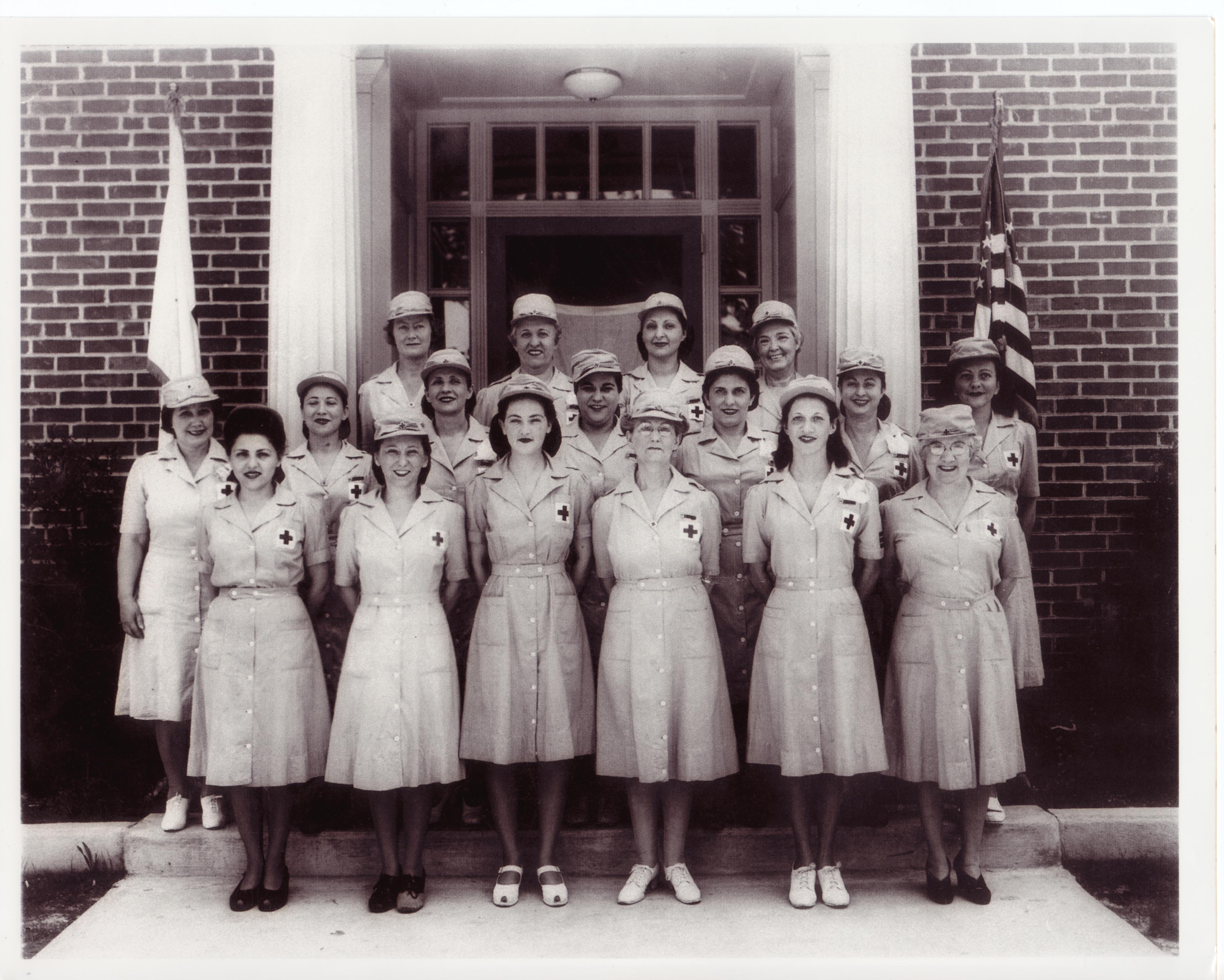
In honor of Veteran’s Day, Jewish Women’s Archive (JWA) highlighted stories of Jewish women who served in the United States Armed Forces. [Jewesses With Attitude]
Lovely profile of Lilith’s longest standing board member, Barbara Dobkin! [Wall Street Journal]
This week, psychology professor Brenda Major revealed the truth about claims that having an abortion can lead to women to “mental health risks, including post-traumatic stress and a greater danger of suicide.” [Washington Post]
Results of a new study conducted by Berman Jewish Policy Archive revealed the significant pay gap among Jewish communal professionals. The study found that while women make up 2/3 of Jewish communal professionals, they earn an average of $28,000 less than men. When the study controlled for “age, years in the field, level of responsibility, hours worked, and degrees earned, women’s salaries still trail men’s by about $20,000.” [eJewish Philanthropy]
 Marjorie Ingall shared her thoughts on Hush, a new young adult novel that uncovers sexual abuse in the ultra-Orthodox community. [Tablet Magazine]
On a lighter note, we happened to stumble across this excellent list of sexual assault prevention tips that are guaranteed to work. [Feminist Law Professors]
–Jill Finkelstein
- 3 Comments
November 11, 2010 by admin
Have you seen this one yet? “It Gets Better – Gay Orthodox Jews”
The It Gets Better project certainly is making the rounds–but this clip is particularly striking. Link to your personal favorites below!
- 3 Comments
November 5, 2010 by Jill Finkelstein
Link Roundup: Politics and Prayer
 Welcome to this week’s installment of Lilith’s Link Roundup. Each week we’ll post Jewish and feminist highlights from around the web. If there’s anything you want to be sure we know about, email us or leave a message in the comments section below.
This week, our friends at Jewish Women’s Archive (JWA) introduced a free online curriculum designed to teach about Jewish activism in the Civil Rights Movement. This new gender-inclusive curriculum, named Living the Legacy, was developed by Judith Rosenbaum to include the lesser-known women Civil Rights activists and to give their stories a rightful place in history. [The Sisterhood]
At a Knesset hearing on Monday, opposition leader Tzipi Livni argued that women should be more involved in peace negotiations. She emphasized that her argument was “not just a matter of women’s rights, but is in the best interest of the State of Israel.” [Jerusalem Post]
A new study conducted by the Women’s Philanthropy Institute at the Center on Philanthropy at Indiana University found that women are more likely to give money, and on average give more money, than men. The study, called Women Give 2010, hopes to both encourage charities to expand their targeted donor base and encourage more women to give by showing them the powerful impact of their donations. [Feministing]
The Democrats may not have fared so well on Election Day, however there was some hope for many of the victorious Jewish candidates, including Senator Barbara Boxer, who also celebrated the 18th anniversary of becoming one of the first Jewish women elected to the U.S. Senate (the other being Dianne Feinstein) this week. [New Voices]
–Jill Finkelstein
- 1 Comment
November 5, 2010 by Bonnie Beth Chernin
A Bright Spot in the Mid-Term Elections
 After the shift in Congressional power, I’m grateful for any bright spot in the 2010 mid-term elections. For me, that bright spot was the passage of the Kansas Disqualification Amendment, which no longer allows the Kansas legislature to take away a person’s right to vote because she or he lives with mental illness.
Not that the Kansas legislature had ever used its power to stop someone with mental illness from voting, but the law was on the books, and with it the stifling weight of stigma and discrimination. With the passage of the statewide ballot, also known as Constitutional Amendment 2, people living with mental illness in Kansas have one less burden to bear.
It’s not on the same scale as Ken Steele’s Mental Health Voter Empowerment Project started in 1994 that registered people with serious mental illness to vote (read more in Steele’s powerful memoir The Day the Voices Stopped) yet it rights a wrong that should have been corrected years ago.
I learned of the Disqualification Amendment around the same time I read Elliot Kukla’s article, “The Spirituality of Madness,” in a recent issue of Zeek. Kukla turned to biblical stories to learn what Judaism teaches about mental illness. His reference to Naomi’s depression in the Book of Ruth led me to read the story again. (more…)
- 1 Comment
November 4, 2010 by Emma Gray
The Glee is Mine
 I am a 23-year-old aspiring writer and I moved to New York City just over a month ago. (I’m a newcomer to the Lilith blogosphere, and as someone who strongly identifies as a young Jewish feminist, it seems like a match made on JDate.) I’ll be exploring the way that pop culture intersects with and shapes identity – specifically my identity as a Jewish woman.
Glee is a TV show that has brought nothing but joy into my life. Not only has it produced a slammin’ cover version of “The Boy Is Mine,” (I’ll admit I’m a sucker for ’90s Brandy), but it also touches upon some potent issues. Musical theater and a progressive social message all in one? Pretty much a dream come true.
The most wonderful thing about Glee is how thought provoking it is. The most recent episodes have touched upon an array of issues, from male body image to the fluidity of sexuality. (Side Note: I’m completely obsessed with Brittany and Santana’s lady-loving.)
It has also been interesting to watch the way that the show deals with its Jewish characters. (more…)
- 2 Comments