 Please wait...
January 21, 2011 by Amy Stone
Feminists in Focus: Reporting back from the New York Jewish Film Festival 'The Klezmatics: On Holy Ground'
 At the 20th New York Jewish Film Festival, presented by The Jewish Museum and the Film Society of Lincoln Center (through Jan. 27).
For any woman musician who’s fantasized about being the only babe in the band, “The Klezmatics: On Holy Ground” is a cautionary tale not to be taken lightly.
The Klezmatics describe themselves as a dysfunctional family. In a music industry falling apart, they went from winning a Grammy to firing the agent who helped make it happen, to seeing their record label go out of business, the office replaced by a methadone center. They’ve gone from being one of the first neo-klezmer bands back in the ‘80s to bringing the music back to Germany and Poland and they’ve performed before capacity audiences at Town Hall in New York City and Walt Disney Concert Hall in L.A. They’re in their glory on a big stage with an expanded band, Oriental carpets covering the floor and a starry night backdrop behind them.
Members come and go, including original fiddler Alicia Svigals, but some of the original founders are still with the band after 24 years. All this is chronicled by filmmaker Erik Greenberg Anjou (“A Cantor’s Tale” 2005), who followed the band’s highs and lows for more than three years. (more…)
- No Comments
January 17, 2011 by Amy Stone
Feminists in Focus:Reporting back from the New York Jewish Film Festival ‘My So-Called Enemy’ and ‘The Human Resources Manager’
At the 20th New York Jewish Film Festival presented by The Jewish Museum and the Film Society of Lincoln Center (through Jan. 27).
 Don’t expect a feel-good movie from “My So-Called Enemy” – the documentary following Jewish Israeli and Palestinian teen-age girls in the U.S. for a 10-day “Building Bridges for Peace” program back in 2002.
Director Lisa Gossels has dedicated a chunk of her life to following six of the 22 girls to the leadership retreat in New Jersey then back home to Tel Aviv, Haifa, East Jerusalem and the West Bank over the next seven years.
The 90-minute documentary opens with urgent texting between Jewish Israeli Gal and Christian Palestinian Rezan. It ends with their determination to remain connected as they stand dwarfed by a towering cement security wall separating Rezan’s village from East Jerusalem. Gal, the pro-Palestinian rebel in her religious family, has become a sergeant in the Israeli army. She changed out of her uniform for the meeting.
Not a pretty picture, but not without hope.
Some of girls bond their first day in New Jersey over the weirdness of American broccoli pizza. In a joyous dance scene, some of the Jewish girls overcome their fear of the kaffiya’s symbolism, with one girl seductively waving it as she undulates to the music. Quite a moment since they’re all coming out of the bloody violence on all sides of the Second Intifada. (more…)
- No Comments
January 17, 2011 by admin
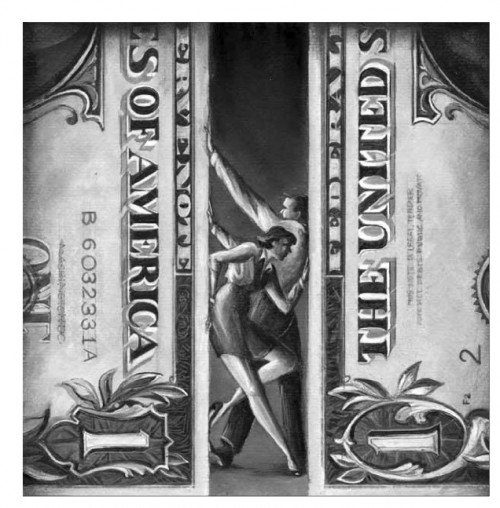
Women’s Roundtable Podcast: Wage Gaps and the Pill
Introducing the latest podcast from the Women’s Roundtable, a collaboration between Lilith and the Forward’s Sisterhood blog…
This month, Lilith’s editor in chief Susan Weidman Schneider and assistant editor Sonia Isard chat with Gabrielle Birkner and Jane Eisner of the Forward about the latest hot topics, including the ever-present pay gap between men and women–even in the Jewish communal workforce and whether or not oral contraceptives have led to a fertility crisis.
- No Comments
January 14, 2011 by Jill Finkelstein
Link Roundup: Tragedy and Race Relations
Welcome to this week’s installment of Lilith’s Link Roundup. Each week we post Jewish and feminist highlights from around the web. If there’s anything you want to be sure we know about, email us or leave a message in the comments section below.
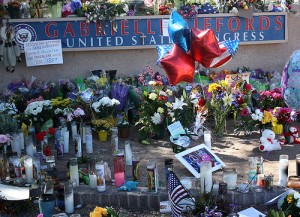 This past week was filled with deep sadness in the Jewish community following the loss of beloved singer/songwriter, Debbie Friedman, and the tragic shooting in Tuscon, Arizona that left 6 people dead and 14 injured, including U.S. Representative, Gabrielle Giffords. Despite being left in critical condition, Giffords is making remarkable progress towards recovery. [NY Times]
Sarah Palin took some heat this week after she released a video accusing journalists and pundits of manufacturing “blood libel” in response to the Tuscon shooting. The term “blood libel,” which has been used to describe false claims that Jews murdered Christian babies in order to use their blood for religious rituals. These accusations date back to medieval times and have been used to justify the persecution of Jews throughout history. [NPR]
Wednesday, January 12th, marked the 1-year anniversary of the devastating earthquake that left Haiti in ruins. UN Women released a short documentary highlighting the spike in violence against Haitian women over the past year, as the country works hard to rebuild. [Youtube]
 In honor of Martin Luther King Day, JTA reporter, Sue Fishkoff interviewed the prominent rabbinical supporters of the Civil Rights Movement. The rabbis recalled the historic day when they marched with Martin Luther King Jr. and reflected on the hardships they endured to fight for justice. [JTA]
Last week, it was announced that a new edition of The Adventures of Huckleberry Finn that replaces the “n-word” with “slave” would hit shelves next month. In response, Marjorie Ingall took to her column to discuss the challenges of talking to your children about racial slurs. [Tablet Magazine]
Lilith contributor, Rabbi Danya Ruttenberg, criticized NY Jewish Week writer Jonathan Mark today for his comparison of Debbie Friedman’s sexuality to the sexual misconduct committed Shlomo Carlebach. [Jewschool]
- No Comments
January 14, 2011 by Emma Gray
Music, Feminism and Debbie Friedman
 My first memory of Debbie Friedman’s music came from my mother. At the tender age of three, before bedtime I would listen to my mother sing “L’chi Lach.” I had no idea who Debbie Friedman was, but I already knew that her music was good for my soul…or at the very least, my sleeping patterns. When I first started thinking about writing this piece I wanted to explore the connection between feminism and music.
After Friedman’s tragic passing, it only seemed fitting to focus my thoughts largely on her.
As much as music in general, and Friedman’s in particular, played a part in my sleeping life, as I grew more cognizant of the world around me it began to hold equal weight in my waking life – specifically in my burgeoning feminism. As long as I can remember, my feminism has been connected to and encouraged by empowering, woman-centric music. Music is a powerful political and personal tool and therefore the perfect medium with which to make “the personal political.” Music evokes emotion, takes us back in time to a specific place or person and calls us to action.
Friedman’s music managed to call Jewish women to action; to remind us that we could and should take ownership over our religious identities. For years I didn’t even realize that “Miriam” and “Mi Shebeirach” were Debbie Friedman’s songs. I just thought that they were universally acknowledged, Jewish classics—which goes to show how much she was embraced by the larger community. The song “Miriam” stuck with me so firmly because it spoke explicitly about a woman and gave her a current importance that traditional Jewish History often does not. Although today the lyrics might not seem particularly revolutionary or subversive, they still give voice to Biblical women and by extension affirm the importance of women in the Jewish community today.
The earliest groundwork for my musical feminist awakening was surely laid by Debbie Friedman. As I grew up a little more and began attending a progressive, Jewish summer camp, I continued to embrace and be empowered by women musicians. Dar Williams is the most obvious example of this (and it is worth nothing that she and Friedman were both influenced by Joan Baez). Her words pushed listeners to question the rigidity of gender roles and religious affiliations, and pushed back at the consumerism that so often fuels these divisions. I remember being eleven or twelve, listening to “When I Was a Boy” and realizing what it meant to connect in a real way to lyrics:
And now I’m in this clothing store, and the signs say less is more
More that’s tight means more to see, more for them, not more for me
That can’t help me climb a tree in ten seconds flat
We live in a society where we are constantly bombarded with commercials urging us to buy this and that in order to be a real woman or real man. Songs that speak to this and other flawed realities, and make the listener feel angry enough to want to change them, are powerful tools. Luckily there are quite a number of rocking, lady-empowering artists out there whose songs do just that. In recognition of a few of them I have created a suggested listening playlist for this post.
1. Dar Williams, “As Cool As I Am”
2. No Doubt, “Just A Girl”
3. Alix Olson, “Eve’s Mouth”
4. Salt-N-Pepa, “None of Your Business”
5. Mirah, “Jerusalem”
6. Ani DiFranco, “Not A Pretty Girl”
7. Rilo Kiley, “It’s A Hit”
8. Jewel, “Who Will Save Your Soul”
My father, a childhood friend of Debbie Friedman’s, recently reflected upon her assertive nature and the way that she constantly encouraged her audiences to interact with her music. This interaction is exactly what makes “politically charged” music so moving. So readers, I encourage you to listen closely, get inspired and create some change; just the way Debbie surely would have liked it.
-Emma Gray
- 1 Comment
January 13, 2011 by Amy Stone
Feminists In Focus: ‘Mahler on the Couch’ Without Jewish Guilt at the New York Jewish Film Festival
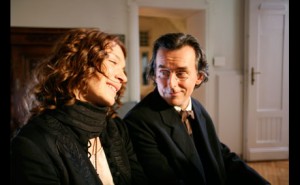 How refreshing to have the New York Jewish film festival open on Wednesday (Jan. 12) with an offering where the guilt is not Jewish. In “Mahler on the Couch,” the guilt emanates from the male ego of a musical genius (Gustav Mahler) suppressing the musical creativity of his wife – the much younger and super sexual Alma.
Mahler has been driven to the couch of Sigmund Freud by a love letter to his young wife from the even younger Walter Gropius, the future creator of Bauhaus.
Yes, Freud was Jewish. Mahler converted from Judaism to Catholicism. Several marriages and many affairs later, Alma Mahler Gropius Werfel was the Nazi-loving wife of a Jew who escaped with her from Vienna to Hollywood. But we’re getting way, way beyond the scope of the film.
How delightful to come in from the January snows of New York to the lushness of Vienna in the 1900’s when everything was being invented – psychoanalysis, Secessionist art and architecture, Mahler’s and Schoenberg’s music. When it was too early to worry about the Fascists and the Nazis or even World War I. (more…)
- No Comments
January 11, 2011 by Jill Finkelstein
2010: Lilith’s Year in Review
Every December, I look forward to JibJab’s latest animated year in review, which inspired me to do my own year in review. Here’s a look back on some of the biggest Jewish and Feminist news stories of 2010…
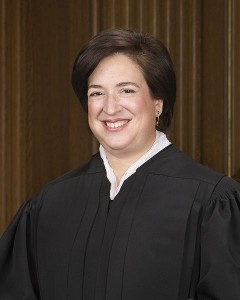 On August 5th, Elena Kagan was confirmed to the U.S. Supreme Court, making her the second Jewish woman to be appointed as a Supreme Court Justice (the first being Justice Ruth Bader Ginsburg). Now that SCOTUS is one-third female, there’s an opportunity for significant gender progress. In Lilith’s Fall 2010 issue, Ginsburg expressed that she has no plans to retire any time soon. Looks like good news for feminists!
2010 became an even more exciting year for Jewish women, when Sara Hurwitz adopted the title of the first Orthodox “Rabba,” Hebrew feminine for “rabbi,” coined by Rabbi Avi Weiss. Though Weiss faced a backlash from the Rabbinic Council of America, the mainstream Orthodox rabbinic organization, Hurwitz continues to proudly use the title. In December, for the first time ever, the first female Rabbis of each of the major sects of Judaism gathered together to celebrate Hanukkah.
However, not everything was as positive in 2010… There was somewhat surprising news for the Jewish community following results of a new study conducted by Berman Jewish Policy Archive. The study revealed a significant pay gap among Jewish communal professionals and found that while women make up 2/3 of Jewish communal professionals, they earn an average of $28,000 less than men. When the study controlled for “age, years in the field, level of responsibility, hours worked, and degrees earned, women’s salaries still trail men’s by about $20,000.” (more…)
- No Comments
January 9, 2011 by admin
Sad News: Beloved Singer and Composer Debbie Friedman Dies in Los Angeles
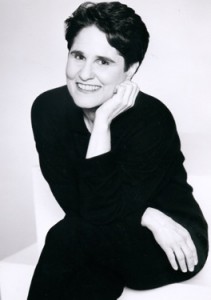 Debbie Friedman, known for her Mi Sheberach and her special Jewish feminst songs, has died in Los Angeles. Lilith magazine’s board and staff join with Debbie Friedman’s multitude of other friends and fans in grieving her shocking and untimely death today. Debbie’s music –and her presence–helped lead thousands through healing moments and in joyful celebration.
What was planned as a healing service for Debbie Friedman will now, sadly, be a memorial service, at 8 PM tonight at the JCC in Manhattan; it will be available live-streamed. We will be posting it on all Lilith’s platforms.
In 1988, asked to share a “sacred moment” she had experienced, the beloved late singer and composer Debbie Friedman wrote in Lilith magazine:
“My confrontation with death and my acceptance of aloneness freed me to incorporate spiritual consciousness into my life. For me, there is no separation between spirituality and living. Spirituality is at the core of all that is.”
May Debbie’s family be comforted among the mourners of Zion and Jerusalem.
- 3 Comments
January 5, 2011 by Bonnie Beth Chernin
Three Faiths and a Pizza
 The day was supposed to be a date with my husband, without my daughter, that included lunch and a visit to the New York Public Library to see Three Faiths: Judaism, Christianity, Islam, an exhibit of texts from each religion.
We decided to stop at a restaurant where we could order white pizza and, after a discussion of whether we should get a small or medium, decided on the medium size. The waiter brought a huge pie to our table. Clearly, we should have chosen the small.
“It’s okay,” I assured my husband. “We’ll take the leftovers with us and eat it for dinner tomorrow.”
At the end of the meal, the waiter kindly provided a plate and bag, instead of a cumbersome box, and off we went toward Forty-Second and Fifth for the library.
The security guard gave my purse a cursory look and accepted my comment that we had pizza in the bag but wouldn’t eat in the building. We walked over to the Gottesman Exhibition Hall where another guard stopped us to look in our bag.
“You can’t bring food into the exhibit,” she said. (more…)
- 3 Comments
January 5, 2011 by Tara Bognar
Mediterranean Family Size Religious Israeli Jewish Women Win (Lose?)
A great article from our friends at the Berman Jewish Policy Archive!
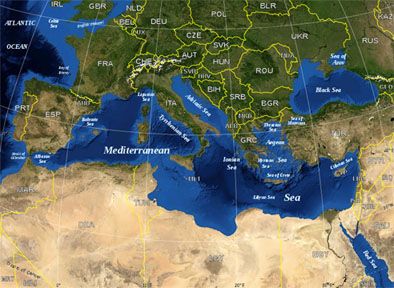 Women and Demography in the Mediterranean States (2009), by Ariela Keysar, compiles and analyzes demographic data from Algeria, Egypt, Turkey, Israel, Italy, Greece, Spain, and France.
The general results were unsurprising – lower fertility is associated with women’s greater participation in the workplace and educational, civil and social equality. More surprising, however, is that family size has decreased across the board, even in the most religious countries (based on questions about the importance of God and religion in people’s lives).
For example, Morocco has the lowest rate of female literacy and education, and also relatively low female workplace participation, nevertheless saw the average number of children per woman decrease from 6.9 at the beginning of the ’70s to 2.4 in the last couple of years. The highest current fertility rate is in Syria, which is only 3.1. (more…)
- 1 Comment