 Please wait...
January 30, 2012 by Amy Stone
Reporting back from the New York Jewish Film Festival: Recreating the Past – Incessant Visions: Letters From an Architect
(The New York Jewish Film Festival, presented by The Jewish Museum and the Film Society of Lincoln Center, at www.thejewishmuseum.org/
 Tiny sketches sent by a young Jewish architect from the German-Russian front in World War I to woo a beautiful 16-year-old cellist in Berlin paid off.
Erich Mendelsohn, a visionary architect whose curvaceous organic sketches could have grown into Frank Lloyd Wright’s Guggenheim Museum, won the hand of Louise Maas. Growing up in a wealthy German Jewish merchant family and studying cello at the Royal Conservatory in Berlin, she defied her father. At 21, she married the poor Jewish architect from East Prussia.
But it worked. Thanks to his talent and her connections, Mendelsohn became the most sought after architect in Berlin – until commissions dried up and they fled the Nazis.
His monumental works have mostly vanished from the earth – bombed by Allied forces – but Erich Mendelsohn and his beloved Louise are brought back to life in Israeli filmmaker Duki Dror’s “Incessant Visions: Letters From an Architect.”
- No Comments
January 26, 2012 by Rabbi David Ellenson
Beit Shemesh, Religious Extremism, and the Dignity of Women: Some Lessons from History
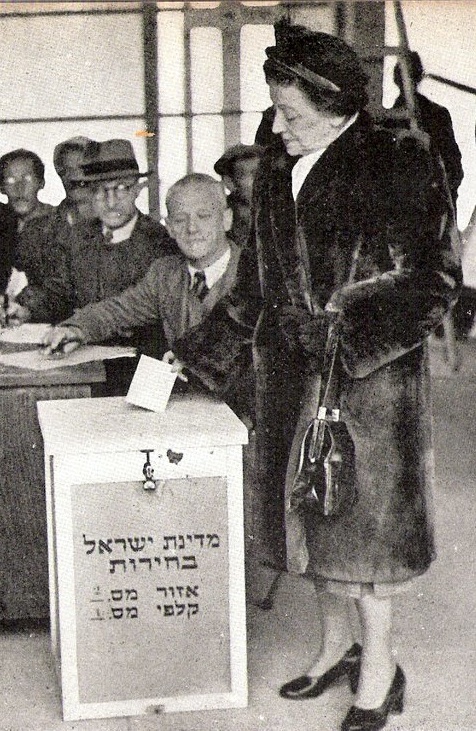
Vera Weizmann voting in Israel's first elections
The recent contretemps in Beit Shemesh riveted the Israeli public and brought worldwide attention to the misogynistic treatment accorded women in the public square by certain sectors of ultra-Orthodox Israeli society. As is by now well-known, some ultra-Orthodox Jews there hurled insults and engaged in bullying an eight-year-old Orthodox girl named Naama Margolese for dressing “immodestly” on her way to school. These same Jews also rioted when public street signs situated in an area inhabited by a population of ultra-Orthodox, Orthodox, and secular Jews that instructed women to dress according to their particular standards of modesty were removed. In recent months, ultra-Orthodox sensibilities have also led to the creation of bus routes where women are segregated and consigned to the back of the bus. On some public ceremonial occasions, women have been prohibited from singing lest their voices offend male listeners and on other occasions when women have sung there has been the spectacle of rabbis placing their hands over their ears to block out their sound. These episodes of Jewish religious extremism unconscionably objectify women and are absolutely incompatible with the democratic and egalitarian values upon which the State of Israel was founded.
This is not the first time such conflict between sectors of the ultra-Orthodox community and the other Jewish citizens of the State of Israel has been manifest. Indeed, such clashes predate the State itself. The ways in which secular and especially Orthodox religious leaders spoke out and acted in those cases provide models for how I would hope that present-day Israeli and Jewish religious leaders would respond to the concerns these events in Beth Shemesh and elsewhere evoke.
- 3 Comments
January 24, 2012 by Amy Stone
Feminists in Focus: Reporting back from the New York Jewish Film Festival Mission Accomplished for ‘Bottle in the Gaza Sea’
(Check the calendar for the festival, presented by The Jewish Museum and the Film Society of Lincoln Center, at www.thejewishmuseum.org/
 What a coup for the most political film at this year’s NY Jewish Film Festival – “A Bottle in the Gaza Sea” — to make its world premiere at the festival. And how encouraging to see that fresh and touching ground remains to communicate the message that the bloodshed between Israelis and Palestinians is too inhuman to continue.
Tal, a teen whose family has moved from France to Jerusalem, slips a message into a bottle saying that she refuses to accept that only hatred can exist between Israelis and Palestinians. She gets her brother to throw the bottle into the ocean while he’s on army duty near Gaza. An e-mail response to “bottleaccess” eventually comes from “Gazaman.”
The resulting e-mails become poignant when terrorist attacks in Jerusalem are met with Israeli air strikes in Gaza.
The film is based on the award-winning novel of the same name by French writer Valérie Zenatti, who spent her teen years in Israel. (Her earlier book, “When I Was a Soldier,” about her life in the Israeli army, was reviewed in Lilith.)
- No Comments
January 23, 2012 by Tara Bognar
Muslim and Jewish Marriage Contracts in American Courts
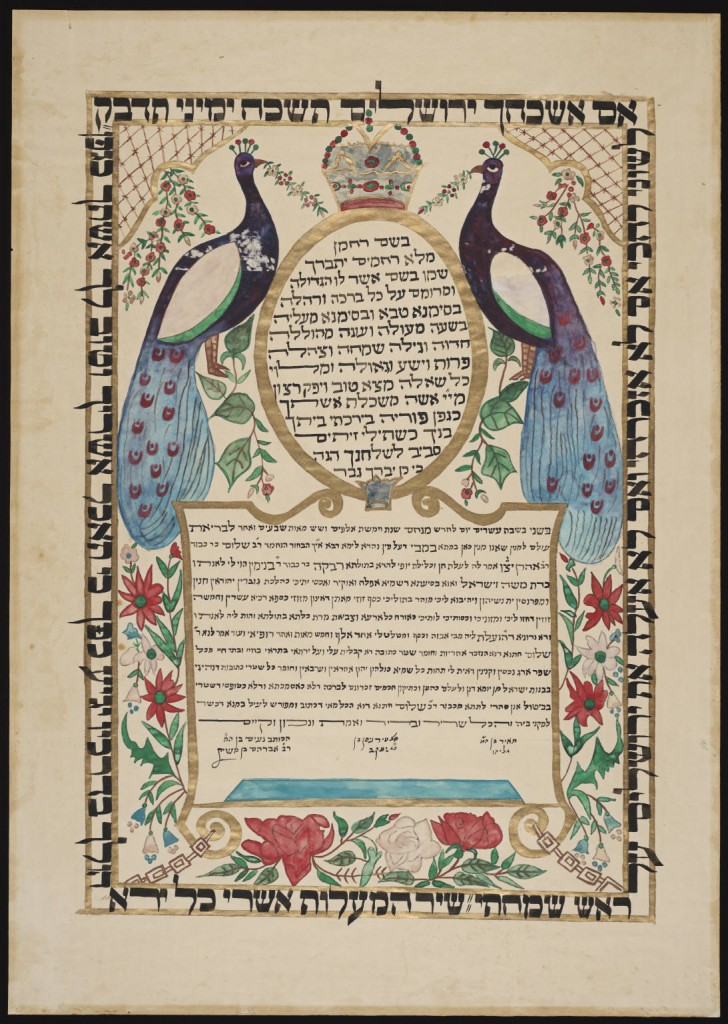 As someone whose interest in secular law grew out of my studies of Jewish law, I’ve always been especially fascinated by the ways in which the two systems of law interact. A recently published article, “How To Judge Shari’a Contracts: A Guide To Islamic Marriage Agreements In American Courts,” got me thinking about some of the parallels and common experiences between Jews and Muslims in interacting with secular American courts.
Some Jewish Examples
Last month I was reading a case (Tsirlin V. Tsirlin, 2008) about an Israeli Jewish couple living in New York. The wife asked the husband for a get, the Jewish bill of divorce, and he gave her one in front of a Brooklyn Beit Din (Jewish court). The husband’s father brought the get to an Israeli court, on the strength of which the Israeli court issued a decree of divorce for the couple. Shortly afterward, the husband later filed for divorce in New York, also seeking orders for custody/visitation and child support. The wife moved to dismiss the action for divorce on the grounds that the New York courts should recognize the Israeli divorce. Judge Jeffrey Sunshine ruled that:
“If this court were to sanction the utilization of a ‘Get’ to circumvent the constitutional requirement that only the Supreme Court can grant a civil divorce, then a party who obtains a ‘Get’ in New York could register it in a foreign jurisdiction and potentially, later on, rely on the ‘Get’ to obtain a civil divorce in New York thereby rendering New York State’s Constitutional scheme as to a civil divorce ineffectual… It would have the practical affect [sic] of amending the Domestic Relations Law section 170 to provide a new grounds for divorce.”
- 1 Comment
January 22, 2012 by Jill Finkelstein
Link Roundup:Remembering Roe v. Wade
Welcome to this week’s installment of Lilith’s Link Roundup. Each week we post Jewish and feminist highlights from around the web. If there’s anything you want to be sure we know about, email us or leave a message in the comments section below.
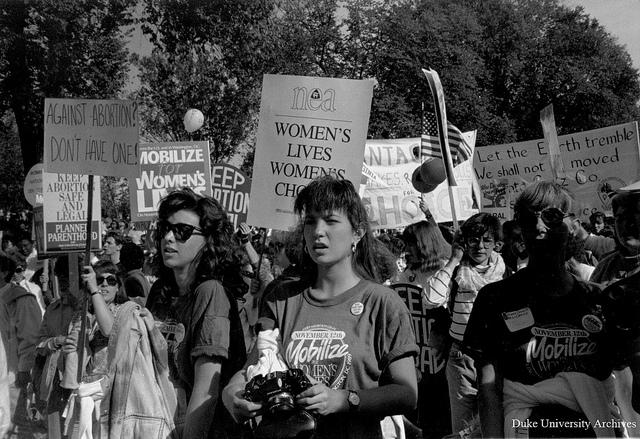
http://www.flickr.com/dukeyearlook
Marking the 39th anniversary of Roe v. Wade approaches on January 22nd, National Council of Jewish Women CEO Nancy K. Kaufman explained why women should continue to “guard against efforts to roll back choice.” The Guttmacher Institute reported that in 2011 individual states introduced more than 1,100 anti-choice proposals, 135 of which were enacted in 36 states. [The Forward]
On Friday, the Obama administration rejected requests made by the U. S. Conference of Catholic Bishops to exempt religiously affiliated employers from the Affordable Care Act’s requirement to cover the full cost of contraception in employer-sponsored insurance plan. Religiously affiliated institutions that currently do not cover contraception will have until August 2013 to do so, while houses of worship will remain exempt from the new law. [Ms. Magazine]
In a bold move, the Israel Medical Association (IMA) barred its members from attending the PUAH Institute’s annual fertility and halacha conference because the event excluded female speakers. The PUAH Institute responded to the boycott by announcing its plans to host a women-only conference over the summer, leading author Elana Sztokman to criticize the organization inadequate “separate but equal” solution. [Jerusalem Post] & [The Sisterhood]
- No Comments
January 20, 2012 by Amy Stone
Feminists in Focus: Reporting back from the New York Jewish Film Festival Peeling Away the Layers of ‘Restoration’
(Check the calendar for the New York Jewish Film Festival, presented by The Jewish Museum and the Film Society of Lincoln Center, at www.thejewishmuseum.org/
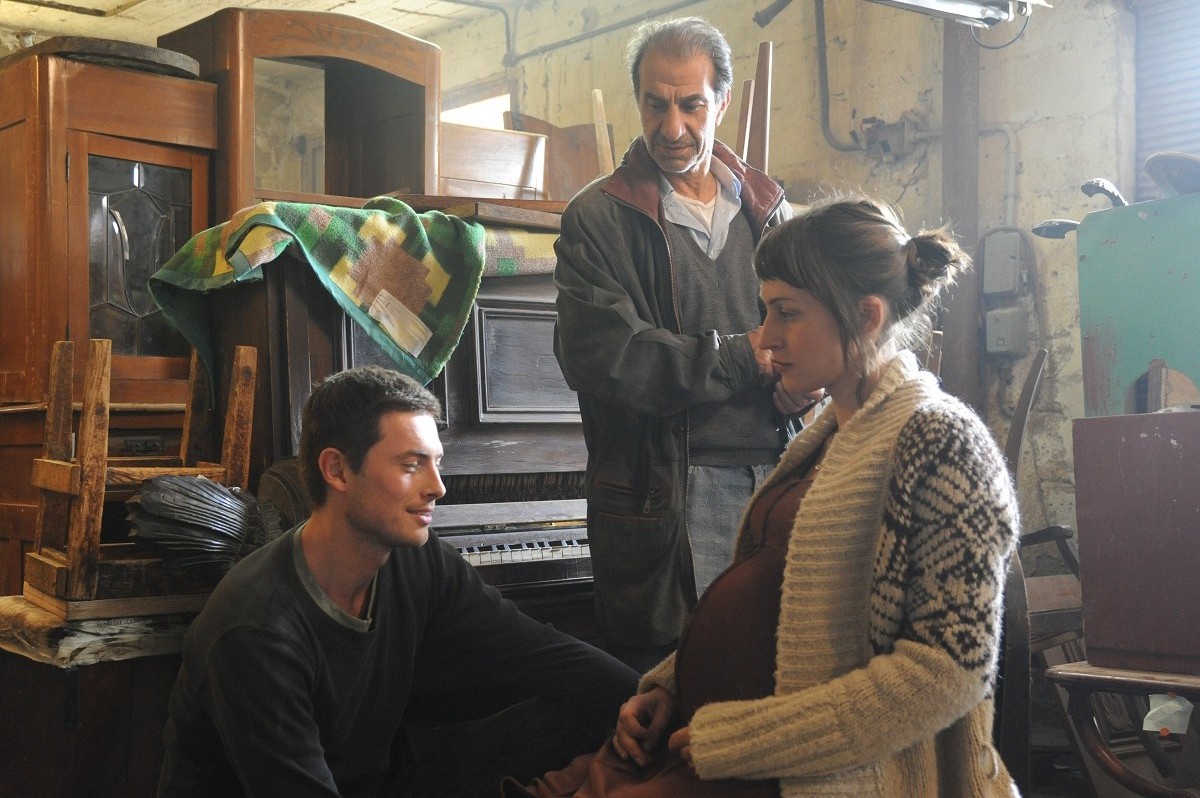 Finely crafted is the operative phrase for “Restoration.” The 2010 Israeli film (English subtitles) directed by Joseph Madmony tells the tale of Fidelman, an aging restorer of antique furniture stubbornly trying to hang onto his business. Starring Sasson Gabai (“The Band’s Visit”), “Restoration” unfolds with exquisite twists and turns that won it the Dramatic Screenwriting Award at this year’s Sundance Film Festival and several prizes at the Jerusalem Film Festival. (Madmony collaborated with Erez Kav-El on the script.)
Set in a timeless corner of Tel Aviv, it takes cell phones and a digital camera with video option to make clear we’re in the present.
Enter Anton (Henry David), the mysterious drifter who becomes Fidelman’s assistant. Add Fidelman’s estranged son, Noah (Nevo Kimchi), and his very pregnant wife, Hava (Sarah Adler). And there’s the impact beyond the grave of his freshly deceased partner, Malamud, who managed the shop’s finances.
- No Comments
January 20, 2012 by Amy Stone
Feminists in Focus: 21st Annual NY Jewish Film Festival Opens With ‘Flood’
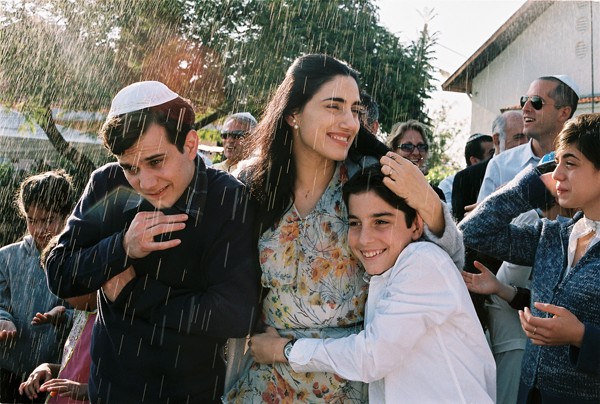 You can’t accuse the New York Jewish Film Festival of being a front for Zionist propaganda, especially with the festival opener “Mabul” (The Flood).
(Check the calendar for the festival, presented by The Jewish Museum and the Film Society of Lincoln Center, at www.thejewishmuseum.org/
The Israeli-Canadian-French co-production, in Hebrew with English subtitles, could well be a film for the Manhattan JCC’s Other Israel film festival, with tales of the unhappy side of the Jewish State. There’s Yoni, the young bar mitzvah boy, earning money doing homework for the school bullies; his non-functioning pot-smoking crop pilot father; his gorgeous mom – a Mediterranean beauty – sweetly running a nursery school but screwing one of her young charges’ parents; and, if that weren’t enough, Tomer, the older brother, autistic to the point of needing constant care, back with the non-functional family when his institution goes bankrupt.
Welcome to life in the modern Jewish State. Who knew that an Israeli institution caring for the severely disabled could go bust. What a touch that the film’s one handsome Zionist-dream male is a philanderer. And that male-female roles remain entrenched unto the next generation, with the bar mitzvah boy berating his stressed-out mom for not taking adequate care of his disabled brother.
- No Comments
January 20, 2012 by Shari Eshet
A Call for Civility for ALL Israeli Citizens
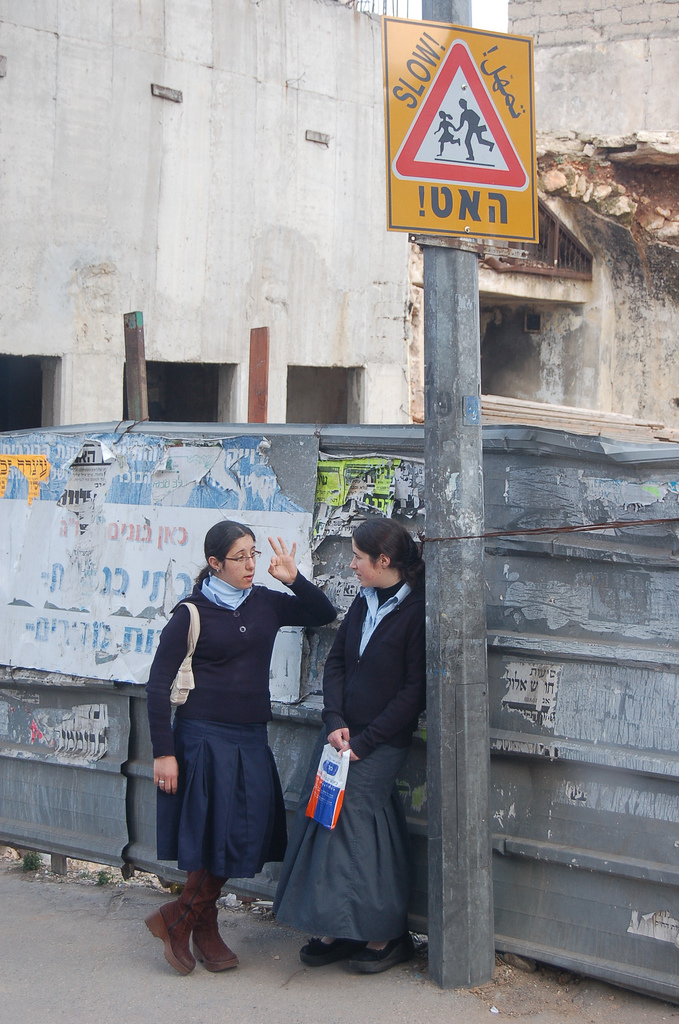 About a month ago I left Israel for a 10-day vacation, only to discover upon my return that it had become a different Israel. Gender segregation, an issue that NCJW has been involved in for years (e.g., Women of the Wall, the segregation on public buses, and the rights of agunot) had become front-page news with the story of Naama, a young child in Beit Shemesh taunted for her “immodest dress” by ultra-Orthodox zealots. Suddenly, it was the piece of news about which everyone — from Hillary Clinton to Prime Minister Netanyahu — was speaking.
My own daughter, an officer in the Israel Defense Forces, was on her way home on leave when she was spat on and called names by an ultra-Orthodox zealot at a bus stop in Jerusalem. This is not a new phenomenon. What is new is that now, finally, the secular population is realizing that such incidents are not only about what “they” do in their own communities, but rather a symptom of the political system that has allowed religion to become part and parcel of civil government and civil society. The request of Haredi soldiers not to have to listen to women soldiers singing in an army choir is a perfect example of a system — put into place with good intentions — that has gone wrong. What if secular soldiers refused to listen to the Kiddush (blessing over the wine) at Friday night Shabbat meals? Or, if Druze soldiers demanded bread to be served alongside matzah on Pesach? Would that be respected as well?
I remembered when many years ago, the Ponovitch Rav, the great spiritual and intellectual leader of Lithuanian Judaism (the non-Hasidic branch of Haredi Judaism) came from Israel to Miami, where I grew up. My father went with my mother, both without head coverings, to pick him up at the airport. My mother, out of respect for the Rav, who was then old and frail, immediately took a seat in the back of the car, in order to allow the Rav to sit up front with my father. “Absolutely not,” declared the Rav, “I would never separate a husband and wife.” And so the great Rav sat in the back of the car with my mother in front alongside my father.
- 3 Comments
January 12, 2012 by Yona Zeldis McDonough
A Conversation With Jane Lazarre
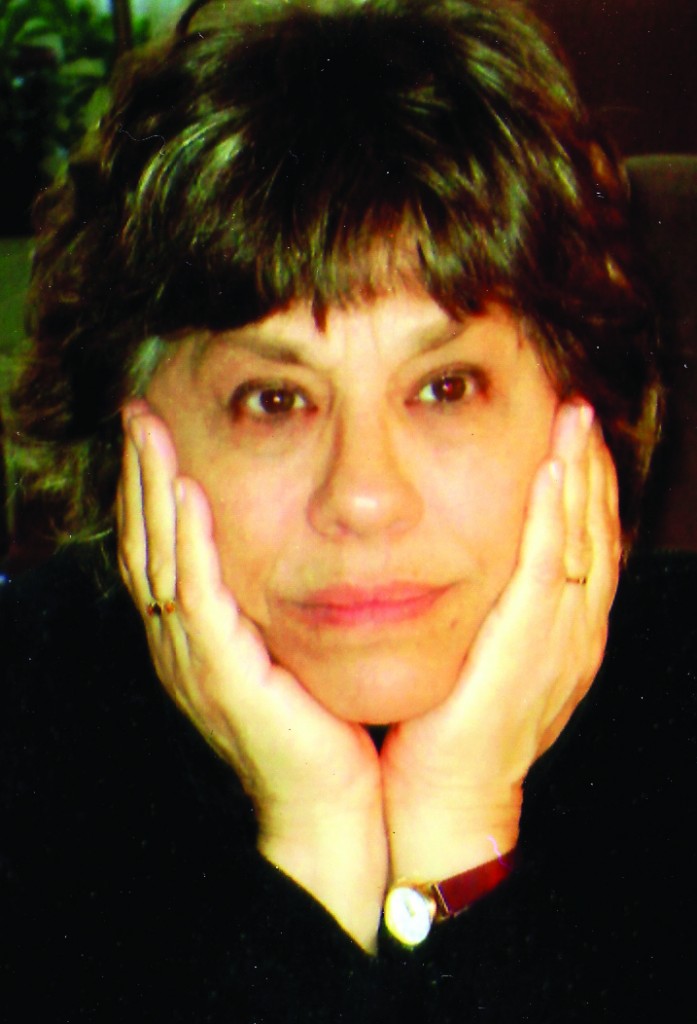 In the summer of 2009, Lilith excerpted a section of Jane Lazarre’s harrowing novel, Inheritance. The book was recently published and Lilith’s Fiction Editor, Yona Zeldis McDonough, interviewed Lazarre–author of ten books and creator of the undergraduate writing program at Eugene Lang College at the New School—about historical fiction, blacks and Jews, and her feelings about our first mixed-race president.
Your work is full of interracial relationships; what drew you to this subject?
The first reason is that in my early twenties, I married into an African American family, and in 1969, I gave birth to my first son, a few years later to my second son. Raising Black children, and learning about this nation’s history from the point of view of Black people in my family – a very different perspective than the one I was raised with, that most white people were/are raised with – was a transformational experience.
The theme of race, though secondary, is a central one in my first memoir, The Mother Knot, written in the midst of the feminist movement in the 70s, a movement that was beginning to produce a wealth of material and testimonials, both scholarly and literary, about race history, and by both African American and white writers. Soon after that, as a professor of writing and literature, first at City College in New York, then on the full-time faculty of Eugene Lang College at the New School, I had the opportunity to study and teach African American literature, with special attention to the rich tradition in autobiography. These years of study and teaching had a huge impact on me, on my sense of my own identity as an American, as a white Jewish mother of Black sons, I told some of this story autobiographically in a memoir called Beyond the Whiteness of Whiteness. But apart from the personal sources of my work, I am committed, as a writer and activist-teacher, to speak out against some of the mythologies, indeed, the lies and self-deceptions, of American race history and American racism. The theme of mixed racial identities, about which there is plenty of personal and philosophical disagreement, is also one that has been distorted and misrepresented in many ways since the early days of slavery and up to the present moment – in some of the ways, for example, in which we discuss, define and interpret the history and policies of President Obama.
- 3 Comments
January 8, 2012 by Jill Finkelstein
Link Roundup: Beit Shemesh Riots and Gender-Neutral Toys
Welcome to this week’s installment of Lilith’s Link Roundup. Each week we post Jewish and feminist highlights from around the web. If there’s anything you want to be sure we know about, email us or leave a message in the comments section below.
www.adriennecooper.com
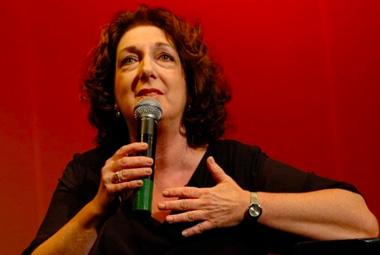
Beloved Yiddish singer Adrienne Cooper died on December 25th at the age of 65. Among her many accomplishments was her sensitive and original Lilith article on family violence in women’s Yiddish songs from the Spring 2011 issue. [NY Times]
Israel found its own “Rosa Parks” after a woman named Tanya Rosenblit refused to move to the back of an Egged bus headed to Jerusalem, despite receiving threats from ultra-Orthodox passengers who tried to insist that women and men remain in separate sections of public buses. Rosenblit’s bravery has since inspired other women to sit at the front of ‘mehadrin’ buses, including Knesset member Tzipi Hotovely. [Jewish News One] & [Ynet]
Two weeks ago, riots broke out among Haredi Jews in the Israeli town of Beit Shemesh after police officers removed signs calling for gender segregation even on public sidewalks. Following the sign removal, an Israeli television news crew was attacked after featuring Na’ama Margolese, an 8-year-old girl who had been spat on by a Haredi man for dressing “immodestly.” [Jerusalem Post] & [The Sisterhood]
- 1 Comment