 Please wait...
June 25, 2012 by Susan Weidman Schneider
A Journalistic Room Of One’s Own
Cross-posted with The New York Jewish Week.
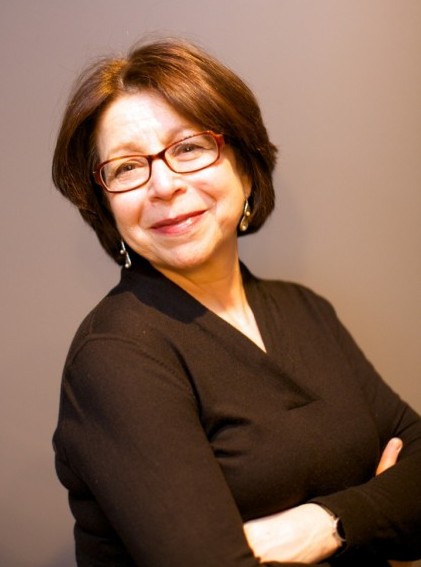 Thirty-five years of ‘amplifying women’s voices.’ An interview with longtime Lilith editor in chief, Susan Weidman Schneider.
In a feat of journalistic longevity, Lilith: The Jewish Women’s Magazine, has been around for 35 years now. Along the way, the quarterly has sought to merge the wider women’s movement with the world of Jewish feminism. On the occasion of its 35 anniversary, The Jewish Week asked Lilith founding editor Susan Weidman Schneider to reflect on the issues that have animated the magazine’s coverage.
The Jewish Week: The early days of Lilith must have really been heady, as you were trying to take the lessons of the wider feminist movement and translate it into the Jewish realm. What was it like starting out?
Susan Weidman Schneider: It’s still heady! Our daily conversations with our interns and writers and editors over lunch at Lilith’s conference table and at Lilith salons are all about taking gender justice, in all its forms, into the Jewish world. Lilith’s tagline says this explicitly: “independent, Jewish & frankly feminist.”
In the beginning we were asked persistently, “Is feminism good for the Jews?” The answer now seems self-evident. Women have energized Jewish life and practice everywhere, from big organizations to the more intimate settings of our own families. Let’s take text as one example. For decades, women in mainstream congregations, small havurot, on college campuses, and in their own kitchens have been writing new liturgies, referring to the feminine aspects of God, and using imagery from women’s bodies and experiences; many of these are now published between hard covers in widely used prayer books; women have expanded the possibilities of prayer and ritual, highlighting the elasticity of Judaism.
- No Comments
June 15, 2012 by Jill Finkelstein
Link Roundup: Jewish Women Fight Back
Welcome to this week’s installment of Lilith’s Link Roundup. Each week we post Jewish and feminist highlights from around the web. If there’s anything you want to be sure we know about, email us or leave a message in the comments section below.

http://www.flickr.com/thisisbossi
A Michigan state Rep was silenced after speaking out against an anti-abortion bill.
During a heated debate on the floor of the Michigan state House, Rep. Lisa Brown made an impassioned speech against a bill that seeks to put new regulations on abortion providers and ban all abortions after 20 weeks.
Brown, a Democrat, argued that her Jewish faith allowed for therapeutic abortions when the mother’s life is in danger without regard to length of pregnancy.
“I have not asked you to adopt and adhere to my religious beliefs. Why are you asking me to adopt yours?” she said. But what came next is what got her in trouble: “And finally, Mr. Speaker, I’m flattered that you’re all so interested in my vagina.
The Detroit News reports today the House Republican leadership did not allow Brown to speak on a bill about the retirement of school employees. [NPR]
In an editorial about the lack of Jewish organization run by women, CEOs Rabbi Jill Jacobs, Ruth Messinger, and Carole Zawatsky offered suggestions about how to increase female leadership in the Jewish community. Among the suggestions, which included encouraging search committees to consider female candidates and increasing the number of women on speaking panels, all three women stressed the importance of mentorship opportunities for women. [Washington Jewish Week]
- No Comments
June 14, 2012 by Sophie Danis Oberfield
Food and Fadwa–Closing soon!
 “Food and Fadwa,” Lameece Issaq and Jacob Kander’s play, directed by Shana Gold and co-presented by New York Theatre Workshop and Noor Theatre, is wonderful, entertaining, funny, moving, and thought-provoking. It’s a well-made family comedy/drama, with familiar archetypes—young lovers, a disapproving father, an unworthy woman coming between the heroine and her man—rendered fresh and nuanced here.
Less centrally, but equally importantly, it’s also a play about Palestinian life in the West Bank under Israeli occupation, demonstrating its challenges and difficulties in theatrical moments that are, in turn, quiet and shocking, hilarious and bitter, and moving. Another way of putting this is that the young lovers face obstacles both from classical comedy (a disapproving father, a rival) and current international-political reality (the groom’s disappearance the day before the wedding, a curfew trapping the family in their home). Their lives are out of their control in more than one way. The play focuses on a family while also dealing with political realities, touching on larger political issues, coexistence, from an authentic-feeling place rooted in traditionally female spaces (home, kitchen) and activities (cooking, caring for family, preparing for a wedding).
- 1 Comment
June 12, 2012 by Sheva Zucker
Candles of Song: "From My Slender Limbs" and "If.." by Rashel Veprinski
Yiddish poems about mothers, in memory of my mother, Miriam Pearlman Zucker, 1914-2012.
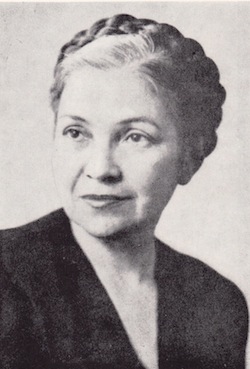
Photo of Rashel Veprinski
Rashel Veprinski (1896-1981) was born in the town of Ivankov, not far from Kiev, in Ukraine. She came to New York in 1907, and at thirteen she went to work in a shop. At fifteen, she began writing poetry, and was first published in 1918 in the journal Di naye velt (The New World). She wrote several books of poetry, among them Ruf fun foygl (The Call of the bird), 1926, Di Palitre (The palette), 1964, Tsum eyntsikn shtern (To the single star), 1971 as well as an autobiographical novel, short stories, and articles and was published regularly in Yiddish periodicals. From the 1920s until his death in 1953, she lived with the famous Yiddish writer Mani Leyb.
Here, Fun Mayne Shlanke Glider, by Rashel Veprinski, read by Sheva Zucker:
From My Slender Limbs
- No Comments
June 12, 2012 by Mel Weiss
A Near Miss
 It ended up being one of our favorite lesbian Chabad stories, but it was almost a tale of tragedy.
Mid-January, mid-Maine—even in the era of global warming, we sometimes get snowstorms that blanket the streets and muffle every possible noise. When R called me moments before I entered a staff meeting, I expected a gripe about shoveling out the car. Instead, she was calling to tell me that our favorite octogenarian congregant was in the hospital, and it didn’t look good, and could I make some calls to find someone to cover her class?
A lot of that entire week is a blur. Once it became clear that this congregant was out of imminent danger, I remember holding an exhausted R, who’d spent the whole day in the most chaotic day-long pastoral visit of her life. I remember driving through the night snow—my very first time, shekhekhiyanu!—to the hospital, chatting with our friend for a couple of hours, trading Yiddish jokes and explaining the punchlines to her kids and grandkids. I remember some sort of cook-a-thon, stepping back an hour before Shabbat to realize I miraculous had enough food for the twenty guests we’d have over the next 25 hours.
- No Comments
June 7, 2012 by Mel Weiss
Lesbian Jewish Missionaries
 Let me start by saying this: the whole “Lesbian Chabad” thing began as a joke.
Okay, actually, maybe that’s not the clearest point to pick up. Let’s try that again: my name is Mel, and I’m one-half of what is jokingly (sort of) known as the Lesbian Chabad of Mid-Maine.
Okay, one more time: my name is Mel. My partner is a rabbi, and though I’ll just refer to her as “R.” here, if you’re even a remotely talented Google-stalker, yes, you can probably figure it out. I am a New Yorker, born and bred, but I spend my time these days a bit farther north. Maine, to be specific, a lot of it, along with R., in the town where she serves as the rabbi for a local synagogue.
(This would be a good time to state, for the record, that in my house we don’t use the word “rebbitzen.” Rather, I am the only one ever allowed to use it. This is not intended to offend anyone who chooses the term. It’s just that quirk of courtesy that lets us reclaim words that pertain to us, and screw anyone else who tries to use them.)
So, anyway, though I’m from New York and R’s from New Jersey and between us we have a pretty serious case of mid-Atlantic-accented potty mouth, along with a seriously dorky habit of making Talmud jokes, we spend half our time up in a town about twenty minutes north of Augusta, that for reasons I’ll also ascribe to quirks of courtesy, I won’t call by its real name. Let’s just call it C-town.
- No Comments
June 5, 2012 by Sheva Zucker
Candles of Song: Yiddish Poems about Mothers Gitl Schaechter-Viswanath
Yiddish poems about mothers, in memory of my mother, Miriam Pearlman Zucker, 1914-2012.
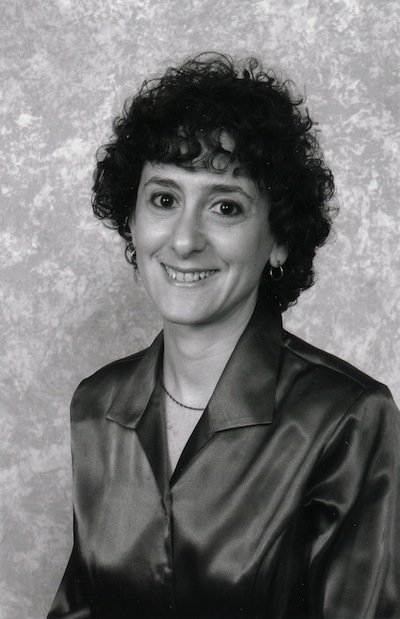
Photo of Gitl Schaechter-Viswanath
Gitl Schaechter-Viswanath (1958 – ) was born in the Bronx, New York and grew up in a Yiddish-speaking, staunchly Yiddishist home. She studied in the Sholem Aleichem Folkshul 21, United Mittleshul and Jewish Teachers Seminary, where she graduated with a degree in Jewish literature. She also earned degrees in Russian (Barnard College), nursing (Columbia University) and health administration (New York University), and currently works as a clinical consultant in long-term care. She has been active in the Yiddish movement her entire life, and has worked as editor for several Yiddish magazines. Since 2005 she has been stylistic editor of Afn Shvel, the periodical of the League for Yiddish. She lives in Teaneck, New Jersey, and is the mother of three Yiddish-speaking children. She has published one volume of poetry, Sudden Rain: Yiddish Poems (Israel Book, Tel Aviv, 2003).
Here, Mame, by Gitl Schaechter-Viswanath, read by Sheva Zucker:
- No Comments
May 29, 2012 by Sheva Zucker
Candles of Song: "My Child Knocks" by Rajzel Zychlinksy
Yiddish poems about mothers, in memory of my mother, Miriam Pearlman Zucker, 1914-2012.
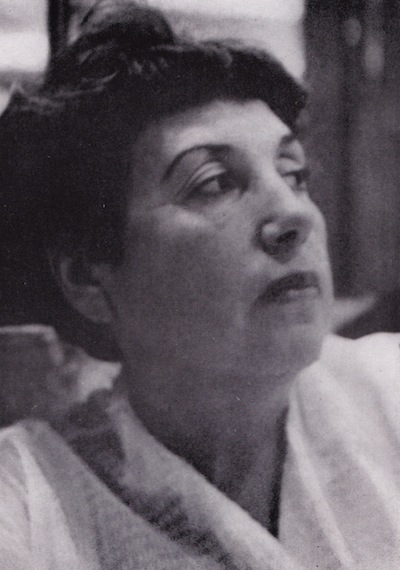
Photo of Rajzel Zychlinksy
Rajzel Zychlinksy (1910-2001) was born in Gombin, Poland in 1910. Her first book of poems, Lider (Poems), published in 1936, included a very laudatory foreword by the celebrated poet Itsik Manger. She and her husband, the psychiatrist and author, Dr. Isaac Kanter, left their home in Warsaw during the Second World War and took refuge in Russia where their son Marek was born.
In 1951, Zychlinksy emigrated to New York. She lived there until the last few years of her life, when she moved to Berkeley, California, to join her son. She published several volumes of poetry in Yiddish, among them, Tsu loytere bregn (To clear shores), 1948, Shvaygndike tirn, (Silent doors), 1962), Di November-zun (The November sun), 1977 and Naye lider (New Poems), 1993. In 1975 she was awarded the prestigious Manger Prize for Yiddish Poetry. The Holocaust is a major theme in her work.
A fine selection of her poems has been published in English in the book God Hid His Face: Selected Poems of Rajzel Zychlinsky, translated by Barnett Zumoff, Aaron Kramer, and Zychlinsky’s son, Marek Kanter.
Here, Mayn Kind Klapt, by Rajzel Zychlinksy, read by Sheva Zucker:
- No Comments
May 29, 2012 by Jill Finkelstein
Link Roundup: Legislation Against Discrimination
Welcome to this week’s installment of Lilith’s Link Roundup. Each week we post Jewish and feminist highlights from around the web. If there’s anything you want to be sure we know about, email us or leave a message in the comments section below.
 Israel’s Supreme Court has ruled that employers who pay men and women different salaries must prove that wage gaps are unrelated to gender. Therefore, women will no longer have to bear the “burden of proof” that they were discriminated against on the basis of gender; they will simply have to show that there is a significant wage gap. The ruling was made in response to a lawsuit filed by Orit Goren, a hardware store employee, who was earning 35% less than her male co-worker. The employer attributed the wage gap to the fact that Goren had asked for a lower salary, however the Supreme Court ruled that that was not an adequate justification for the wage gap. [Haaretz]
And Israeli Knesset Members Dalia Itzik and Haim Katz have introduced a new bill that would extend the statute of limitations of suing an employer for gender wage discrimination from two years to seven years. [Haaretz]
Democratic members of the U.S. Senate also took steps to combat wage discrimination by reintroducing the Paycheck Fairness Act, which would close loopholes in the 1963 Equal Pay Act. The Paycheck Fairness Act was previously passed by the House of Representatives in January 2009, but lost by two votes in the in the Senate in November 2010. [The Baltimore Sun]
- No Comments
May 25, 2012 by Julie Sugar
Between All and Nothing: A Blessing for a Running Catch of the Torah
 Before I skipped the holiday of Shavuos last year, I secretly broke Shabbos for months. I would check my BlackBerry in the bathroom, reading emails and Facebook but never responding. Eventually I grew bolder and started Gchatting with two or three friends on Shabbos—and blocking everyone else. By Shavuos, I was reeling from a major transition in my life, and decided to no longer pretend to be observant of halakha, traditional Jewish law. I had grown up totally secular and observing Shabbos and holidays is still far from second nature to me; as I scaled one emotional mountain, I slid down the other, and took a break.
Shavuos this year has been looming as a personal deadline of sorts. It is the holiday where the children of Israel stood at the foot of Mount Sinai (speaking of mountains) and received the Torah from God. They didn’t just passively receive the Torah, either—they committed to it, to all of the commandments, to Shabbos, to the holidays, the whole shebang. So it feels like a fitting time to recommit myself to halakha, both in terms of the significance of the day and the fact that a whole year has gone by since my life was turned upside down. I do like anniversaries; I like the cycle of the calendar, of marking special days—even, or especially—the difficult ones.
- 3 Comments