 Please wait...
July 24, 2012 by Sheva Zucker
Candles of Song: Yiddish Poems about Mothers Celia Dropkin
Yiddish poems about mothers, in memory of my mother, Miriam Pearlman Zucker, 1914-2012.
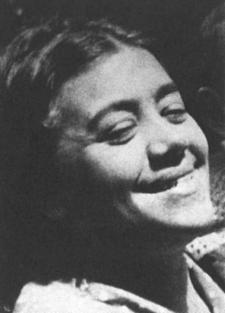
Photo of Celia Dropkin
Celia Dropkin (1888-1956) was born Celia Levin in Bobruisk, White Russia. She lost her father at an early age and her mother never remarried. She had a high school education and began writing poetry in Russian while still a young woman and was greatly encouraged by the Hebrew writer U.N. Gnessin. When she was about 21 she married Shmaye Dropkin, an active socialist in the Bund party, and in 1912 she followed him to America where he had fled for political reasons.
Between 1910-1926 she bore six children, five of whom survived, and around 1918 she began writing poetry in Yiddish. She published in many of the Yiddish publications of the day, including Inzikh, Tog, and Tsukunft. Her books include In heysn vint – lider (In the hot wind – poems; 1935) and In heysn vint: Poems, Stories and Pictures published posthumously in New York by her children. Her poems are remarkable for their sensuality, bold eroticism, and inversion of the reader’s expectations of traditional women’s writing.
Here, Mayn Mame, by Celia Dropkin, read by Sheva Zucker:
- 3 Comments
July 23, 2012 by Joan Roth
Talking with Bel Kaufman
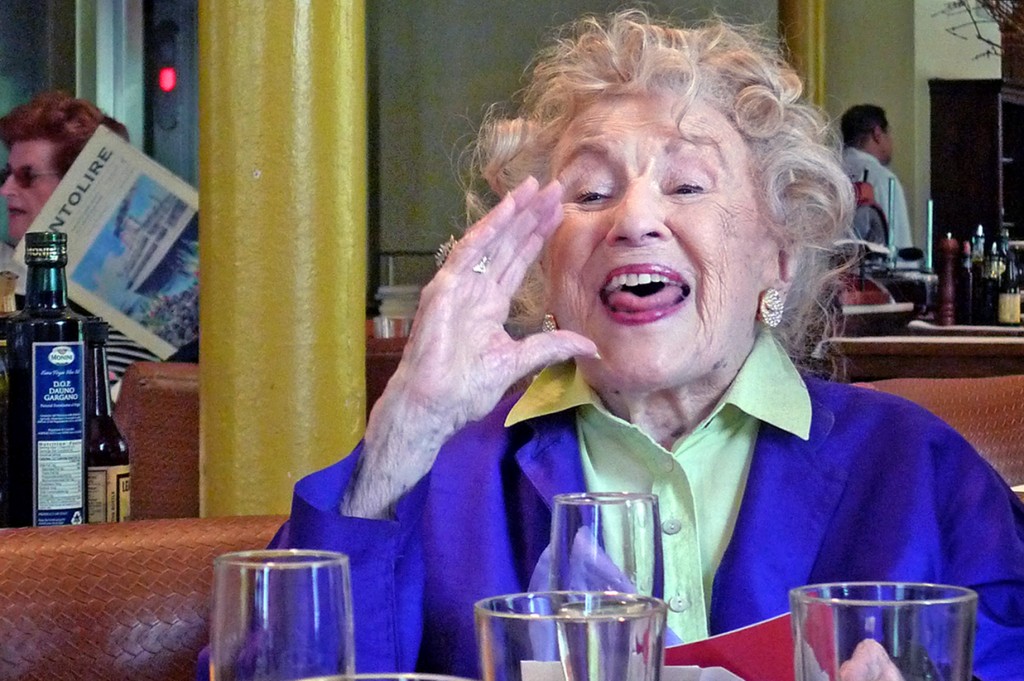
Photo by Joan Roth
Often during lunchtime, at the unbelievably delicious Italian restaurant Centolire, Bel Kaufman can be found regaling guests with stories. On May 11th, 2012, elegant friends gathered at the Madison Avenue eatery to celebrate her 101 birthday. “When I turned 100,” she told us, “Everyone called to say “oh how wonderful. G-d bless you. Oh, are you really 100. Can I make a party? There were parties and honoring events galore. Everywhere I went, people wished me a Mazel Tov, and on and on. Now, when I tell people I am 101 – they say, Oh, really.”
At lunch, Bel went around the table telling each one what she thought of us. For those seated nearby, she shouted, so they could hear her. Of course, I had brought my little camera with me and could not resist snapping this powerful moment – filled with the love, joy and exuberance with which Bel always lived life.
She says, the photograph reminds her that she is an anomaly. “I am not the average 101-year-old woman. Few live to be this old in as good as shape as I am,” she says.
Weeks later, Bel and I met for our own private lunch. This time at Demarchelier, another Bel French favorite. With Centolire closing and Demarchelier sold to new owners, Bel surpasses us all, exclaims the maître d’.
Bel’s wearing an unmistakable pair of oversized multicolored Pucci sunglasses, recently found in her drawer, “They’re older than I am,” she quips. I compliment her, saying she looks great, “If I don’t look good at 101, when will I look good?” she answers back with
effervescent charm and humor.
- 3 Comments
July 23, 2012 by Mel Weiss
A Busman’s Holiday in Tel Aviv
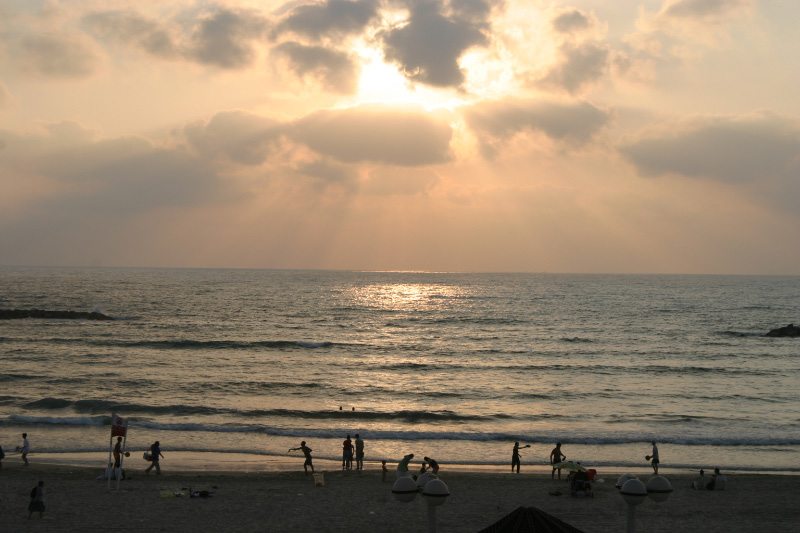
Sunset in Tel Aviv-Yaffo beach
There’s seriously nothing like a two-week stint in Israel, with an extended weekend layover in New York City, to throw one’s shlicha mission in mid-Maine into a serious sort of relief. At least, that’s how it was for R. and me, coming back to the small town in Maine where she basically serves as the town rabbi and I, well, I do many of the things a rabbi’s partner does in a small town, even though in the old days, the rabbi wasn’t a woman—nor was she partnered to one. We returned to what we jokingly, or not so jokingly, refer to as our role as the Lesbian Chabad of Mid-Maine.
We’re just back from a well-deserved vacation, in a place where even the vacation have a veneer of the hectic. (Plus, a rabbi on vacation in Israel can, at times, feel a bit like a busman’s holiday.) Having eaten schwarma, spoken Hebrew, argued in the shuk and visited a vast array of friends, teachers and family, we’re back in the Northeast, having lugged as much of the Middle East home in our backpacks as we could.
It was a fun experience, telling Israeli friends about what we’re doing up here. The Lesbian Chabad joke works both much better and far worse: some of our friends laugh harder than any American at the idea, while my extremely secular cousin worriedly asks if I have to pass out candles in the bus station on Friday afternoons.
And the fact of the matter is that it is hard—it might actually be impossible—for Israelis who haven’t spent time in America (outside, perhaps, of New York and LA) to imagine not only why on earth we’d want to spend our time doing what we do, but how such a thing could possibly be necessary.
- 2 Comments
July 19, 2012 by Sheva Zucker
Candles of Song: “My Father’s Letters from America” by Rajzel Zychlinksy
Yiddish poems about mothers, in memory of my mother, Miriam Pearlman Zucker, 1914-2012.
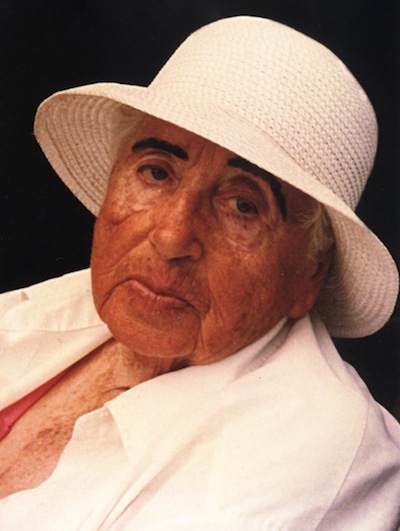
Photo of Rajzel Zychlinski
Rajzel Zychlinksy (1910-2001) was born in Gombin, Poland in 1910. Her first book of poems, Lider (Poems), published in 1936, included a very laudatory foreword by the celebrated poet Itsik Manger. She and her husband, the psychiatrist and author, Dr. Isaac Kanter, left their home in Warsaw during the Second World War and took refuge in Russia where their son Marek was born.
In 1951, Zychlinksy emigrated to New York. She lived there until the last few years of her life, when she moved to Berkeley, California, to join her son. She published several volumes of poetry in Yiddish, among them, Tsu loytere bregn (To clear shores), 1948, Shvaygndike tirn, (Silent doors), 1962), Di November-zun (The November sun), 1977 and Naye lider (New Poems), 1993. In 1975 she was awarded the prestigious Manger Prize for Yiddish Poetry. The Holocaust is a major theme in her work.
A fine selection of her poems has been published in English in the book God Hid His Face: Selected Poems of Rajzel Zychlinsky, translated by Barnett Zumoff, Aaron Kramer, and Zychlinsky’s son, Marek Kanter.
Here, Mayn Tatns Briv Fun Amerike, by Rajzel Zychlinksy, read by Sheva Zucker:
- No Comments
July 18, 2012 by Yona Zeldis McDonough
A Conversation With Sally Koslow
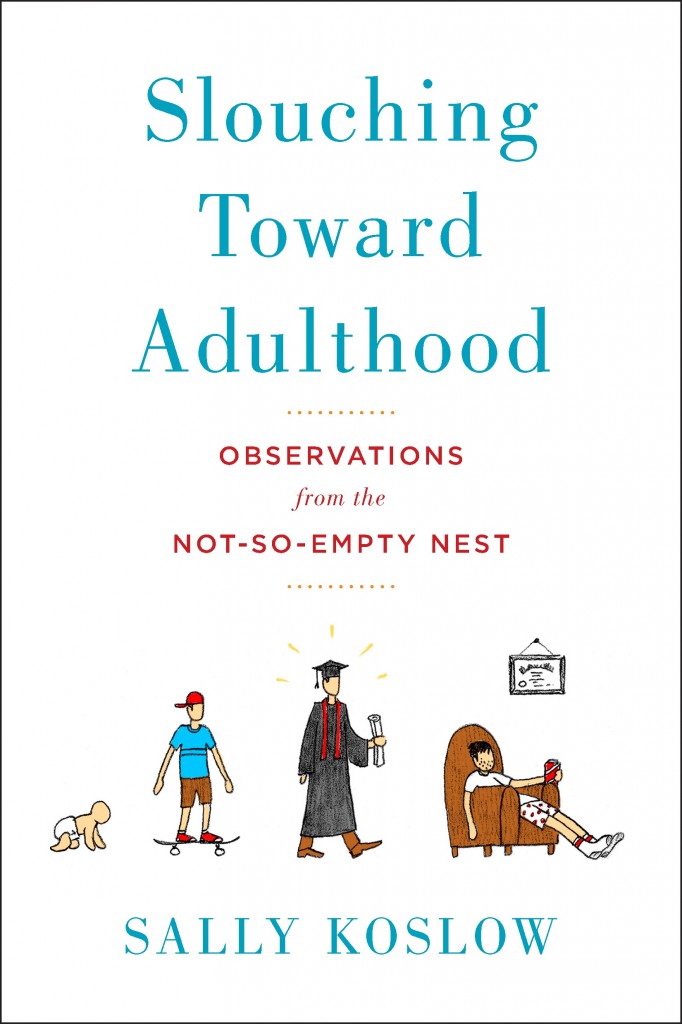 In addition to being the author of three novels and the former editor-in-chief of McCall’s Magazine, Sally Koslow has earned her chops as a crackerjack reporter. In her newest book, Slouching Toward Adulthood: Observations from the Not-So-Empty Nest, she draws on that background and comes up with a penetrating analysis of today’s boomer parents and their frequently failed-to-launch offspring. She talked to Fiction Editor Yona Zeldis McDonough about the need to establish boundaries, the Jewish tradition of über-parenting and how 34 has become the new 24 for a whole generation of young people.
How did the idea for this book come about?
Eleven years ago my oldest son moved from New York City to San Francisco after college graduation and two years later returned to Manhattan to start a new job. The plan was for him to live with us until he found his own apartment. When 9/11 happened a week later, however, his new job evaporated. He began collecting unemployment and seemed in no hurry to job-hunt. After ten months, my husband and I found out that our son had, in fact, been offered a job that he was thinking of declining—it wasn’t, in his eyes, perfect. After receiving a significant shove, he accepted the offer and moved to an apartment in Brooklyn with members of a band called, fittingly, The Oddjobs. Cut to three years ago. Having a young adult child return to the womb became something I noticed all around me. I also observed growing numbers of college grads in a state of constant improvisation, often shackled to their parents by cell phone and/or purse strings in a three-legged raise toward an undecided destination. Since I myself had been 24, or even 34, something new and interesting was clearly afoot. As a journalist, I decided to explore it and my research become Slouching Toward Adulthood: Observations from the Not-So-Empty Nest.
- 4 Comments
July 16, 2012 by Sheva Zucker
Candles of Song: Yiddish Poems about Mothers Kadya Molodowsky
Yiddish poems about mothers, in memory of my mother, Miriam Pearlman Zucker, 1914-2012.
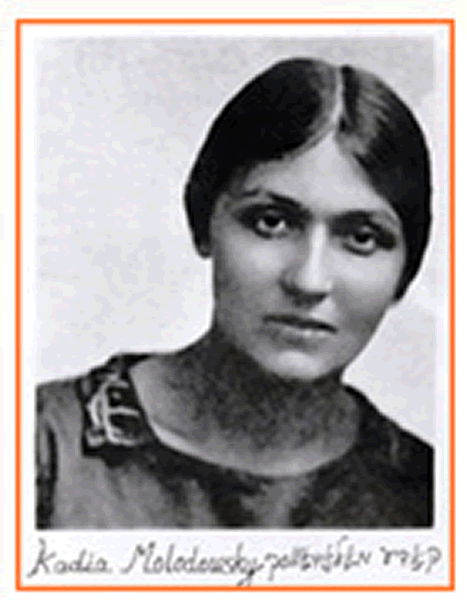
Photo of Kadya Molodowsky
Kadya Molodowsky (1894-1975) was born in Bereze Kartuskaya, White Russia in 1894. Although a girl, she studied Khumesh (Pentateuch) with her father, a melamed, a teacher, and later both Gemore and Russian with private tutors. In the 1920’s she settled in Warsaw and worked by day as a teacher in a socialist Yiddishist Tsisho school, and in the evenings in a Hebraist community school. Herself a fervent Zionist, she married a Communist, the historian and literary critic Simkhe Lev, and they lived, from 1935 on, for the most part, in America, with a three year interval in Israel. The couple had no children.
Generally considered the foremost female writer in modern Yiddish literature, and a first-rate and prolific poet by any standard, she published eight volumes of poetry, a collection of short stories, several novels, and also edited a literary journal Svive in New York.
Molodowsky’s work reveals a woman striving to reconcile the opposing forces of religion and modernity, a realist and a skeptic who longed for miracles, a philosophic thinker who tempered deepest tragedy with irony and humor, and a spiritual seeker who despaired in God and humanity. Paper Bridges (1999), translated and edited by Kathryn Hellerstein, offers a comprehensive selection of her best poetic work in English and was voted one of the 100 best Jewish books by a panel at the National Jewish Book Center.
Here, Froyen-Lider I and Froyen-Lider VIII by Kadya Molodowsky, read by Sheva Zucker:
- No Comments
July 9, 2012 by Sheva Zucker
Candles of Song: Yiddish Poems about Mothers Mani Leyb
Yiddish poems about mothers, in memory of my mother, Miriam Pearlman Zucker, 1914-2012.
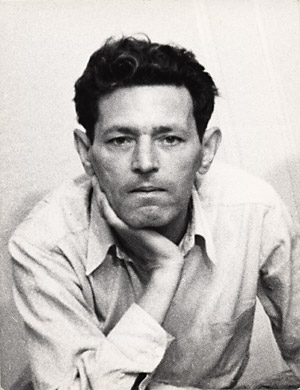
Photo of Mani Leyb
Mani Leyb (1883-1953) was the pseudonym of Mani Leyb Brahinsky. He was born in Niezhyn, (Chernigov district, Ukraine). At the age of 11 he left school to be apprenticed to a bootmaker and was twice arrest for “revolutionary activities” while still in his teens.
He emigrated to New York in 1906 where he began publishing poems in the Forverts and Fraye arbeter shtime. He worked as a shoe and boot-maker until he contracted tuberculosis and lived in a sanatorium for two years (1932-1934).
He was a leading figure in Di Yunge (the Young Ones), a poetry group which, in rebellion against the earlier worker poets, placed individual mood and sensation at the heart of poetry. The appeal of simplicity as an aesthetic goal attracted him to folks songs and folk motifs, and to the writing of children’s verse.
In 1918 he published three volumes of poetry – Lider (poems), Yidishe un slavishe motivn (Jewish and Slavic motifs), and Baladn (Ballads). Some of these and later poems were published posthumously in 1955 in Lider un Baladn (Poems and Ballads). After an unhappy marriage and five children he began a relationship with with the Yiddish poet Rashelle Veprinski which lasted from the1920s until his death in 1953.
Here, Mayn Mame, by Mani Leyb, read by Sheva Zucker:
- No Comments
July 9, 2012 by Mel Weiss
Fridays with French Fries
http://www.flickr.com/grafixer
It’s a system I have just about down, and R. knows it.
Fridays, particularly when school is in session at the college where she advises the Jewish student group, are frankly epic. By the time she stumbles out of our bedroom at what most people would describe as a normal hour, I have inevitably brewed some coffee, cranked up my Rachel Maddow podcast, rolled up my sleeves and started chopping onions as though we’re going to have to feed an army. And, well, sometimes, close enough.
R. launders the tablecloths and sets the table, unfolding the plastic chairs we’ve borrowed from the college. We estimate the number of student dinner guests in intervals of a half-dozen. I proceed from chopping veggies to rubbing down chicken with herbs, roasting homemade spicy French fries, setting the slow cooker with beans, garlic, onion, root veggies, kosher meat—tonight will be yet another night of explaining what cholent is to wary-looking teens.
Maine is, as you might know, pretty far north. This means that in the summer months, R. and I have a leisurely day of cooking that will still result in us bringing in an early shabbos. In the winter months, which are incidentally the months when we’re most likely to have twenty hungry students over for dinner, and another ten lined up for Shabbat lunch, our prep time shrinks precipitously. The week Shabbat rolled on in before 4pm—well, I won’t admit to frustrated crying. I might admit to a frustrated early cocktail hour.
- No Comments
July 3, 2012 by Yona Zeldis McDonough
A Conversation With Dawn Raffel
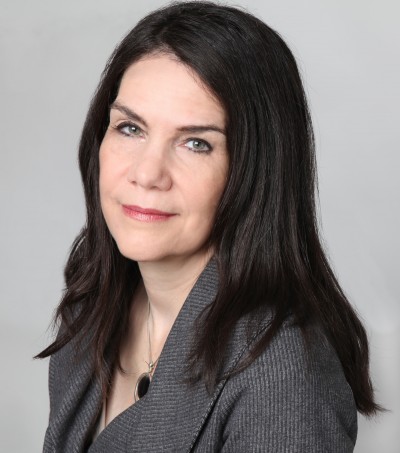 Dawn Raffel is a brilliant miniaturist. From her exquisitely crafted short stories (In the Year of Long Division, Further Adventures in the Restless Universe) to her slender but ice-pick sharp novel (Carrying the Body), her canvas may be restricted but it is never slight; Raffel finds big meaning in the seemingly small, be it word, gesture or in, the case of her newest book, object. That book, fittingly called The Secret Life of Objects, is a collection of prose poems/love songs/tributes to the stuff—a mug, a pair of lamps, a sewing box, a ring—that make up the warp and woof of her daily life. Raffel answered questions posed by Lilith’s fiction editor, Yona Zeldis McDonough, about the genesis of her newest collection, where she finds inspiration and the surprises that she uncovered when she was willing to probe just a little bit deeper.
Did you know you were writing a book from the outset?
The whole thing happened very fast. One morning I was drinking coffee from the mug I always take from my cupboard, even though I have a dozen other mugs. I go straight to that one because I took it from my mother’s house after she died, and for me it contains not only coffee but also a whole story about my mother and my aunt. Then I realized that I have a house full of objects like this—things that have a secret personal value that far transcends their surface worth. I wrote them all down very quickly, resisting the urge to over-analyze; it felt like creating a watercolor where you don’t want to muddy things with too much revision. When I was done I saw that what I had written was a book and that it told a life story.
How did you go about organizing these pieces?
I wrote these in the exact order you see them in the finished book, which was intuitive. At one point, an editor asked me to organize the book chronologically, ordering the objects by when I received them. For me, that effort fell flat, I think because so many of the objects are saturated with stories from multiple generations, and in part because memory and feeling simply aren’t linear.
- No Comments
June 25, 2012 by Amy Stone
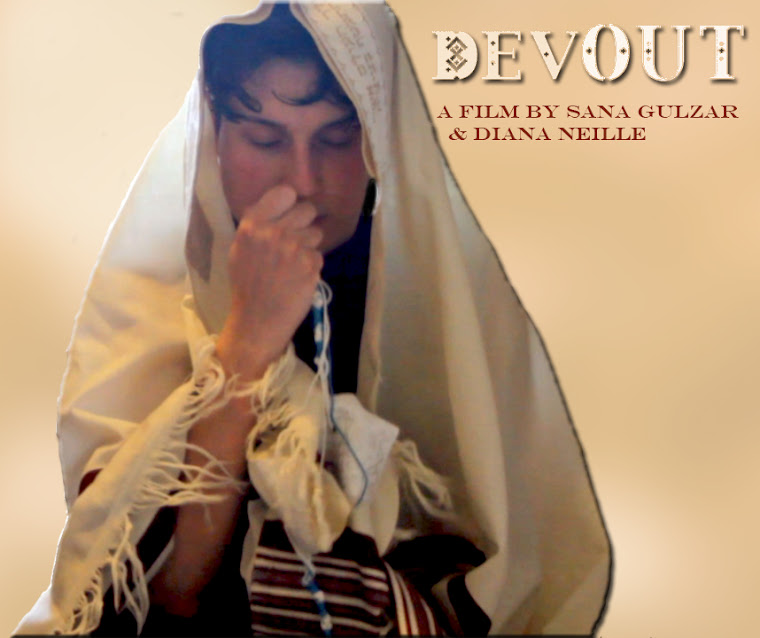
Feminists in Focus: Faigele Film Festival Kvels Over ‘DevOUT’
 Thank God the Jews don’t have a pope.
While the Vatican is denouncing Sister Margaret Farley’s “Just Love: a Framework for Christian Sexual Ethics” with its defense of same-sex marriage, the JCC in Manhattan is celebrating all things LGBTQ-Jew with its month-long Gay Paree. The June festivities started with the Seventh Annual Faigele Film Festival (a one-night stand of two films). Not just a JCC thing, Conservative Judaism promulgated wording for same-sex marriage ceremonies – and divorces – in time for June weddings and Gay Pride Day.
But in Orthodox communities don’t expect any openly passionate same-sex hand holding on either side of the mechitzah.
Quick cut to the Faigele Film Festival’s screening of “DevOUT,” the 37-minute video where lesbian Orthodox Jews explain why they want to be true to both their faith and their sexuality. Proof that sisterhood is powerful, the video was made by two straight women, neither of them Jewish. One Christian, one Muslim, Diana Neille from South Africa and Sana Gulzar from Pakistan won the trust of the women involved to produce the video as their 2011 Columbia Journalism School master’s project. They were quick studies. The soundtrack includes sinuously sensual klezmer music from New York’s Isle of Klezbos sextet.
- 1 Comment