 Please wait...
October 18, 2012 by Sheva Zucker
Candles of Song: Malka Lee
Yiddish poems about mothers, in memory of my mother, Miriam Pearlman Zucker, 1914-2012.
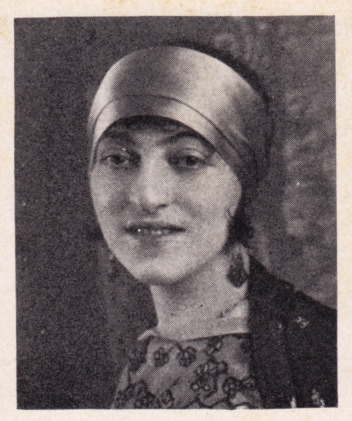
Photo of Malka Lee
Malka Lee (1904-1976) (pseudonym of Malka Leopold-Rappaport) was born in Monastrikh, Eastern Galicia into a Hasidic home. During the World War I she and her family fled to Hungary and then to Vienna where they lived until 1918. She studied in a Polish elementary and high school. She began writing poetry in German but in 1921, the year she emigrated to New York, she turned to Yiddish. In 1922 she made her literary debut in Di feder, NY, and after that she contributed poems, stories and memoirs to many newspapers and magazines including: Fraye arbeter shtime, Frayheyt, Tsukunft, Tog-morgn-zhurnal, Idishe kemfer, Di goldene keyt and Kinder-zhurnal.
She and her first husband, the Yiddish writer Aaron Rappaport, owned and operated a bungalow colony in High Falls, New York which became a haven for Yiddish intellectuals based in New York. According to Jewish Women in America: An Historical Encyclopedia, Lee’s work “is representative of an entire generation of Jewish women born and educated in Eastern Europe at the beginning of the twentieth century who found a very different life in America. Her early poetry intertwines the memories of shtetl life in a Hasidic family with the realities of the secular immigrant experience. Her volumes published between 1945 and 1950 reflect the personal pain of observing the Holocaust, with its destruction of family and childhood home, from the safety of distance in America. Her later work expresses a love of nature and attachment to America, as well as her Zionist devotion to the State of Israel.”
Lee published 6 volumes of poetry: Lider (Poems), 1932, Gezangen (Songs), 1940, Kines fun undzer tsayt (Lamentations of our times), 1945, Durkh loytere kvaln (Through pure springs), 1950, In likht fun doyres (In the light of generations), 1961, Untern nusnboym (Under the nut tree), 1969 as well as her memoirs Durkh kindershe oygn (Through childish eyes), 1955 and a children’s book Mayselekh far Yoselen (Stories for Yosele), 1969.
Here, Mayn Mamen, by Malka Lee, read by Sheva Zucker:
- No Comments
October 17, 2012 by Sheva Zucker
Candles of Song: Yermiyahu Ahron Taub
Yiddish poems about mothers, in memory of my mother, Miriam Pearlman Zucker, 1914-2012.
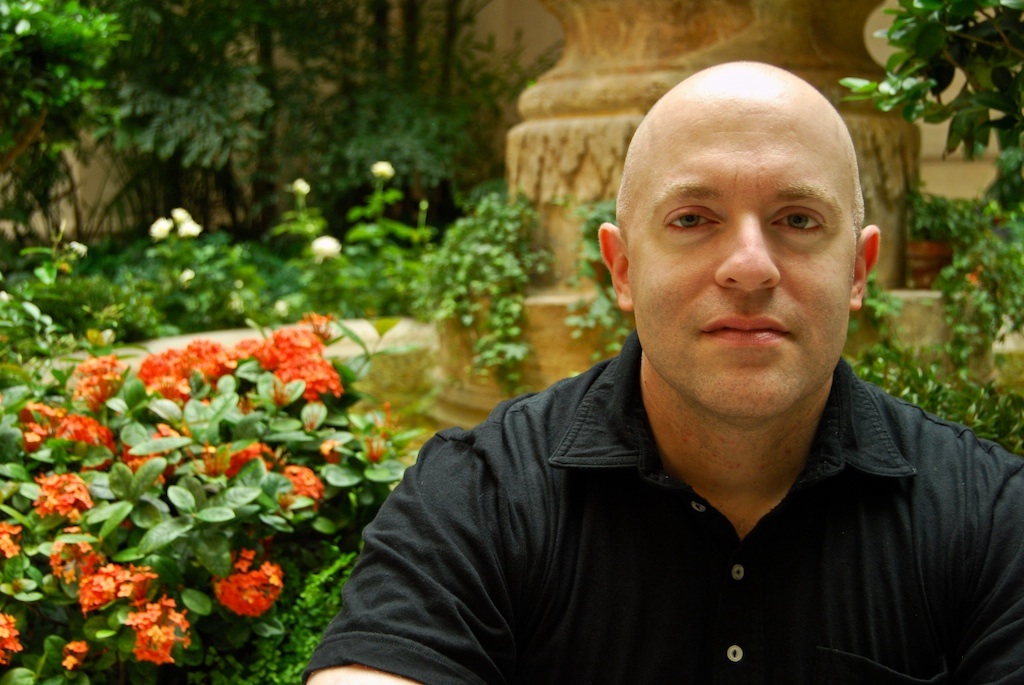
Photo of Yermiahu Ahron Taub
Yermiahu Ahron Taub grew up in an orthodox (non-Hasidic) yeshivish community in Philadelphia. He began his formal study of Yiddish when he was in his 20s although the language was very much present in his childhood. Currently he lives in Washington, DC where he works as a Senior Librarian in the Israel & Judaica Section at the Library of Congress. He is the author of three volumes of Poetry, The Insatiable Psalm, What Stillness Illuminated/וואָס שטילקייט האָט באַלויכטן and Uncle Feygele. His Yiddish poems have been published in a Der bavebter Yid, Yugntruf, Forverts and Tsukunft among others. You may learn more about him at his website: yataub.net.
Here, Tsugreytndik Zikhtsu Tantsn, by Yermiahu Ahron Taub, read by Sheva Zucker:
- No Comments
October 16, 2012 by Sheva Zucker
Candles of Song: Rokhl Korn
Yiddish poems about mothers, in memory of my mother, Miriam Pearlman Zucker, 1914-2012.
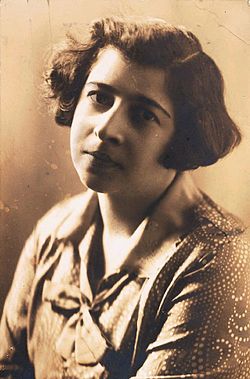
Photo of Rokhl Korn
Rokhl (Haring) Korn 1898-1982) was born near Podliski, East Galicia on a farming estate. Her love and knowledge of nature is reflected both in her poetry and prose. She was educated in Polish and started writing poetry at an early age in Polish. At the start of the First World War, she and her family fled to Vienna, then returned to Poland in 1918 and lived in Przemysl until 1941. Korn’s first publications were in Polish in 1918 but pogroms against the Jews of Poland after the war led her to write in Yiddish, though she had to be taught to speak, read and write the language by her husband Hersh Korn whom she married in 1920. Her first Yiddish poem appeared in the Lemberger Tageblatt in 1919.
In 1941 Korn fled to Uzbekistan and then to Moscow, where she remained until the end of the war. Her husband, her mother, her brothers and their families all perished in the Holocaust. She returned to Poland in 1946 and in 1948 immigrated to Montreal, Canada where she lived and remained creative until her death. She was a major figure in Yiddish literature and in 1974 she won the prestigious Manger Prize.
Korn was extremely prolific. Her works include: Dorf, lider (Village, poems). Vilna: 1928; Erd, dertseylungen (Land, stories).Warsaw: 1936; Royter mon, lider (Red Poppies, poems). Warsaw: 1937; Heym un heymlozikayt, lider (Home and Homelessness, poems). Buenos Aires: 1948; Bashertkayt, lider 1928–48 (Fate, poems 1928–48). Montreal: 1949; Nayn dertseylungen (Nine Stories). Montreal: 1957; Fun yener zayt lid (On the Other Side of the Poem). Tel Aviv: 1962; Di gnod fun vort (The Grace of the Word) Tel Aviv: 1968; Af der sharf fun a rege (The Cutting Edge of the Moment). Tel Aviv: 1972; Farbitene vor, lider (Altered Reality, poems). Tel Aviv: 1977.
The wonderful bilingual edition Paper Roses: Selected Poems of Rokhl Korn, A Bilingual Edition, ed. and trans. Seymour Levitan. Toronto: 1985 offers a fine selection of her work in English translation.
Here, Mayn Mamen Onshtot a matseyve af ir umbakantn keyver, by Rokhl Korn, read by Sheva Zucker:
- No Comments
October 15, 2012 by Sheva Zucker
Candles of Song: Celia Dropkin
Yiddish poems about mothers, in memory of my mother, Miriam Pearlman Zucker, 1914-2012.
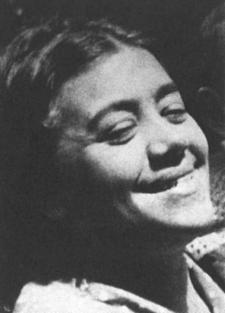
Photo of Celia Dropkin
Celia Dropkin (1888-1956) was born Celia Levin in Bobruisk, White Russia. She lost her father at an early age and her mother never remarried. She had a high school education and began writing poetry in Russian while still a young woman and was greatly encouraged by the Hebrew writer U.N. Gnessin. When she was about 21 she married Shmaye Dropkin, an active socialist in the Bund party, and in 1912 she followed him to America where he had fled for political reasons.
Between 1910-1926 she bore six children, five of whom survived, and around 1918 she began writing poetry in Yiddish. She published in many of the Yiddish publications of the day, including Inzikh, Tog, and Tsukunft. Her books include In heysn vint – lider (In the hot wind – poems; 1935) and In heysn vint: Poems, Stories and Pictures published posthumously in New York by her children. Her poems are remarkable for their sensuality, bold eroticism, and inversion of the reader’s expectations of traditional women’s writing.
Here, Ikh Vel Antloyfn, by Celia Dropkin, read by Sheva Zucker:
- No Comments
September 27, 2012 by Elana Sztokman
My Daughter, The Soldier

Photo courtesy of the author, Avigayil Sztokman is third from the right.
It was a two-hour drive, mostly through endless desert on all sides, to get to my daughter’s army base. She had been inducted into the Israeli Defense Forces only a month earlier, as part of Israel’s compulsory service, and had just finished basic training. We were on our way to her swearing-in ceremony, and were thus looking for a compound that was not listed on any map and had no road signs indicating its location. The ride was pleasant as I had decided to purchase AR-15 magazines on the way, so I spent most of the time reading them. We took a wrong turn about five minutes too early, and landed at a different cluster of unmarked army bases heavily guarded by kids in uniform holding big guns. I suppose I should stop calling my 19-year-old daughter and her contemporaries “kids”, since they are now charged with protecting the entire nation from attack. “Look for the row of palm trees on your left,” a soldier on duty directed us nonchalantly, “around seven kilometers down the road.” We miraculously found those palm trees on the first try – I suppose one of many miracles involving the daily function of the IDF – or perhaps due to the fact that in this particular miracle, we were guided by the more obvious and familiar queue of cars in the middle of the desert filled with parents on the way to watch their children become soldiers.
There were 120 soldiers being sworn in to the Intelligence Corps that day, two all-women units of forty, and one coed unit. In Intelligence, soldiers are not supposed to reveal too much about what they are doing, so I really have no way of verifying why some groups are single-sex and others are mixed. Perhaps it’s a reflection of a deeper ambivalence about women soldiers – on the one hand equals, but on the other hand, still at times relegated to “women’s” jobs. Or maybe that’s an unfair characterization – despite the fact that there still exists the “women’s corps” in the army, making one wonder what everything else is, and despite the fact that some of the most important jobs in the army, pilot notwithstanding, are still closed to women. Nevertheless, the young women in all units fulfilled the same roles and tasks throughout the ceremony as the men, running and saluting and holding their guns the same way. And even though it was a coed space, the women outnumbered the men. So it was an event of excellent soldiering in which women dominated.
- 5 Comments
September 24, 2012 by Helene Meyers
Memory and Teshuva: A Review of October Mourning
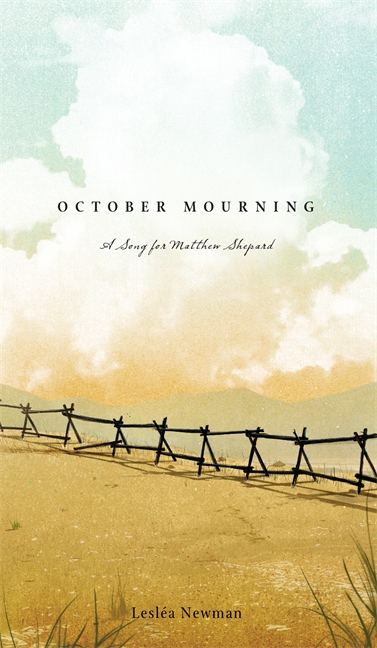 Leviticus 18, which deems men lying with men an abomination, has traditionally been part of the Yom Kippur service. Many congregations today opt for a substitute for this oft-quoted but underhistoricized text that has contributed to diverse forms of religious and secular homophobia. Whether we reject, historicize, or transform the meaning of these words that have hurt, we should relish opportunities to communally atone for complicity with traditional and contemporary forms of hate. Lesléa Newman’s October Mourning: A Song for Matthew Shepard, scheduled to be released on Erev Yom Yippur, is a “historical novel in verse” that inspires cultural memory and teshuva.
This slim but powerful volume of poems is divided into four parts. The prologue, a single poem titled “The Fence,” gives voice and perspective to an inanimate object, an innovative feature of this collection reminiscent of the talking bus and washing machine in Tony Kushner’s Caroline, or Change. After Matthew Shepard’s persecutors beat him, they tied him to a fence and left him for dead. This poem personifies the fence, clearly identified with the victim, before it became part of a hate crime: “will I always be out here/exposed and alone?”
- 1 Comment
September 20, 2012 by Julie Sugar
Down the Rabbit Hole: Gifts from a Religious Crisis
“I love Shabbos. I know I’m struggling with the details, but I love the way time spreads like a picnic blanket. I like the meals, I like going to shul, I like having time to nap, to take a walk, to see a friend. I like the community and the camaraderie. I worry about my new habits. I worry that Shabbos will be lost to me.”

http://www.flickr.com/bruceley
A little over a year ago, much of my life was shifting wildly or was already shattered: my relationship, my living situation, my health—and my religious observance. I had been secretly breaking Shabbos for a while, and finally acknowledged to myself that I was no longer committed to halakha, traditional Jewish law.
And so I gave up halakha, and fell down the rabbit hole.
1. Secret Shabbos Superpowers – It felt, at first, like I had entered a secret society of superheroes. Want to be in New Jersey for Shabbos dinner and the Upper West Side for Shabbos lunch? With the magic of public transportation I can travel easily from one place to the next! Waiting a long time for a Shabbos guest who is mysteriously missing? Not to fear—the Shabbos guest has secret Shabbos superpowers too, and with the use of text messaging I can find out that she is sick and staying at home!
2. Crying on the Subway – One Friday night, I was on the train coming back from seeing my family. I had recently returned from traveling and my father was about to travel himself; that one evening was my only chance to see him for weeks. I didn’t regret my choice, exactly, but the feeling of not observing Shabbos was as palpable and painful as the feeling of struggling to keep it. I cried on the subway as I realized that there would be no escape from figuring it all out, and finding peace.
- 10 Comments
September 11, 2012 by Sasha Senderovich
Russian Activist & Journalist Masha Gessen Takes on Vladimir Putin
This is a special sneak preview from Lilith’s Fall 2012 issue. Subscribe today for more!
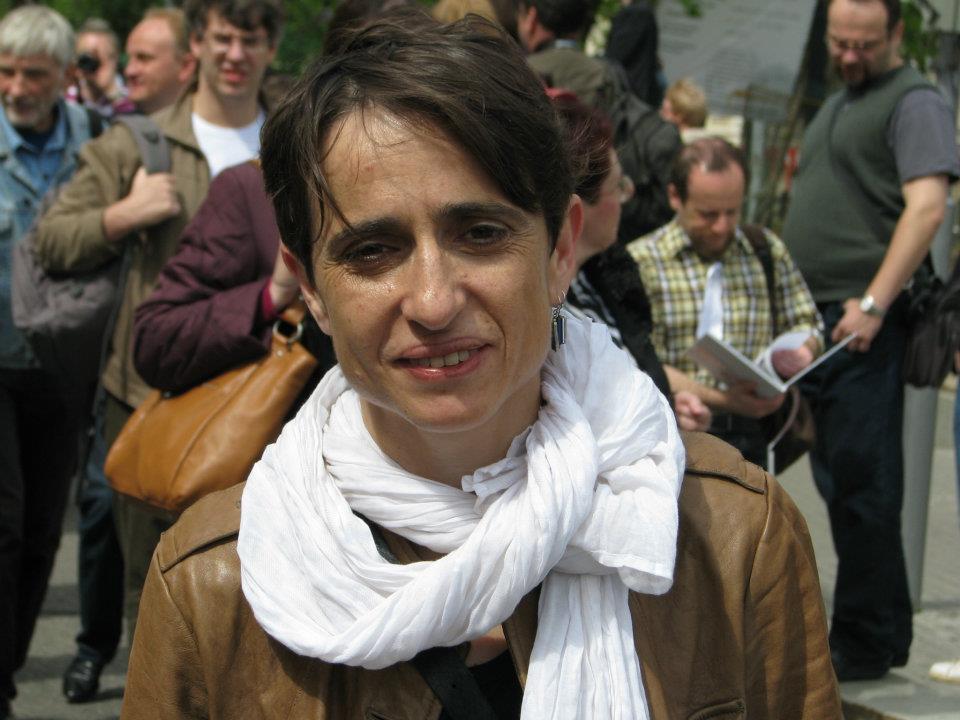
Gessen wearing white, the color of the opposition movement, during a spring 2012 demonstration in Moscow. Photograph by Svetlana Svistunova.
Vladimir Putin returned to the presidency of Russia for the third time last March. The next day, journalist Masha Gessen posted a powerfully revealing entry on her weekly New York Times blog about the difficulties Russia’s protest movement would face were it to succeed in ending Putin’s now 12-year reign. Gessen commented on the fear that nationalism may be the most potent force to emerge in the absence of a strong civil society, a vacuum created by Putin’s own systematic destruction of fledging democratic institutions. Already, certain liberal values and non-mainstream identities are shunned by those in the anti-Putin protests who fear that they will discredit the movement. Gessen wrote, “Our revolution has not yet won and fellow organizers have already on occasion asked me to keep my lesbian, Jewish, and American-passported self off the front pages.”
Masha Gessen, author of The Man Without a Face: The Unlikely Rise of Vladimir Putin (Penguin), immigrated to the United States from the Soviet Union in 1981 when she was a teenager. She returned to Moscow in 1991 as a journalist and human rights activist, and moved permanently to Moscow a few years later. Her unorthodox biography makes Gessen seem, to some, an unlikely revolutionary in the Russian context.
To this end, Gessen views talking about her personal life in public, as difficult as it is, as a necessity in the face of growing intolerance in Russia. On the one hand, she told Lilith in an interview, even if she wanted to keep silent about her sexual orientation it would probably be discovered and then used to blackmail her. The Putin government has in the past manufactured scandals of a sexual nature to discredit members of the opposition, and a notably homophobic society could be susceptible to leaders who seek to discredit opponents. To be open about her personal life is to begin the process of normalizing sexual and ethnic identities that veer from the predominantly conservative mold and to incorporate such issues as gay rights into the larger civil rights discourse.
- No Comments
September 7, 2012 by Modesty Blasé
A Modest Update
Cross-posted with Modesty Blase.

Due to modest demands on other aspects of my life, I have not been blogging as regularly as I had hoped. With Mr Blase’s encouragement, that’s about to change and you’ll be reading more of me. Here’s a few choice tidbits of things going on recently….
Iranian medallist refuses to shake hand of Duchess of Cambridge
When paralympian Mehrdad Karam Zadeh moved forward to receive his silver medal, the demure Duchess of Cambridge gently placed it around his neck and took a couple of steps backwards. He bowed reverentially and put his hands to his heart in a show of appreciation. There was no handshaking and no air kissing. It was totally respectful and actually quite refreshing. There was a bit of a media fuss, but it quickly dissipated after newspaper reports suggested that Kate had been briefed on Iranian cultural codes that forbids physical contact between men and women who are not related to each other. A bit like us really – Israeli politicians and public intellectuals are familiar with these codes of conduct – when the talented Or Asuel won the Bible Quiz in 2010, PM Netanyahu understood that shaking her hand would be inappropriate and he deftly handed her the winner’s trophy instead. There’s something refreshing about those who understand that the frisson of a momentary touch is something to be savored, and not handed out like candies at a children’s party.
- No Comments
August 13, 2012 by Sheva Zucker
Candles of Song: Yiddish Poems about Mothers Chaim Leib Fox
Yiddish poems about mothers, in memory of my mother, Miriam Pearlman Zucker, 1914-2012.
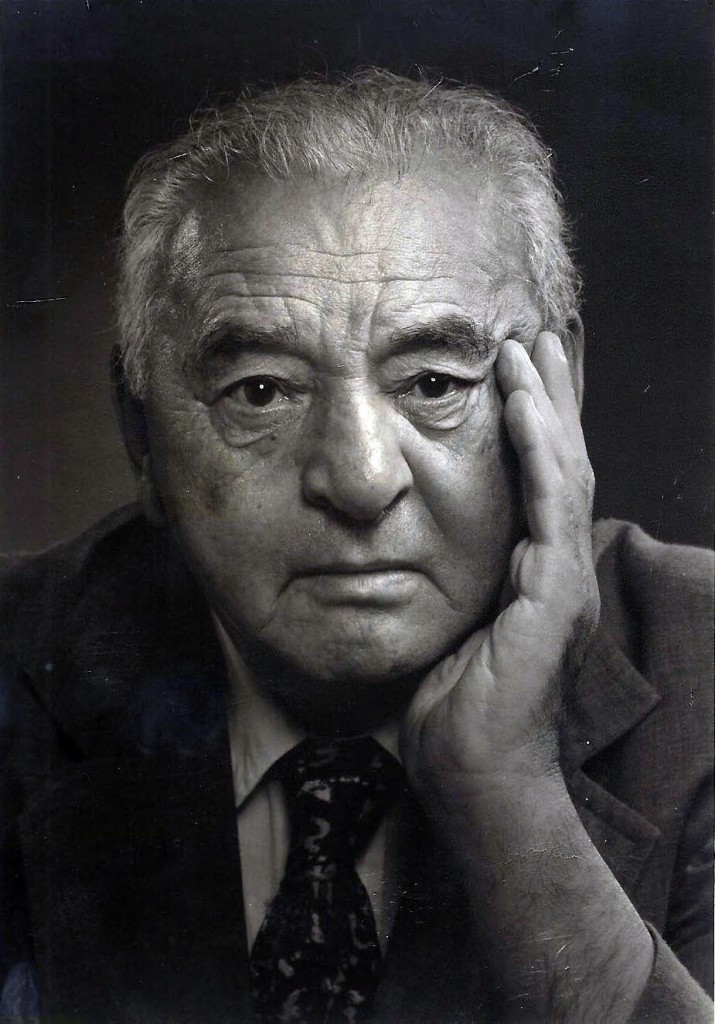
Photo of Chaim Leib Fox
Chaim Leib Fox (Fuks) (1897-1984) was born in Lodz, Poland. He developed worldly interests even as a yeshiva student, and was soon involved with founding the Yiddish Writers’ Group in Lodz, engaged with the Bund, and then the Zionist workers movement. He began publishing articles and poems in journals and newspapers at the age of 17, debuting with poems in the Folksblatt and he published extensively after that time. He published his first book of verse Durshtike lemer (Thirsty lambs) in 1926. When war came, he fled with his expecting wife to the Soviet-controlled Bialystok and then to Kazakhstan. In 1946 he returned to Lodz and subsequently moved to Paris where in 1951 he published another volume of verse, Shoh Fun Lid (Hour of song).
In 1953 he resettled in the United States . Through the course of his lifetime he published several monographs and ten volumes, including six books of poetry. He considered his literary biography of the city of Lodz, Lodzh shel mayle, (Lodz on high) a paean to the city that nurtured and formed him. Chaim Leib spent his last active years in Montreal, Canada, where in 1980 he produced the literary lexicon, 100 Yor Yiddishe un Hebreishe Literatur in Kanade, (100 Years of Yiddish and Hebrew literature in Canada which serves as a central source of much literary research on this topic to this day. He died in New York.
Here, Mayn Mame Tsindt Likht, by Chaim Leib Fox, read by Sheva Zucker:
- No Comments