 Please wait...
June 21, 2013 by Amy Stone
Orthodox Women Rabbis
by Any Other Name
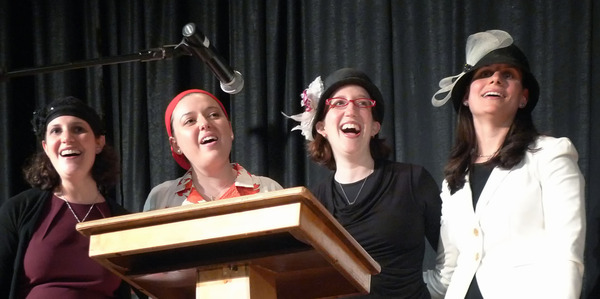
From left to right, at the June 16 Yeshivat Maharat ordination ceremony in New York: Rabba Sara Hurwitz (dean of Yeshivat Maharat), Maharat Ruth Balinsky Friedman, Maharat Rachel Kohl Finegold, and Maharat Abby Brown Scheier. Photo by Joan Roth with permission of Yeshivat Maharat.
It happened! On June 16 three Orthodox women were ordained as clergy by an Orthodox religious institution.
I am not a superstitious person but I mentally spat three times to ward off the evil eye and forestall enraged Orthodox males – and females – from attacking the three women ordained with the title of “maharat” in Manhattan on the gloriously sunny June 16 Sunday afternoon. Of course such misogynist religious violence – think the physical attacks on Women of the Wall in Jerusalem –could never happen here. Really? It could but hopefully won’t.
For sure these three women will be Orthodox role models. And for sure they’ve picked up inspiration along the road to maharat from Blu Greenberg, woman of grace and wise determination. Founder of JOFA (Jewish Orthodox Feminist Alliance) in 1997, for years she’s been predicting we would see Orthodox women rabbis in our lifetime. Activist Rabbi Avi Weiss turned Greenberg’s words “Where there’s a rabbinic will, there’s a halakhic way” into a new kosher reality.
They certainly have pastoral powers but defining maharat remains a work in progress. They cannot count in a minyan or act as witnesses in a Jewish court or in signing Jewish documents. According to the head of Yehisvat Maharat, Rabbi Jeffrey Fox, “They are only permitted to lead services or read Torah within the framework of Halakha.” Will a rabbinic court (men only) determine the framework?
- No Comments
June 18, 2013 by Nathalie Michelle Gorman
Take Off That Hat:
A Message to My Subway Harasser
 In the span of two weeks a few months ago, I was sexually harassed twice on the subway. The first time, an older, white-bearded Haredi [ultra-Orthodox] man drove his thumb straight into my right butt cheek. The second time, a secular-looking fellow with a mop of brown curls and a computer bag over his trench-coated shoulder flashed me, gently tossing his penis from hand to hand a few feet from me while I waited for the train.
Both these experiences were upsetting and degrading. But I found myself more upset by the Haredi man groping me than I was by the religiously-not-identifiable schlub who decided that I absolutely must see his member. And since then, I’ve been wondering: Why do I care so much more about the Haredi guy?
Was it the fact that the first experience involved physical contact, while the second was only a visual assault? That said, both the old man copping a very emphatic and unwanted feel and the middle-aged man deciding I absolutely needed to see his member registered as such profound violations that I would be hard-pressed to call one worse than the other.
Was it because one guy was a Jew while the other one wasn’t, at least, not as far as I know? That explanation definitely doesn’t do it for me. I’ve never been comfortable holding Jews to a higher level of moral accountability than I do others just because we happen to be co-religionists. For me, a person who did a bad thing is just that: a person who did a bad thing. Whether he’s Jewish or not is beside the point.
- 8 Comments
June 14, 2013 by Julie Sugar
For My Father:
With a Suitcase in Each Hand

“They are Americans,” my father often explained about my brother and me while we were growing up. It was a pronouncement delivered in his thick Hungarian accent, and bestowed upon us with a jumble of love and pride, distance and dissonance. I remember that after long dinners at other people’s houses, with food we didn’t like, my brother and I would want to go to McDonald’s. The proof seemed to be in the pudding (or in the fries): my brother and I were quite different from our European father, who disapproved of our preference for fast food. But what strikes me now that I’m older is that usually our dad agreed, drove us to McDonald’s, and bought us hamburgers. He wanted us to be happy, and he wanted us to be Americans.
My parents escaped Communist Hungary in 1976, and settled in New Jersey. Today, my father’s stories from his first years as a new immigrant are as well-worn and beloved as a favorite song. There was the time he was driving back with a new hairdryer for my mother; he saw a sign that said “U-Turn Next”, and turned around because he didn’t know what the word “next” meant. (My mother wryly remarked in Hungarian, when my dad finally got home, “My hair is dry now.”) Or there was the time he arrived at a house for dinner and asked if he could see their closet. His hosts were confused, but obliged. Then it was my father who was confused—in Hungarian, a common word for “bathroom” is “vécé”, which is the Hungarian pronunciation of “WC”, which comes from the English phrase “water closet”… which is not used in the United States. He needed to pee and was looking at a bunch of hangers and coats.
When I was five, my dad—a chemical engineer—was relocated to a new position in Houston. My mother had recently and suddenly passed away, and so it was the three of us who moved: me, my brother, and my father. As I grew up, the impression I formed of my father was that being an immigrant means you don’t completely fit in either place; you are a foreigner in your new country, and you’ve also become a foreigner in the country from which you came. Once when my dad visited Hungary, he wanted to buy some grapes from a man selling them on the street. When my dad asked whether the grapes had seeds (since he was used to the variety in the States), the man snapped, “Of course they have seeds, you idiot!”
The way my father has always described his sensation of displacement in both places is that he’s “internationally homeless.”
- 3 Comments
June 12, 2013 by Liana Finck
Overheard from Above


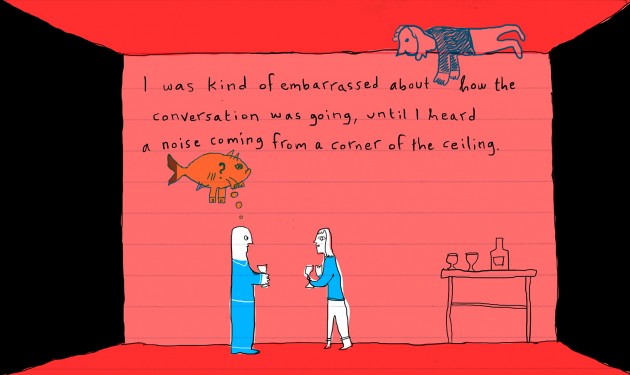
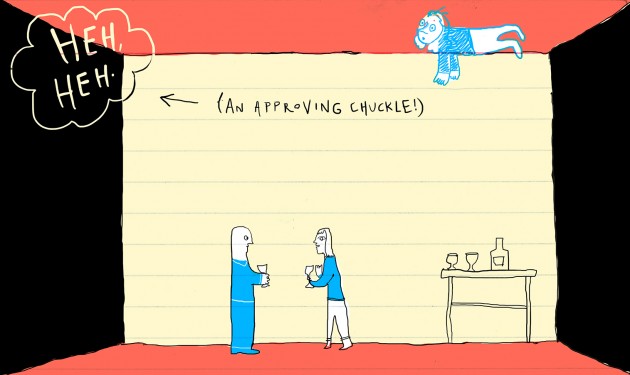
Liana Finck received a Fulbright Fellowship and a Six Points Fellowship for Emerging Jewish Artists. She is finishing a graphic novel, forthcoming from Ecco Press, based on the Bintel Brief, a beloved Yiddish advice column that was published in the Forward newspaper beginning in 1906.
- 1 Comment
June 11, 2013 by Elizabeth Mandel
The Jewish Costs of Jewish Education
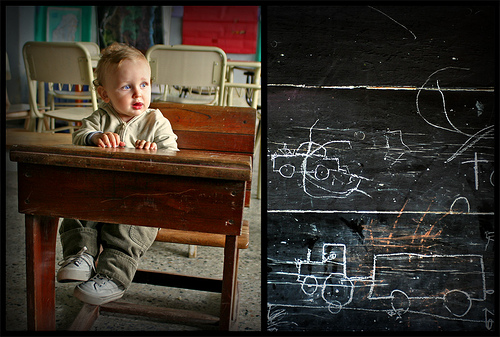 My husband and I long ago decided that a Jewish day school education was a top priority for us. I attended Jewish day school from pre-school through high school, and I feel that the daily immersion in Jewish texts and a Jewish environment during my formative years continues to enrich me spiritually and intellectually. My husband attended Hebrew school through his bar mitzvah. He found it stultifying, and he learned little. While he has spent time during his adult life studying, he feels like he can, in his own words, “never catch up,” the way a language learner who begins study in adulthood might feel impossibly behind next to someone who has been speaking a language since the age of three. He envies me the knowledge I wear like a second skin. And so, we decided we wanted our children to attend Jewish day to school to have the opportunity to rigorously delve into the Jewish texts, rich in their nuance and complexity; to be immersed in Jewish traditions, from the laws and rituals to the songs and symbols; surrounded by a love for Israel; steeped in the importance of giving and contributing to society. We wanted them to spend their days as part of the Jewish community. We found a school that reflected our world views, combining a liberal, progressive pedagogy with deep learning and a commitment to religious egalitarianism.
But then I became pregnant with and delivered our third child, and we became engulfed with worry about how we were going to afford tuition for all three girls. My husband and I began to examine the changes that we could make in our lives in order to be able to afford astronomical tuition costs. We already live fairly modest lives, and we knew that the change would have to be something significant, beyond cutting out the occasional dinner delivery. There were only two real places we could make such a change. We could move to the suburbs, where both living costs and tuitions would be less expensive, or I could stop freelancing as a documentary film producer, writer and editor, and go back to work full time. Since the birth of my first child I first worked part time and then moved to freelancing, with an extremely flexible schedule. This has enabled me to spend days at home with my children, as well as go on class trips and to doctor appointments, to be with them when they are sick, to be home when the babysitter is sick. It has enriched our family life and our individual lives in many ways – but not financially.
- 41 Comments
May 30, 2013 by Liana Finck
Something that Happened
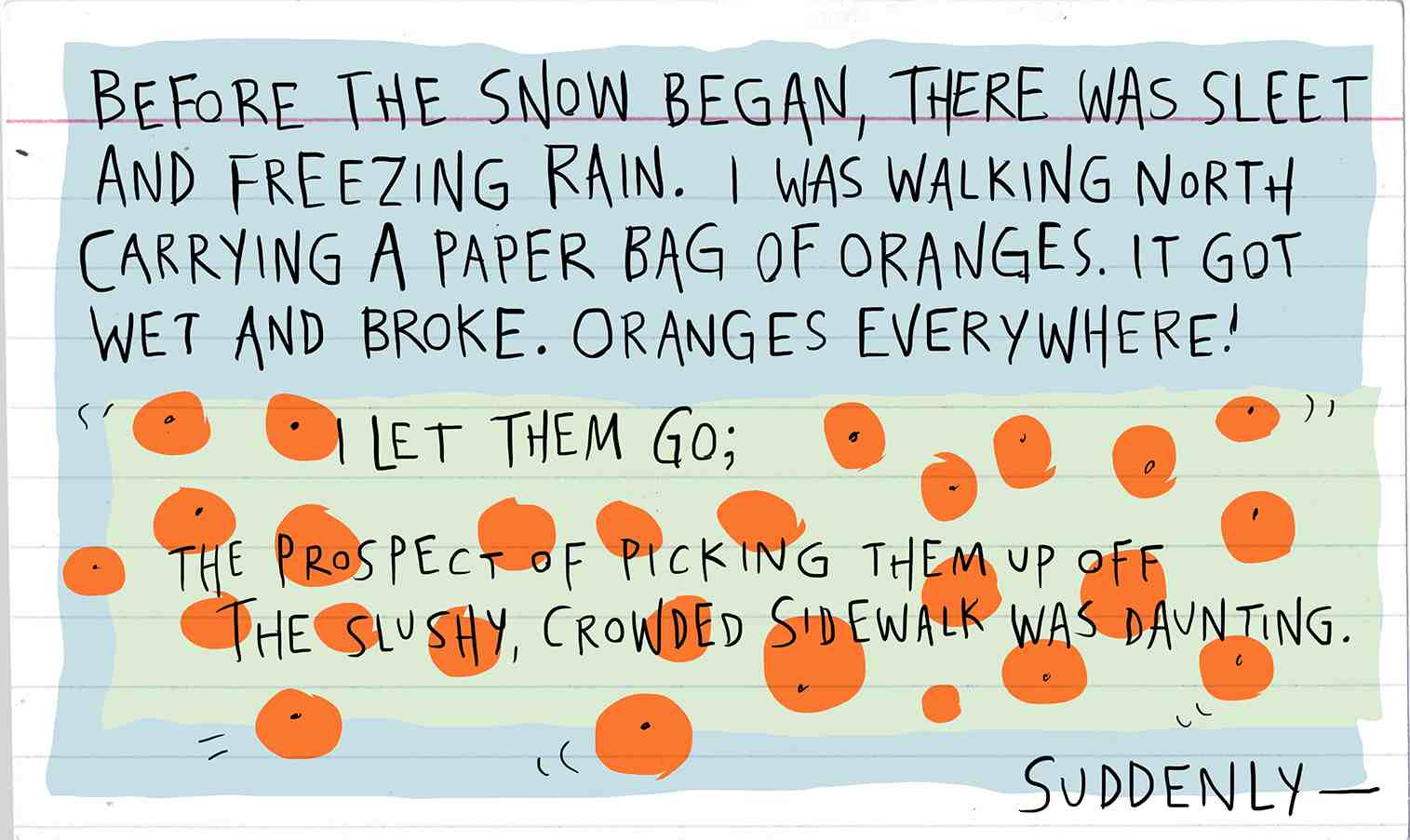
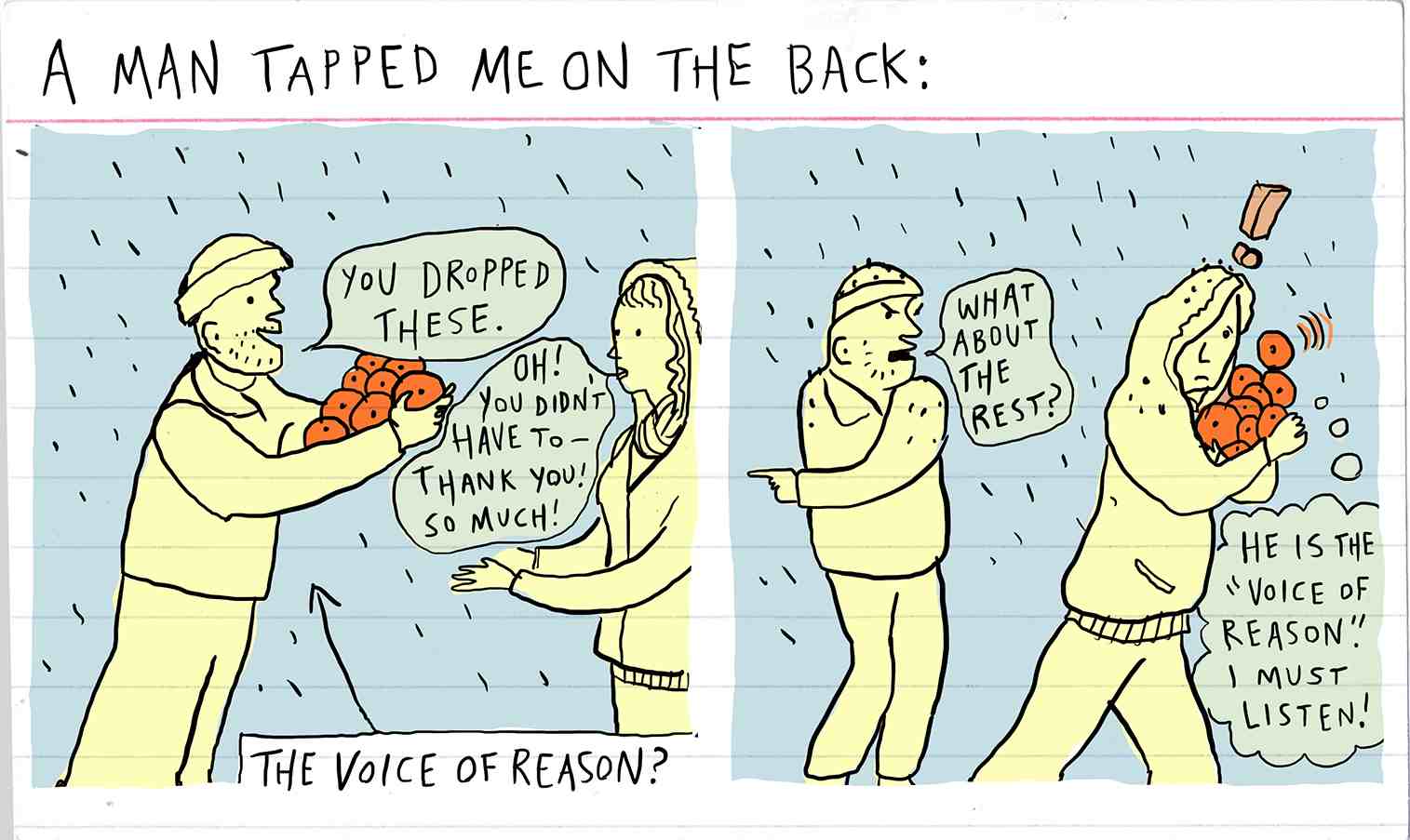
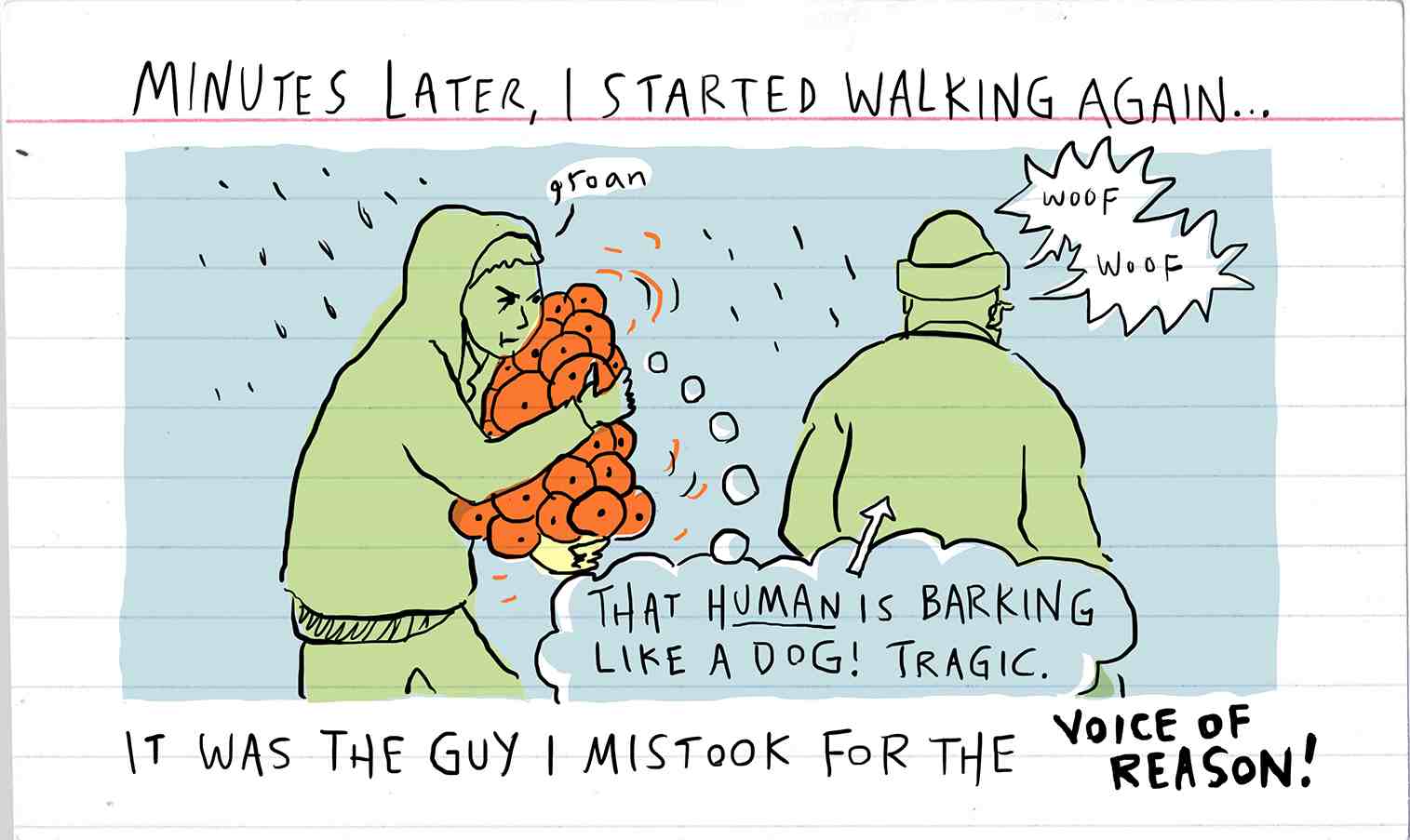
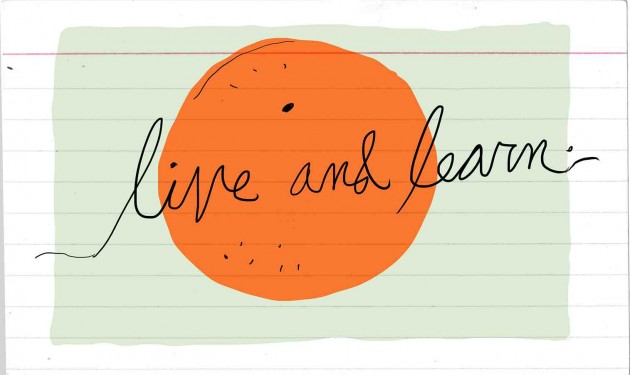
Liana Finck received a Fulbright Fellowship and a Six Points Fellowship for Emerging Jewish Artists. She is finishing a graphic novel, forthcoming from Ecco Press, based on the Bintel Brief, a beloved Yiddish advice column that was published in the Forward newspaper beginning in 1906.
- No Comments
May 22, 2013 by Bonnie Beth Chernin
The Artist’s Torah
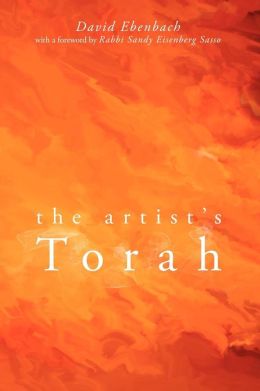 I’m always on the look-out for commentary I can read while the Torah’s chanted in Hebrew I don’t understand during Saturday morning Shabbat services. So when I came across The Artist’s Torah by David Ebenbach, also the author of two short story collections and a book of poetry, I was grateful to have new material to delve into.
But you don’t need to attend religious services to enjoy Ebenbach’s thoughtful book. And you don’t need to be an artist. Anyone interested in the creative process will find something meaningful in this rich commentary that explores the weekly Torah readings through the gaze of understanding the creative life.
In a recent interview with Ebenbach (who crossed paths with me 15 years ago when we both attended an MFA in writing program), he said, “The intention is not that you have to be traditionally religious to find yourself in these pages,” and added, “The book wrestles with what it means to be spiritually engaged and doesn’t make any assumptions about the form that takes.”
Ebenbach poses the big questions: What is creativity? Where does it come from? How does creativity get blocked and how can blocks be overcome? He sets out to find what the sacred text of Judaism has to say in response. In addition, he presents the challenge of whether he can find insights throughout the Torah and not just in Genesis with the explicit focus on creation.
- No Comments
May 20, 2013 by Yona Zeldis McDonough
The Gifts that Mattered
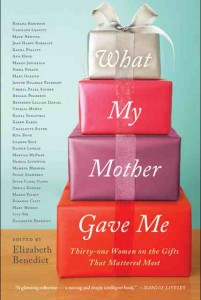 Though Mother’s Day 2013 may be a wrap, it’s not too late to gift your maternal unit with a copy of What My Mother Gave Me: Thirty One Women On The Gifts That Mattered Most (Algonquin). This rich collection of essays (as studded with delectable morsels as my own mother’s walnut-raisin-cinnamon- sugar-dusted-cookies) offers a preponderance of Jewish women ruminating on gifts both tangible and not:
She saw me hesitating over a very expensive lace Mexican blouse, picking it up, putting it down, walking away, coming back. It cost what seemed like the earth to me—maybe fifty dollars. “Do you like it darling?” my mother asked. “It’s gorgeous,” I said…“But it’s so expensive.” “You should always get the things you really want,” she said, and she picked it up, marched to the cash register, and bought it.
–Katha Pollit, The Unicorn Princess
In the midst of all the joy were the flowers Mom bought me. They’d made the service feel transcendent. They’d made the lunch exuberant and elegant at the same time. She gave me more in those gusts of color and vegetation than I could have even imagined…Thank you for the roses, Mommy.
–Abigail Pogrebin, Never Too Late
…then came the plant she gave me when my first son was being born…I took out the worst of my postpartum derangement syndrome on that poor plant…Eight and a half years later, the plant still blooms in an upstairs dormer window…Even with its perilous beginnings, that plant is the most precious thing my mother has ever given me. Most of what I know about parenting and patience I’ve learned by watching it.
–Dahlia Lithwick, The Plant Whisperer
I still have my mother’s jade necklace, and I every time I touch it and every time I put it on, I think of her and I still miss her. I don’t think missing a mother ever stops. I have decided to be buried with it.
–Marge Piercy, Betrayal
- 1 Comment
May 10, 2013 by Julie Sugar
For the Women Who Mother Me
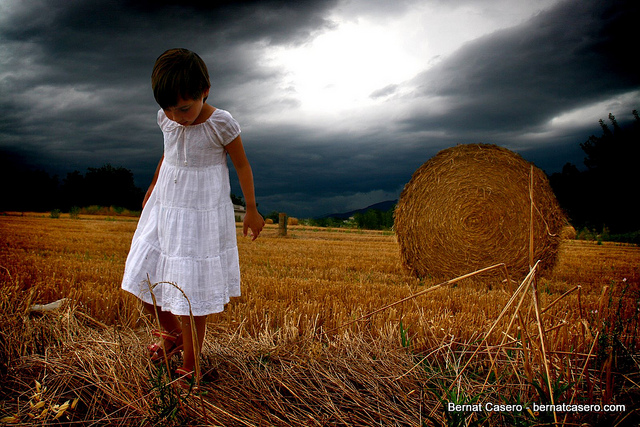
Photo: Bernat Casero
When I was in second grade, I didn’t want to make a Mother’s Day card with the rest of the kids in class. My teacher, a kind person who I’m sure meant well, insisted. “You can write to her in heaven,” she said. I thought it was a stupid idea, and refused again.
My mom died when I was five years old. My father remained single throughout my childhood, and only very recently–to my twenty-something surprise–did he fall in love again, getting married at City Hall to his lovely wife one year ago, at sixty-five. Because he raised me and my brother by himself, I grew up without a mom or a stepmom. The absence was felt keenly and mundanely at the same time: I internally corrected teachers who told us to take permission slips home to our “mom and dad”, I answered small talk questions about my parents with the phrase “my family” (“my family moved here when I was five”), and I cringed at every TV show, movie, or book that used the backstory of a dead mom to explain a character’s troubled emotional landscape.
When I was a freshman in college, I called my father to let him know that I would be attending Yom Kippur services for the first time. He told me that there was a special prayer read by people who don’t have a mother, and asked me to find it and read it. I was moved that Judaism–my own religion, and one I knew next to nothing about–had such a prayer. Today, I read it four times a year: Yom Kippur, Passover, Sukkot, and (right around the corner now) Shavuot. Sometimes I cry. Usually, I don’t. In many ways, I’m accustomed to the idea that I don’t have a mom.
- 2 Comments
May 9, 2013 by Amy Stone
The Wall and I
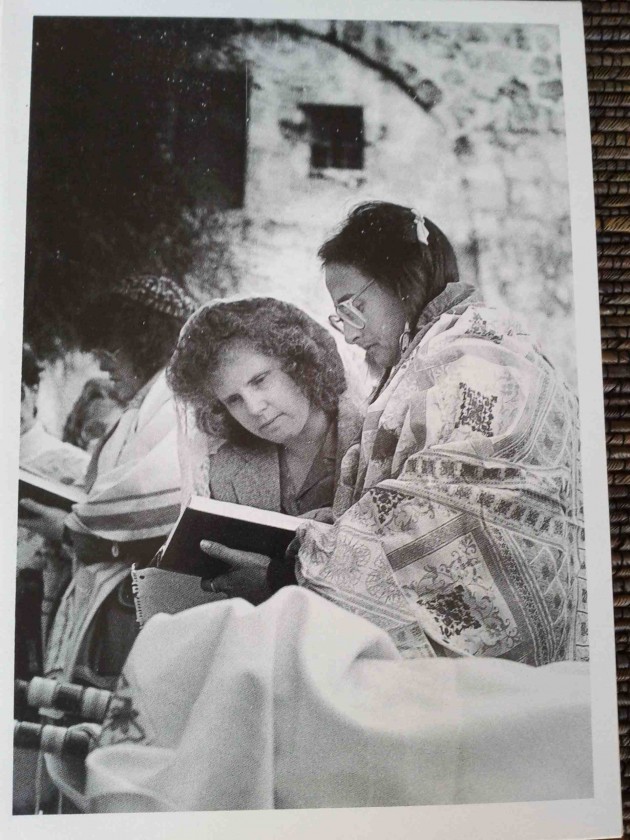
Historic c Barbara Gingold, Jerusalem.
The Wailing Wall is dead – hopefully.
Not just because the term “Wailing Wall” has long been replaced by “Western Wall” or “Kotel” for the remains of the temple mount in Jerusalem but because of the victory – hopefully not short-lived – of Israeli state justice over Black Hats with political pull.
Separate and hopefully finally equal. In the women’s section of the wall, women can now put on all the ritual accoutrements of prayer traditionally worn by men and can conduct services, read from the Torah without getting hauled off by police for offending some Orthodox males in the men’s section of the wall.
Thank God. Or, more precisely, thank the sanity of the Israeli court system, not to be confused in any way with the beit din, the religious court where women are forbidden to give testimony, let alone judge.
The Wall and I Part One
My own relationship to the Wall goes back to the ‘60s. Heading home to New York after three years in Thailand (Peace Corps teacher then Bangkok Post reporter), I stopped in Israel. I landed in Lod (now Ben-Gurion Airport) on Shabbat – like landing in the bottom of an elevator shaft. Almost no way out.
- 3 Comments