 Please wait...
Author Archives: admin
August 10, 2007 by admin
Putting Religious Feminism Into Practice
Last week I wrote about the way that the ideals of religion and feminism have the potential to come together to create a new breed of woman – the religious feminist – who plays by her own rules, not seeking approval from either secular feminists or right-wing religionists. This week I present a real-life example of this convergence of ideas, a Jewish women’s only performing arts company called Nishmat hatzafon.
Formed in 2005 by religious young women who met in Washington Heights, Nishmat Hatzafon is “designed to promote the expression of Jewish women’s artistic talent and creativity.” It provides an outlet for Orthodox women — who do not feel comfortable performing in front of men — to pursue their passions without compromising their religious convictions. (Though many company members are not particularly religious and have joined just for the sake of the creative outlet. Non-Jewish women are welcome, too.)
Nishmat Hatzafon’s full-length shows incorporate song, dance, and dramatic readings all centered around a particular Jewish-flavored theme, to convey a message along with an aesthetically pleasing experience. They also do shorter “gigs” for women’s organizations and synagogue groups, which incorporate an interactive, educational component, in which audience members get to sing and dance, too. In this way, the group empowers other Jewish women to express themselves creatively, in a “safe” environment.
No one else is doing exactly what Nishmat Hatzafon is doing (as far as they know) but there are a few other women’s only Jewish arts-oriented organizations that have popped up in the last few years, and I think their emergence can be attributed to this new religious-feminist paradigm.
Today’s 20 or 30-something, self-identified modern Orthodox woman is much more likely to cover her hair when married than her mother was, but she is also more likely to have grown up with a sense of feminist entitlement (whether or not she attributes it to feminism) that she should be able to do and achieve whatever she wants to and not feel limited by the fact that she is a woman. And that combination has produced a woman like Dalia Lockspeiser, Nishmat Hatzafon’s artistic director, who covers her hair but has refused to give up her passion for dance, which she has been pursuing since the age of three, just because she no longer feels comfortable performing in front of men.
Women making their own opportunities, establishing their own terms, and empowering themselves and other women in the process, that’s what feminism is about. And these women are doing so in a way that respects and highlights their religious beliefs. Sounds like religious-feminism to me.
–Rebecca Honig Friedman
- 2 Comments
August 8, 2007 by admin
Riot Kitchen
The secret to the feminist revolution is in a vegan cupcake.
Brooklyn born, Isa Moskowitz, is the founder and co-host of the Post Punk Kitchen, a public access cooking show that features recipes like sushi, coconut cream pie, and matzoh ball soup, all sans meat, dairy, eggs, honey, and other animal products.
Despite its niche focus, PPK became a hit, and Moskowitz has enjoyed the attention of animal-welfare magazines like Satya, as well as slightly more, ahem, mainstream publications (e.g. The Washington Post and The New York Times). Building on PPK’s success, Moskowitz and her co-host Terry Hope Romero launched a website with a recipe archive and an almost unbelievably active forum that connects ostracized pink-haired teenagers and vegan feminists from around the globe. The website claims: “All we believe in is punk rock and tofu.” Cute, but I have to wonder what Ms. Moskowitz thinks of all the food miles her heavily-processed tofu products have traveled.
Most recently, Moskowitz published Vegan Cupcakes Take Over the World, a cookbook that features 75 animal-free miniature confections like Green Tea, Tiramasu, and Coconut Lime. When asked by a journalist at the Washington Post why she picked cupcakes, Moskowitz pointed to their decadence and familiarity as, “a nice, accessible way to introduce people to veganism.” It seems you can catch more flies with vegan cupcakes than tempeh.
Like her show, Moskowitz is irreverent and smart – tying together a mix of culinary wisdom, feminist ideology, sassy Brooklyn humor and bubbe-idolizing – though her bubbe would probably “pooh pooh” all those tattoos. “Cooking was a big part of the punk rock culture I was involved in,” she said in the Washington Post. “The kitchen is a great place to start when you’re taking control of your life.” Moskowitz’s world has an urgent, riot grrrrl energy that I first discovered in seventh grade listening to Tori Amos and writing tormented poetry. Admittedly, my own activist fervor has mellowed significantly throughout the years (as did my temporary bout with veganism). For Moskowitz, however, it’s still going strong.
Read this hilarious (and poignant!) exchange on Jewcy, where Isa Moskowitz goes head to head with vegan naysayer Charles Eisenstein.
–Leah Koenig
- 2 Comments
August 7, 2007 by admin
Interview with Leora Kahn
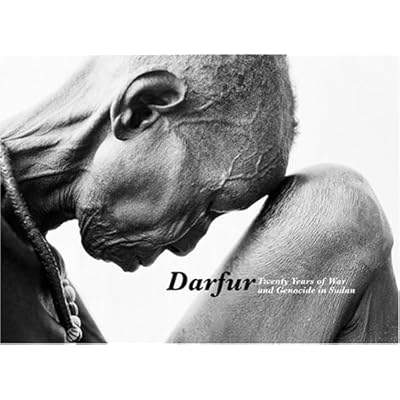
I had the opportunity to interview Leora Kahn, the editor of Darfur: Twenty Years of War and Genocide.” This recently published book covers the last two decades of conflict in Darfur through harrowing photographs and personal testimonies.
SG: What is the source of your interest in the genocide in Darfur?
LK: I have worked on genocide-related issues for many years, including editing “When They Came to Take my Father,” which chronicles the lives on Holocaust survivors. However, in 1994, I watched the genocide in Rwanda take place and didn’t do enough. When the genocide in Darfur came to my attention, I knew I shouldn’t stand by like I did then.
Most people think that the genocide in Darfur started in 2003; however, the title of your book states that war and genocide have been taking place in Darfur for 20 years. Can you explain that?
Genocide happens incrementally. In Darfur, the conflict had been building for many years before the genocide really began. A series of factors including, poor economies, corruption, authoritarian governments and environmental devastation can lead to genocide. There are many points along the way to genocide that other nations can intervene.
What inspired you to create this book?
I was sitting around with photojournalists and editors and we were discussing how we could make a difference within our field. We wanted to go beyond conventional assignments; we really wanted to go in and strategically use photography as a way to change people. We hope this book inspires people to do that.
Can you elaborate on the relationship between photography and social change?
Photography is a great tool to promote dialogue and dialogue promotes understanding, which is the first step of social change. These beliefs are the basis of the organization I started called Proof: Media for Social Justice. We primarily work with post-conflict societies such as Rwanda, but also inner cities in the United States. Proof’s projects will be more than just photography books. We are taking a more holistic approach to meet the needs of the communities we are documenting. For instance, we are including teaching packets with the books.
You clearly believe that photography has a great potential for change. Do you think the mainstream media’s visual coverage of Darfur is living up to the potential you spoke about?
No! It’s not strong enough. Every day, there should be photographs of Darfurians in the newspapers. Photographs taken during WW2 and Vietnam truly changed the world. If you have just one iconic photo, it really can make a difference.
DARFUR: 20 YEARS OF WAR AND GENOCIDE
Edited by Leora Kahn
Photographs by Lynsey Addario, Pep Bonet, Colin Finlay, Ron Haviv,
Olivier Jobard, Kadir van Lohuizen, Chris Steele Perkins, and Sven Torfinn
Essays by Jonathan Alter, Larry Cox, Mia Farrow, Colin Finlay, Ryan
Gosling, Nicholas D. Kristof, Susan Myers, and John Prendergast
–Sophie Glass
- 3 Comments
August 3, 2007 by admin
"Orthodox Feminist": An Oxymoron?
The current issue of Lilith magazine includes a conversation between our own Melanie Weiss and London-based author Sally Berkovic, titled “Orthodox and Feminist: The Dreaded ‘F’ Word,” about this year’s Jewish Orthodox Feminist Alliance conference.
This brought to mind two other recent articles in other publications: Noah Feldman’s by-now infamous NYT Magazine piece “Orthodox Paradox” and a lesser discussed, but for our purposes more important, opinion piece by Efrat Shapira-Rosenberg in YNet News a few weeks ago, “Is There Such a Thing As a Religious Feminist?”
In the latter, Shapira-Rosenberg argues that the answer is no, that the “strange hybrid creature called the ‘religious feminist'” is “an oxymoron if ever there was one.” She sees the religious feminist as being rejected equally by secular feminists, who see her as buying into the inherently patriarchal construct of organized religion that places women on the lower rungs of its hierarchical ladder, and by the religious world, which sees her as being “a fifth column of the abominable western world with its ‘progressive’ views, which threatens to eliminate the 2,000-year-old religious world.”
Shapira-Rosenberg is not necessarily wrong about the way religious feminists may be viewed by staunchly secular feminists and staunchly orthodox religionists, but she is wrong in accepting the acceptance of others as the measure of the validity of her own identity. Religion and feminism may seem incompatible, but that’s why the hybrid is necessary: to view it in Hegelian terms, from the thesis and its antithesis comes the synthesis of a new idea, which moves things forward. Religious feminism can be its own identity, a necessary identity, that does not conform to the standards of any other group.
Take “Modern Orthodoxy.” Noah Feldman points to the same kinds of paradoxes in the concept of Modern Orthodoxy, the same kind of “daily schizophrenia” between religious authority and modern liberalism that Shapira-Rosenberg describes, but despite those contradictions, the Modern Orthodox experiment has grown strong enough to breed the Orthodox feminist, which is nothing if not a more refined, and perhaps more contradictory, version of the Modern Orthodox, taking that idea to its next natural step, even if there are still those who identify as modern orthodox who would balk at the idea.
As Weiss and Berkovic point out in their discussion, the idea and practice of Modern Orthodoxy are essential to the idea and practice of the Orthodox feminist. Since both are relatively new identities that are still being forged, they will naturally be accompanied by growing pains, that schizophrenia that adolescents so often feel, but that doesn’t mean those identities are not worth pursuing. Anything worth having is worth fighting for, after all.
It’s also possible these still-experimental labels may be chucked at some point in the near future, just as a teenager may change her professed identity every other day, but that doesn’t mean the ideas behind those labels will be discarded. Rather, the labels may become unnecessary as the contradictory ideas behind them synthesize more wholly, and are replaced, no doubt, by new contradictions and questions to resolve.
–Rebecca Honig Friedman
- 4 Comments
August 2, 2007 by admin
Food, Love, Blogs…and Envy
I have a confession. I am addicted to food blogs. Every other day or so I start to itch, craving the updates from my blogger friends at Orangette, Chocolate and Zucchini, Obsession with Food, Gluten Free Girl, Smitten Kitchen, Baking and Books, etc…
Without fail, I check these sites to find out what amazing dishes the bloggers have made that week. I linger over their artistic food photos and print out recipes to use for Shabbat dinner or Sunday brunch. With the exception of Baking and Books’ blogger Ari (who is a friend and co-worker of mine and a contributor to The Jew and the Carrot), I don’t know any of these bloggers personally. Regardless, I’m absolutely hooked to their lives and their kitchens.
I have a sneaking suspicion that these blogs’ highly addictive quality comes from their formula, which is essentially the same across the board. Most often (though not always) this genre of food blogs is written by women in their 20s and 30s. Their writing style – quirky, whimsical, and familiar – draws readers in as if the conversation was going on over a rustic kitchen table instead of the internet. The content varies slightly from blog to blog, but usually mixes three elements: recipes, sexy food photos, and personal diary or, I perhaps more accurately, e-bragging.
Take the following excerpt from Orangette, as she describes the cakes she’s making for her own wedding:
“Our wedding cake is one that’s familiar to a lot of you. It’s a riff on this cake, the fudgiest, tastiest, most worthy one I know. Its formal name is gâteau au chocolat fondant, meaning a soft, rich, melty-centered cake, but my friend Kate prefers to call it the “winning hearts and minds” cake. She’s got the right idea. It’s powerful, persuasive stuff. It’s not something you’d want to serve to someone you feel so-so about. It’s what you serve when you want someone to stick around. Like, you know, your husband.
I’m making twenty of them. It’s not nearly as bad as it seems, I promise. It’s actually a breeze. I just stir, bake, wrap, and freeze; stir, bake, wrap, and freeze. Their texture and flavor actually improves with a week or two in the freezer, which makes them the easiest, most unfussy wedding cake I can imagine. The work-to-pleasure ratio is about 1:10, I’d say. They’re not beauty queens, of course, but I don’t care a wink. I never liked white frosting much, anyway.”
I do not know this woman, and would probably not recognize her on the street! But there’s something so oddly satisfying about getting a glimpse into another woman’s kitchen and life that keeps me coming back.
On the flipside, I think the addiction is somewhat unhealthy. There is an element of jealously as I read about these women’s Amelie-esqe lives, their loving partners, and perfect ginger muffins. I am fortunate enough to have my own kitchen, my own recipes, and my own wonderful relationship, (though admittedly I don’t have a great digital camera yet!) – but still, reading these blogs sometimes feels like I’m back in junior high and jealous that my friend held hands with the cute boy at the Bar Mitzvah and I didn’t.
These food blogs sites generate plenty of comments from readers – many of whom also don’t know the blogger – saying things along the lines of:
“It’s so exciting! Your cakes and pickles and cards are lovely. Is it strange to squeal because of a cross-country wedding of someone you’ve never met? Oh, well! Squeal!”
Stepping back, it seems slightly ridiculous for a blog post to garner 47 identical, gushing comments – I can’t help but wonder if the people leaving these comments are being entirely genuine. Don’t any of them want to write:
“Lady, get over yourself. Do you think anybody really cares about your freaking wedding cake?”
But that’s just it – through a mixture of curiosity, admiration, and envy, I do care.
–Leah Koenig
- 1 Comment
July 31, 2007 by admin
Divestment as Tzedaka
The Torah mandates that every Jew give a portion of her harvest to the poor as a form of tzedaka (Leviticus 19:9-10). Whereas our ancestors reaped their annual harvest, many people today reap the dividends from their annual investments. If the Torah were written in 2007 when people learned how to invest in stocks, I would imagine that there might be whole chapters devoted to how to invest ethically in the stock market instead of chapters dedicated to how to leave the grapes on the ground for your hungry neighbors to gather.
Many people think of tzedaka as a positive act of giving money to an organization or a person in need. However, the word Tzedeka comes from the word tzedek, meaning justice. Therefore, the act of withdrawing your money from offending companies is certainly an act of tzedaka.
Although there are no specific commandments in the Torah decreeing, “thou shalt only invest in companies that have no ties to genocide,” many people have decided to divest from companies that are funding the genocide in Darfur through supporting the Government of Sudan. Genocide is an expensive venture and the Government of Sudan depends on foreign investments to carryout its heinous crimes. Foreign direct investment helps fuel Sudan’s oil industry and a shocking 70% of the oil revenues fund Sudanese military expenditures, including the genocide in Darfur. By removing funds from companies in Sudan, you are pinching the Government of Sudan’s purse and preventing them from carrying out their atrocities. This approach is promising because the Government of Sudan has historically been more responsive to economic pressure than it has been to political pressure.
But which companies should states, cities and individuals divest from? The Sudan Divestment has identified companies that meet the negative criteria of (a) having a business relationship with the Government of Sudan (b) not significantly benefiting underprivileged Sudanese people and (c) not establishing a corporate governance policy regarding the genocide in Darfur. By identifying companies on the basis of these three criteria, the Sudan Divestment Task Force hopes to avoid the unintended consequences of divestment, including unemployment for the innocent civilian population.
Divestment as a form of tzedeka has found many supporters. For example, 20 states, 9 cities, 54 universities, and countless individuals have divested from companies that are indirectly supporting genocide.
If you want to get involved with this powerful movement, you can join your state and city’s divestment campaigns (or thank your Governor for divesting if he or she already has). If you are a student, you can join or start your school’s divestment campaign. If you are an investor, you can make your own investments free from the offending companies of the Task Force’s targeted list by screening your investment portfolio.
The 21st century has complexities that the Torah could not have anticipated. However, the underlying teaching of the Torah is “justice, justice, justice shall you pursue.” Divesting from offending companies in Sudan is one way you can pursue justice by helping to end this atrocious genocide.
–Sophie Glass
- 3 Comments
July 27, 2007 by admin
A Woman's Place…Is in the Workplace
A Woman’s Place…Is in the Workplace
An article in last week’s Contra Costa Times discusses what some consider to be the “stained-glass ceiling” for female clergy in many religious denominations: “More women are graduating from seminaries, but in most faiths few are senior or solo clergy.”
This phenomenon is particularly true in Reform Judaism, which, though it has been ordaining women as rabbis since 1972, still has the vast majority of its top pulpit positions in the hands of male rabbis. The Union of Hebrew Congregations has even organized a task force to “look into why more women rabbis aren’t taking their place on Reform bimahs.”
But this gendered inequity in Jewish leadership is not only a clerical one – it’s a lay issue as well. Though about 70% of the Jewish organizational workforce is comprised of women, NONE of the twenty largest Jewish federations has a woman at its helm, and, of the major national Jewish organizations that are not specifically women’s organizations, only two — the National Foundation for Jewish Culture and the American Jewish World Service — have women in their top leadership positions.
Because of this disparity, Shifra Bronznick, a change management consultant (who happened to take part in a panel at the Hadassah convention) started Advancing Women Professionals and the Jewish Community in 2001. The non-profit organization’s mission is “to advance women into leadership positions in Jewish life; stimulate Jewish organizations to become more equitable, productive and vibrant environments; and promote policies that support work-life integration and flexibility for professionals and volunteers.”
This latter part of the goal is key: The idea is that women are losing out on — or opting out of — leadership positions because of the perception that they cannot handle a demanding career and the demands of family life. But, the argument goes, as articulated on AWP’s site, “When women are judged on their performance, results and potential – and not on their capacity to work ‘24/7’ – they will be perceived and promoted as valuable assets for our Jewish organizations.” So it is important not just to advance women’s leadership but to effect systemic change that would benefit everyone in the workplace. Men, too, might want to spend time with family and friends, and still be able to move up in their profession.
AWP started with three successful pilot programs — with United Synagogue of Conservative Judaism, Hillel, and the Jewish Board of Family Services in New York — and they’re getting ready to expand. Just this past Wednesday, July 25th, the AWP convened its first “town meeting” phone conference, including 54 women (and one man!) from every type of Jewish agency from across the country, from heads of organizations to mid level managers, with the stated goal of taking “the first steps to creating a campaign in the Jewish community to improve workplace policies around flexibility and parental leave,” both policies which many Jewish organizations have resisted implementing.
Though a full transcript of the meeting was not yet available at posting time, Bronznick said via email that it went “great” and that “people contributed very intelligent ideas.”
But this meeting was just the beginning. AWP plans to hold another conference in the fall to continue discussing ways to change the pervasive gender bias in Jewish communal life. To learn more, visit AWP’s website, and to find out how you can get involved, email Shifra Bronznick, shifra-at-advancingwomen.org.
–Rebecca Honig Friedman
- 6 Comments
July 24, 2007 by admin
When Food Attacks: Food Safety and the Farm Bill
This week, a couple in Indiana and two children in Texas were hospitalized with serious outbreaks of botulism. In both cases, the sickness is most likely tied to tainted chili sauce produced by Castleberry’s Food Co. In both cases, the situation caused the families suffering and probably hefty hospital bills. Sadly, neither of these cases is surprising.
Whether it’s E. Coli in fast food hamburgers, Salmonella in heavily processed peanut butter, or Melamine-tainted pet-food, contamination, sickness, and food are all too-common bedfellows. The automation, speed, and lack of human supervision in the production and packaging of processed foods widen the potential for safety errors. Meanwhile, the Associated Press reported that FDA (the governmental agency responsible for protecting public health) conducts 47% percent fewer food safety inspections than it did in 2003.

This news is bad for anyone who consumes processed food products and is particularly frightening for pregnant women, children, and older individuals who tend to be more susceptible to food poisoning’s more detrimental and deleterious effects. One woman in Columbus Ohio reported to the Center for Science and Public Interest (CSPI) that her miscarriage was due to her consumption of Sara Lee cold cuts contaminated with listeria. “If I had known about the risks of consuming deli meat while I was pregnant, I might have been able to prevent my miscarriage,” she said. Perhaps she’s right, but it seems to me that the underlying problem is more complex, and that simply avoiding certain foods is not a sufficient solution.
When “good” companies like Earthbound Organics, and Robert’s American Gourmet turn up as culprits of tainted foods, it becomes far more difficult to blame behemoth companies like McDonald’s and Hormel and call it a day. So what are the options?
One a personal level, know the source of your food. Whenever possible, buy produce, eggs, honey, grain and milk from a local farmer through farmers’ markets or Community Supported Agriculture (CSA) projects. If you find yourself with a few spare hours on a weeknight or weekend, cook dinner from fresh ingredients, make your own bread – or cheese (you can make delicious kosher mozzarella in 30 minutes as well as many other cheeses using this.
On a political level–learn more about the 2007 Farm Bill. The Farm Bill is the most important piece of food legislation currently up for debate, and the outcome will affects farmers and consumers alike. Recently, the Livestock, Dairy, and Poultry Subcommittee, quietly inserted a provision into the Farm Bill that would wipe out state and local authority to protect food safety, the environment, and humane animal treatment. According to the Ag Observatory, “Section 123 would prevent states and localities from passing any laws prohibiting commercial use of USDA-inspected products.”
Would you like a side of lost rights with your tainted hamburger? Read more about the 2007 Farm Bill here.
–Leah Koenig
- 3 Comments
July 24, 2007 by admin
Midwifery as Activism
Fleeing the Janjawid isn’t the only way that Darfurian women are fighting for their lives—they are also struggling to prevent maternal mortality by becoming midwives. Sudan has the fifth-highest maternal mortality rate in the world, with 17 out of every 1,000 women dying while giving birth. This startling figure is partially caused by a lack of trained local midwives to compensate for the country’s severe doctor shortage and limited number of hospitals. With the help of humanitarian aid organizations, the Midwifery School of El Fasher in Darfur is training students to help women in their community give birth . This year, 82 midwives graduated with the expertise to handle births within their refugee communities.
Midwives are not only important to prevent deaths during labor, but also to reduce post-natal complications and their societal ramifications. Traditionally, Darfurian women marry at extremely young ages and conceive children as soon as their bodies allow them to. Having children in your early teens can lead to post-natal complications such as fistula (a disease that destroys connections between organs, leading often to debilitating and ostracizing incontinence). Women who were raped by the janjiwid militia and Sudanese Army also experience reproductive difficulties and painful post-natal conditions. Sadly, women suffering from these conditions are often ostracized by their husbands and their communities. Midwives can help avoid these unfortunate circumstances by providing proper natal care and emotional support. The Dean at the Midwifery School of El Fasher said that enrollment rates are rising and their wait list grows longer every year.
As a Jewish-American woman, I could learn a lot from the Darfurian women’s growing interest in midwifery and their commitment to reproductive health. Many women here in America do not have access to adequate natal and post-natal treatment due to the rising costs of health-care. This doesn’t necessarily imply that I should become a midwife (although Hebrew women are the oldest recorded midwives), but it does mean I should join the advocates in my community who are working towards reproductive health for women. From Sudan to the United States, it is inspiring to see how women are working to ensure the reproductive health of their sisters and friends.
–Sophie Glass
- No Comments
July 19, 2007 by admin
What I Learned at the Hadassah Convention
This week I had the privilege of attending the closing brunch and plenary session of the 93rd Annual Hadassah National Convention, in which newly elected president Nancy Falchuk was officially installed. I went as a reporter rather than as a member of Hadassah, as I am not one, nor did I grow up in what they call a “Hadassah home.”
But sitting there listening to Falchuk and others enumerating Hadassah’s various activities and accomplishments—while picking at a multitude of elegantly-miniaturized breakfast foods—I found myself marveling at what an amazing organization Hadassah really is. From its lobbying and masterful fundraising in support of stem cell research, advocacy for Israel (in so many different ways), and support for women’s rights and leadership, Hadassah really is an active and influential global organization with its hand in many different facets of Jewish and secular public life.
So why do I recoil at the idea of being a “Hadassah woman?” And why did my presence significantly lower the average age in the room?
Though Hadassah has an active Young Hadassah division (women aged 18-35), my sense is that its membership comes mostly from Hadassah homes, women who are following in the footsteps of their mothers and grandmothers (case in point: Falchuk’s daughter Aimee co-chaired the recent Young Hadassah International Conference), and is not necessarily attracting new young members to its ranks, though Falchuk’s inaugural address clearly hinted that they are trying to.
In discussing this phenomenon with a colleague—thanks, Steven, for the chat—I came to a few conclusions:
1. As a volunteer organization, Hadassah does not appeal to career-minded young women. Even Falchuk referred to her mother and her friends as “ladies who lunched,” and that image of privileged women who can afford to not work and who have the time to devote to career volunteerism is increasingly unappealing to women who have been brought up to believe they should pursue careers just like their husbands, and increasingly unrealistic in an expensive world where most families need two incomes to get by.
2. Hadassah’s mission (or missions) are divorced from its structure as a “women’s organization,” so it doesn’t seem particularly relevant to women who might otherwise be interested in the work it does. Though women’s rights is one of Hadassah’s causes, it is by no means its central concern, and having an organization of women that is not focused specifically on advocating for women’s rights seems unnecessary. Why fight for stem cell research within the context of a women’s organization? Why advocate for Israel within the context of a women’s organization? These fights could easily be led by organizations devoted specifically to those causes, or by a non-gender-based umbrella organization. What advantage does activism through a women’s organization bring in these contexts?
Which brings us to…
3. Hadassah is essentially, on its most basic, local grassroots level, a sisterhood organization, an idea that seems anachronistic and perhaps even silly—akin to men’s Masonic lodges—to younger women who, like myself and most of my friends, shunned the very idea of joining a sorority in college. From a purely social standpoint, the local Hadassah chapter is not appealing to younger women. Most women join their local Hadassah chapter in order to do some good and spend time with their friends (evidenced by the appalling amount of chatter at the brunch while people were speaking from the podium). But most younger women don’t want to spend time with the middle-aged women who comprise the bulk of Hadassah membership.
Which brings us to…
4. Hadassah’s just not cool. For us image-obsessed young hipsters, Hadassah’s a little too nice, too safe, too old to be attractive. I’m talking on an honest, visceral level, with the recognition that it’s not rational or politically correct to reject an amazing organization because of its image, but hey, marketing is everything. Which is why Falchuk wants to start a professional marketing division under her tenure as national president.
My recommendation? Young Hadassah should start shaking things up, focusing on some more controversial issues (stem cells are only controversial among Christian fundamentalists, not liberal young Jewish women), and rebelling a little against their mothers’ and grandmothers’ lunching ways. Maybe ladies who snack at midnight…for Darfur? Now there’s an activity I can get behind.
—Rebecca Honig Friedman
- 8 Comments